

Weighted Vest Core Strength: Benefits, Exercises & Workouts Guide
Core strength is the foundation of nearly every movement you make—whether you’re running, lifting, or simply maintaining good posture. But standard planks and crunches often stop delivering results once your body adapts.
That’s where a weighted vest changes the game. By adding resistance directly to your torso, it forces your deep stabilising muscles to work harder against gravity in every step, breath, and repetition. This turns familiar exercises into a more intense, full-core challenge and helps break through training plateaus.
Next, we’ll explore how weighted vests build core strength, the best exercises, and how to train safely for maximum results.
Does a Weighted Vest Help Core Strength?
Yes, when used correctly, a weighted vest can be highly effective for improving core strength. Unlike traditional bodyweight training that may eventually plateau, a weighted vest introduces progressive resistance and challenges the body's stabilising system in unique ways. The result is not only stronger abdominal muscles but also better balance, posture, and functional strength.
The Power of Progressive Overload
One of the main reasons weighted vests help develop core strength is progressive overload—the principle of gradually increasing resistance to force muscles to adapt and grow stronger.
Many bodyweight core exercises eventually become endurance-focused once your body adapts. Performing endless repetitions of planks, crunches, or mountain climbers may improve stamina, but it does not always continue building significant strength.
A weighted vest changes this equation by increasing resistance without completely changing the movement pattern.
Benefits include:
- Greater muscle recruitment
- Increased time under tension
- Stronger core contractions
- Continued strength progression without excessive repetitions
Instead of doing more and more reps, you can increase challenge through controlled loading. This approach helps move core training from simple endurance work toward genuine strength development.
For example:
- A standard plank primarily tests endurance after adaptation
- A weighted vest plank requires greater abdominal bracing and spinal stability
- Push-ups and squats also become core-intensive exercises when additional load is worn
This makes weighted vest training an efficient way to keep core exercises challenging over time.
Shifting the Center of Gravity
A less obvious—but extremely important—benefit of weighted vest training is how it changes your centre of gravity.
When weight is distributed around the torso, your body must constantly make small postural adjustments to remain stable. These subtle corrections heavily involve the deep core stabilisers, rather than only the visible abdominal muscles.
Key muscles activated include:
- Transverse abdominis – the deep “corset” muscle that stabilises the spine
- Obliques – responsible for rotation and side-to-side stability
- Multifidus and lower-back stabilisers – supporting spinal alignment
- Hip stabilisers – helping control balance and movement
Because the load sits close to the torso, the body experiences a constant demand for stabilisation during movement.
This means even simple activities performed with a weighted vest can become effective core training, including:
- Walking
- Step-ups
- Lunges
- Hiking
- Bodyweight circuits
The core is forced to work overtime to resist tipping, swaying, or collapsing under the altered balance demands.
Axial vs. Appendicular Loading
Another reason weighted vests can be particularly effective for core development lies in the difference between axial and appendicular loading.
Axial Loading
Axial loading refers to weight placed directly through the body's vertical axis—primarily the spine and torso.
A weighted vest creates this type of loading because the resistance is worn on the body itself.
Benefits include:
- More natural force distribution
- Greater spinal stabilisation demand
- Improved postural strength
- Functional carryover to daily movement and sports
Appendicular Loading
Appendicular loading involves holding weight through the limbs, such as:
- Dumbbells
- Kettlebells
- Weight plates
While these tools are excellent for strength training, some of the stabilisation challenge is shared by the arms and shoulders rather than centred around the torso.
Because a weighted vest keeps the hands free and places resistance closer to the body's centre, the core often works more continuously to maintain alignment.
This does not mean weighted vests are universally superior to dumbbells or kettlebells—each tool has different benefits. However, for exercises focused on posture, stability, locomotion, and whole-body control, torso-based loading can feel more natural and functional.
Top 13 Weighted Vest Exercises for Core Strength
Weighted vest exercises challenge the core in ways that standard bodyweight movements often cannot. Because the load sits around your torso, your abs, obliques, and spinal stabilisers must work continuously to maintain posture and control movement.
Below are some of the most effective weighted vest core exercises, along with how to perform them, quick form tips, and why the vest increases the challenge.
|
Training Focus |
Recommended Exercises |
Primary Core Benefit |
|
Static Stability |
Planks, Side Planks, Beast Holds |
Builds deep core stability, spinal support, and postural control |
|
Dynamic & Anti-Rotational Strength |
Bird-Dogs, Pallof Presses, Russian Twists |
Improves rotational control, balance, and oblique activation |
|
Functional Movement Training |
Farmer’s Carries, Lunges, Hanging Knee Raises |
Develops real-world strength, movement coordination, and total-body core engagement |
The Weighted Plank
The plank is one of the most effective exercises for building deep core stability. Adding a weighted vest increases spinal loading and forces greater abdominal bracing.
The additional torso weight increases axial loading, requiring the transverse abdominis and lower back muscles to work harder to resist collapse.
How to Perform
- Wear a properly fitted weighted vest.
- Place forearms on the floor with elbows under shoulders.
- Extend legs behind you.
- Keep the body in a straight line from head to heels.
- Brace the core and hold.
Quick Form Tip
Avoid allowing the hips to sag or rise too high. Maintain a neutral spine throughout.
Side Plank with a Weighted Vest
Side planks target the obliques and lateral stabilisers. The extra load increases rotational instability, forcing the obliques to work harder to prevent twisting. The core must resist spinal extension while handling increased upper-body loading.
How to Perform
- Lie on one side with elbow beneath shoulder.
- Lift hips off the ground.
- Form a straight line from head to feet.
- Hold before switching sides.
Quick Form Tip
Keep hips stacked and avoid rolling forward.
Weighted Vest Push-Ups
Push-ups become a powerful core exercise when performed with a weighted vest.
How to Perform
- Start in a high plank.
- Hands slightly wider than shoulders.
- Lower chest toward the floor.
- Press back up.
Quick Form Tip
Keep the body rigid—avoid hip sagging.
Mountain Climbers with a Weighted Vest
Mountain climbers combine core activation with cardio conditioning. The vest increases total body load, demanding stronger stabilisation during rapid leg movement.
How to Perform
- Begin in a push-up position.
- Drive one knee toward the chest.
- Alternate legs rapidly while maintaining posture.
Quick Form Tip
Keep shoulders over wrists and minimise hip bouncing.
Weighted Vest Squats
Although often viewed as a leg exercise, squats heavily involve the core. The added torso load challenges spinal alignment and bracing throughout the movement.
How to Perform
- Stand shoulder-width apart.
- Brace the core.
- Sit hips back and bend knees.
- Lower until thighs are parallel.
- Stand back up.
Quick Form Tip
Keep chest lifted and avoid leaning excessively forward.
Weighted Vest Lunges
Lunges develop unilateral strength and balance. The shifted centre of gravity increases balance demands and activates stabilising muscles.
How to Perform
- Step forward.
- Lower until both knees reach roughly 90 degrees.
- Push back to standing.
- Alternate legs.
Quick Form Tip
Front knee should track over—not beyond—the toes.
Weighted Vest Sit-Ups or Crunches
These exercises target the rectus abdominis. The torso must lift additional resistance, increasing abdominal workload.
How to Perform
- Lie on your back.
- Bend knees.
- Lift shoulders or torso using controlled movement.
- Lower slowly.
Quick Form Tip
Avoid pulling the neck or jerking upward.
Weighted Vest Leg Raises
Leg raises target lower abdominal control and hip flexor coordination. The vest increases trunk stabilisation requirements during leg movement.
How to Perform
- Lie flat.
- Keep legs straight.
- Lift legs toward vertical.
- Lower with control.
Quick Form Tip
Keep lower back pressed into the floor.
Weighted Vest Russian Twists
Russian twists develop rotational strength. The extra load magnifies rotational resistance and oblique engagement.
How to Perform
- Sit with knees bent.
- Lean back slightly.
- Rotate torso side to side.
Quick Form Tip
Rotate from the torso—not just the arms.
The Bear Crawl / Beast Hold
These movements train total-body stability. The core must stabilise against constant shifting load during movement.
How to Perform
Beast Hold
- Hands and knees on floor.
- Lift knees slightly off ground.
- Hold position.
Bear Crawl
- Begin in beast hold.
- Move opposite hand and foot together.
- Crawl slowly.
Quick Form Tip
Keep hips level and move under control.
Weighted Bird-Dog
Bird-dogs train spinal stability and coordination. The vest creates greater instability, increasing anti-rotation demands.
How to Perform
- Start on hands and knees.
- Extend opposite arm and leg.
- Hold briefly.
- Alternate sides.
Quick Form Tip
Avoid twisting the hips.
The Pallof Press (with Vest Integration)
The Pallof press is one of the best anti-rotation exercises. The vest adds axial load while the band creates rotational force, dramatically increasing stabilisation requirements.
How to Perform
- Attach a resistance band at chest height.
- Stand sideways to anchor while wearing the vest.
- Hold band at chest.
- Press straight outward.
- Resist rotation.
Quick Form Tip
Keep ribs down and torso square.
Weighted Hanging Knee Raises
This exercise develops dynamic abdominal strength. The additional bodyweight increases resistance and demands stronger trunk control.
How to Perform
- Hang from a pull-up bar.
- Brace core.
- Raise knees toward chest.
- Lower slowly.
Quick Form Tip
Avoid swinging.
The Farmer’s Carry (with Weighted Vest)
Farmer’s carries are among the most functional core exercises available. Holding weights already challenges anti-lateral flexion. The vest adds axial loading, creating “double core demand” for posture and balance.
How to Perform
- Wear the vest.
- Hold dumbbells or kettlebells at sides.
- Walk with controlled posture.
Quick Form Tip
Walk tall and avoid leaning.
Weighted Vest Core Workout Routine
A well-designed weighted vest core workout routine should train more than just the abdominal muscles. For complete core development, your programme should include static stability exercises, anti-rotational movements, and functional training that challenge posture and balance. The routines below provide progressive options for beginners, intermediate users, and advanced athletes.
|
Workout Level |
Exercise |
Sets |
Reps / Time |
Focus |
|
Beginner Routine |
Weighted Plank |
2–3 |
20–30 sec |
Core stability |
|
Weighted Vest Squats |
2–3 |
10–12 reps |
Bracing & posture |
|
|
Mountain Climbers |
2–3 |
20 reps |
Dynamic core control |
|
|
Bird-Dogs |
2 |
8–10 per side |
Spinal stability |
|
|
Rest Between Exercises |
— |
30–45 sec |
Recovery |
|
|
Intermediate Routine |
Weighted Vest Push-Ups |
3 |
10–15 reps |
Core + upper body stability |
|
Side Planks |
3 |
30–45 sec per side |
Oblique strength |
|
|
Weighted Vest Lunges |
3 |
10 per leg |
Balance & coordination |
|
|
Russian Twists |
3 |
20 reps |
Rotational strength |
|
|
Beast Hold |
3 |
30 sec |
Total-body stability |
|
|
Rest Between Exercises |
— |
45–60 sec |
Recovery |
|
|
Advanced Routine |
Weighted Hanging Knee Raises |
3–4 |
12–15 reps |
Dynamic abdominal strength |
|
Pallof Press |
3–4 |
10–12 per side |
Anti-rotation |
|
|
Farmer’s Carry with Weighted Vest |
3–4 |
30–60 sec |
Functional core strength |
|
|
Bear Crawl |
3 |
20–30 sec |
Stability & endurance |
|
|
Weighted Plank |
3–4 |
45–60 sec |
Deep core engagement |
|
|
Rest Between Exercises |
— |
60 sec |
Recovery |
These routines can be performed two to four times per week, depending on your training level and recovery capacity. Beginners should start with a lighter vest—typically around 5–10% of body weight—and prioritise controlled movement and proper posture. As strength improves, you can gradually increase either the vest weight, exercise duration, or number of sets.
How Heavy Should a Weighted Vest Be for Core Training?
Choosing the right weighted vest weight is essential for effective and safe core training. While adding more resistance may seem beneficial, excessive loading can compromise posture and reduce exercise quality. The ideal vest weight depends on your experience level, movement pattern, and ability to maintain proper form throughout the workout.
|
Training Level |
Recommended Vest Weight |
Key Focus |
Best For |
|
Beginner |
5–10% of body weight |
Learning proper bracing and posture |
Planks, squats, walking, basic bodyweight movements |
|
Intermediate |
10–15% of body weight |
Progressive overload and stability development |
Push-ups, lunges, mountain climbers, longer workouts |
|
Advanced |
15–20%+ of body weight (exercise dependent) |
Higher resistance and performance training |
Carries, advanced circuits, strength-focused movements |
Beginner Recommendations
If you are new to weighted vest training, it is usually best to start light—around 5–10% of your body weight. This allows your body to adapt to the added load while maintaining safe movement mechanics. The priority should always be learning how to brace the core, control posture, and move efficiently rather than immediately training with heavy resistance.
A lighter vest is often sufficient to increase challenge during exercises such as planks, squats, walking, and beginner bodyweight circuits. Once these movements feel stable and controlled, you can gradually increase resistance over time.
Intermediate and Advanced Users
More experienced users can typically train with 10–20% or more of body weight, but progression should remain gradual and exercise-specific. Not every movement requires the same amount of load.
|
Exercise Type |
Suggested Loading Approach |
Reason |
|
Static Stability Exercises |
Moderate load |
Focus on posture and sustained bracing |
|
Dynamic Movements |
Moderate to lighter load |
Maintains speed and movement quality |
|
Functional Exercises |
Moderate to heavier load |
Supports strength and conditioning goals |
Exercises such as farmer’s carries and weighted walks may tolerate heavier loading, while movements requiring balance or rapid coordination—such as bird-dogs or mountain climbers—often benefit from lighter resistance. The goal is progressive overload without sacrificing movement quality.
Signs Your Vest Is Too Heavy
A weighted vest should challenge your core, not compromise your mechanics. If the load is excessive, the body often compensates in ways that increase injury risk and reduce training effectiveness.
|
Warning Sign |
What It Means |
|
Poor Posture |
Excessive forward lean, rounded shoulders, or spinal misalignment |
|
Lower-Back Strain |
Core stabilisers are struggling to support the load |
|
Reduced Movement Quality |
Shortened range of motion, wobbling, or loss of control |
|
Breathing Difficulty |
Load may be limiting natural breathing and bracing |
If any of these occur, reduce the weight and prioritise technique before progressing again.
6 Reasons Your Weighted Vest Might Be Hurting Your Body
Key Benefits of Weighted Vest Core Training
Weighted vest core training offers more than stronger abs. Because the load is positioned around the torso, it challenges the body in ways that improve stability, movement efficiency, posture, and overall conditioning.
Enhanced Functional Strength
One of the greatest benefits of weighted vest core training is the development of functional strength—strength that transfers directly into real-life movement rather than remaining limited to the gym.
Unlike isolated abdominal exercises that primarily target individual muscles, weighted vest training challenges the core to stabilise the entire body during movement. Because the load is worn around the torso, the body learns to maintain posture and control while walking, pushing, climbing, squatting, or carrying weight.
Increased Caloric Burn
Weighted vest workouts also increase caloric expenditure by raising the body's overall workload.
Whenever you carry additional mass, even simple movements demand more energy. Walking, lunging, planking, or performing bodyweight circuits with a weighted vest requires the muscles and cardiovascular system to work harder than they would under normal conditions.
This higher metabolic demand can lead to:
- Increased calorie burn during exercise
- Greater cardiovascular challenge
- Higher overall workout intensity
- Improved conditioning over time
The effect is particularly noticeable during full-body and movement-based exercises, where the body must repeatedly accelerate and stabilise the added weight.
Does a weighted vest help lose belly fat?
Improved Posture and Spinal Alignment
Modern lifestyles often encourage poor posture through prolonged sitting and forward-leaning positions. Weighted vest training can help counteract these habits by strengthening the muscles responsible for maintaining spinal alignment.
When wearing a weighted vest, the core and posterior chain—including the lower back, glutes, and upper-back stabilisers—must work continuously to resist gravity and prevent slouching. This constant demand encourages better posture and stronger postural endurance.
Potential posture-related benefits include:
- Better spinal support
- Improved body awareness
- Reduced tendency to round the shoulders
- Stronger postural endurance during standing and movement
Greater Time Efficiency
For many people, lack of time is one of the biggest barriers to consistent exercise. Weighted vest core training offers a practical solution by increasing the difficulty and effectiveness of bodyweight workouts.
Because the added resistance raises muscular activation and stabilisation demands, shorter workouts can produce a stronger training stimulus.
For example, a 10-minute weighted vest circuit may challenge the core more intensely than a longer standard bodyweight routine, particularly once the body has adapted to unweighted exercises.
This makes weighted vest training especially valuable for:
- Busy schedules
- Home workouts
- Short conditioning sessions
- High-efficiency fitness routines
Rather than spending more time exercising, the goal becomes getting more quality work from each movement.
Weighted Vest Core Training Safety Tips
Weighted vest core training is highly effective, but because it increases load on the spine and stabilising muscles, proper safety habits are essential.
Warm Up Before Loading Weight
A proper warm-up is essential before using a weighted vest. Because the vest increases axial load on the spine, the body needs to be fully prepared for movement.
A good warm-up should include:
- Light cardio (walking or marching in place)
- Dynamic mobility (hip circles, arm swings)
- Core activation drills (planks or dead bugs without weight)
This prepares the nervous system and core muscles for stabilisation under load, reducing the risk of strain or poor movement mechanics.
Maintain Proper Posture
Good posture is the foundation of safe weighted vest training. Because the extra load sits on the torso, any postural breakdown is amplified.
Key form principles include:
- Keep a neutral spine (avoid excessive arching or rounding)
- Engage the core throughout all movements
- Keep shoulders relaxed and stacked over hips when possible
- Move slowly and with control, especially during complex exercises
If posture begins to deteriorate during an exercise, it is usually a sign that the weight is too heavy or fatigue has set in.
Progress Gradually
One of the most common mistakes in weighted vest training is progressing too quickly. While it may be tempting to increase resistance, the body needs time to adapt to additional load on the spine and core.
Safe progression includes:
- Starting with a light vest (around 5–10% of body weight)
- Increasing weight in small increments
- Adding time or reps before increasing load
- Gradually introducing more complex movements
This approach helps build long-term strength while reducing injury risk.
Know When to Stop
Listening to your body is critical in weighted vest training. While muscular fatigue is normal, pain or loss of control is a warning sign.
Stop or reduce intensity if you notice:
- Lower back pain or sharp discomfort
- Difficulty maintaining posture or balance
- Loss of control during movement
- Excessive strain on joints or breathing difficulty
Training through poor form often leads to reduced results and higher injury risk. Adjusting intensity is always a better option than pushing through unsafe movement.
Prioritise Recovery and Mobility
Recovery is just as important as the workout itself. Weighted vest training increases overall muscular and spinal stress, so the body needs time to adapt.
Helpful recovery strategies include:
- Rest days between intense sessions
- Light mobility work or walking
- Stretching tight areas (hips, lower back, shoulders)
- Staying hydrated and maintaining good sleep habits
Proper recovery ensures that the core becomes stronger over time rather than overworked.
Does Walking With a Weighted Vest Strengthen Your Core
Yes—walking with a weighted vest can strengthen your core, especially the deep stabilising muscles responsible for posture, balance, and spinal control. While it may look like a simple activity, adding load to your torso turns walking into a full-body stabilisation exercise.
The key difference is that your core is no longer just supporting your body weight—it is actively stabilising extra resistance distributed across the chest and upper torso with every step. This makes it an effective, low-impact way to train core endurance and functional strength.
Benefits of Running With a Weight Vest: Pros and Cons Explained
Jogging with a Weighted Vest: Benefits, Tips & Safety Guide
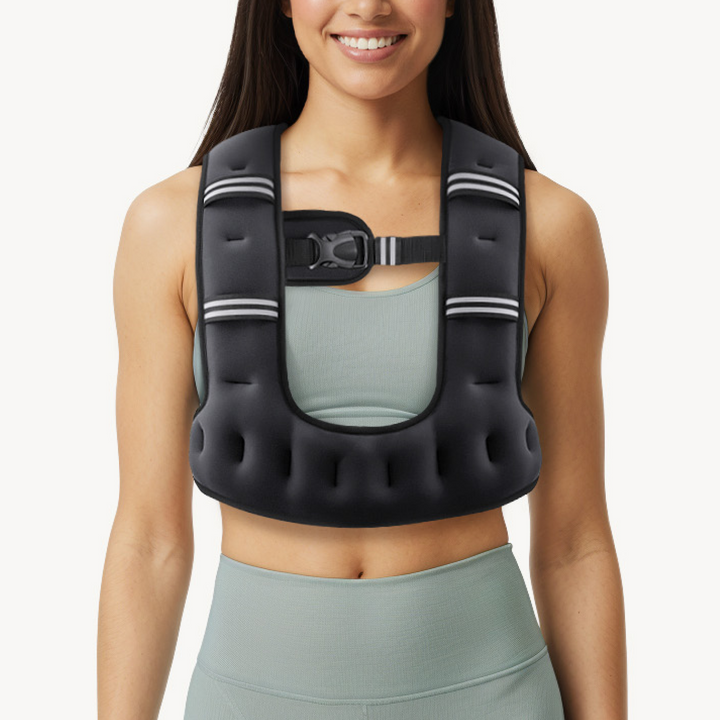
Best Weighted Vest for Core Training

Best Weighted Vest for Seniors: Buying Guide & Top Picks
Zelus Weighted Vest Size Chart for Men and Women
Best Weighted Vest Sizes for Plus-Sized Women
Best Weighted Vests for Large-Busted Women
FAQs
Can you wear a weighted vest every day?
You can wear a weighted vest every day, but only if the intensity is appropriate. Light daily walking or posture-focused use is generally safe and effective, while heavy or intense training requires rest days.
Can I wear a weighted vest all day?
Are weighted vests good for core strength?
Yes—weighted vests are very effective for developing core strength when used correctly. They don’t just train the visible abdominal muscles; they also heavily engage the deep stabilising system that controls posture, balance, and spinal alignment. Because the load sits on the torso, your core is constantly working to keep the body stable during both static holds and dynamic movement.
Can a weighted vest give you abs?
A weighted vest can help you build stronger, more defined abdominal muscles, but it will not directly reveal abs on its own.
How long should I walk with a 20 lb weighted vest?
20 lb is already a moderate-to-heavy load for many people, the focus should be on quality of movement and recovery, not just distance or time.
For most people, a 20 lb weighted vest walk should last 10–40 minutes, depending on fitness level and control.
If you are new to weighted vests, even 10–15 minutes with a 20 lb load can feel demanding, especially on the lower back and core stabilisers.
Does a weighted vest build muscle while walking?
A weighted vest can help you build some muscle while walking, but the effect is limited compared to traditional strength training. Walking with added weight mainly improves muscular endurance, core stability, and lower-body activation, rather than significant muscle size (hypertrophy).
What muscles does a weighted vest work
A weighted vest works the core, legs, glutes, back, and stabilising muscles all at once, making it one of the most efficient tools for whole-body conditioning.
It doesn’t isolate muscles like machines or dumbbells—it trains your body to move and stabilise under load, which is why it is so effective for functional strength and endurance.
Before You Go…
Here are a few handpicked articles to inspire your next self-care moment.

![Best Zelus Adjustable Weighted Vests for Women [Ultimate Guide]](http://zelusfitness.com/cdn/shop/articles/women_2_1_f9d20b54-bd55-4c64-a4cc-9bf962ded799.jpg?v=1780917196&width=1280)


