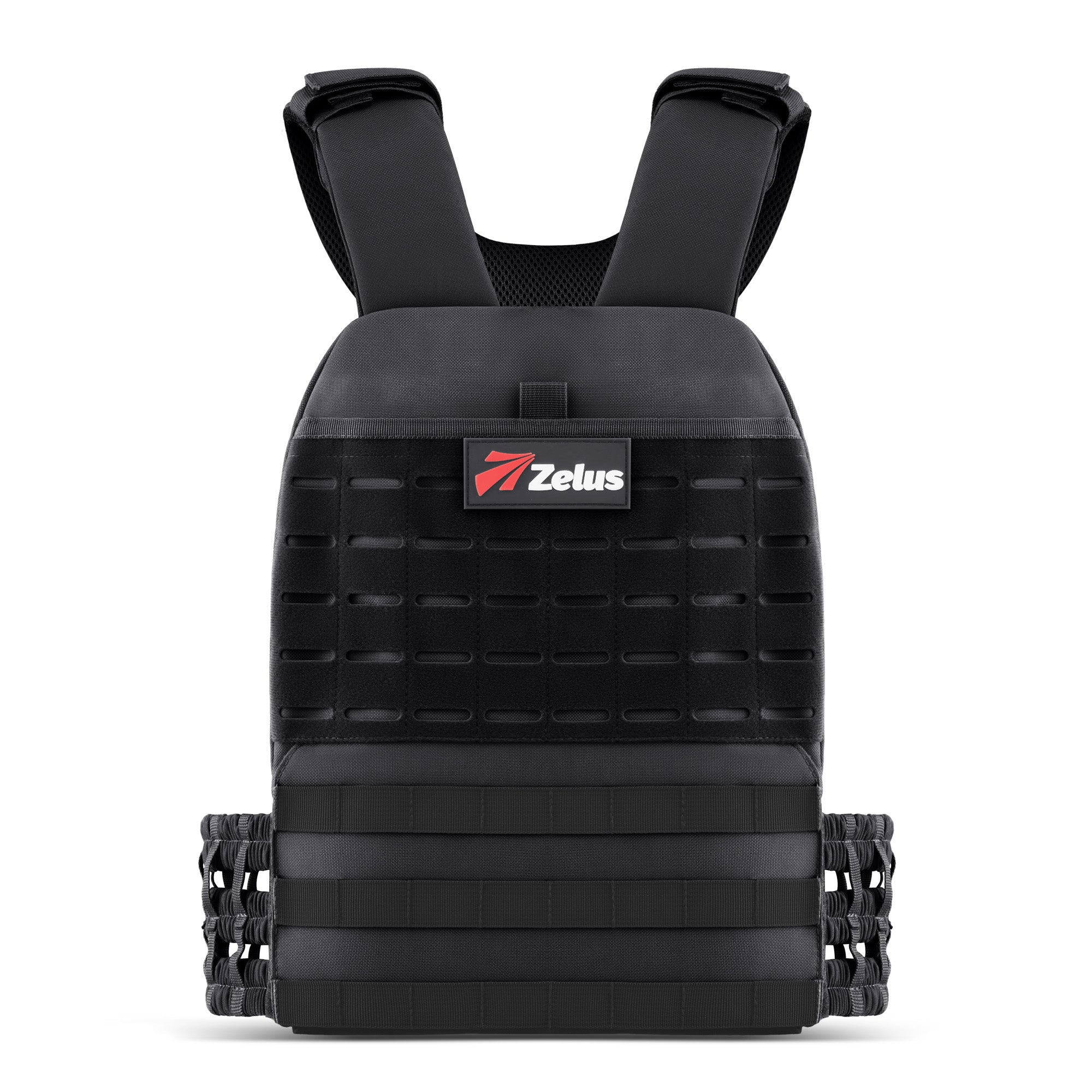
Weighted Vests for Workouts

There’s no shortcut to real results, but the Zelus Adjustable Weighted Vest for men makes every rep count. Its customizable resistance challenges your muscles, boosts endurance, and increases calorie burn, while the secure, comfortable fit keeps you moving freely. Every lift, every step, every workout becomes more effective.

Maximize Every Minute of Training

Boost Functional Fitness

Up to 40% more calories burned when performing high intensity workouts

Improve Athletic Performance

Achieve up to 25% more output from the exact same workout session

Prevent Muscle Loss

Recover as you train and boost blood flow to support muscles

Builds Full-Body Strength

Strengthens tendons, joints, and connective tissue

Max Your Strength, Power, and Performance
  • Build lean muscle and increase overall body strength
  • Boost athletic performance for running, jumping, and lifting
  • Protect joints, tendons, and connective tissue from strain
  • Improve core stability and functional movement for daily life
  • Prevent muscle loss and maintain peak physical condition
  • Train in multiple planes for full-body strength and balance
Get More From Your Workout
  • Active Recovery  

Boost circulation and heat to help your muscles recover, while giving a cozy, calming effect after training.

  • Muscular Endurance   

Your muscles adapt to the added load, helping you last longer and perform better in every workout.

What Size Weighted Vest for Men?

Whether choosing a weight vest for men or weight vest for women, the key is finding a balance between body weight percentage, comfort, and workout purpose—not simply choosing a size label. 

Weighted Vest Size for Men Based on Body Weight

For any man, selecting the right weighted vest starts with understanding how much load his body can safely handle. A common guideline is to choose a vest that equals a percentage of a man’s total body weight. A beginner man should typically start with around 5–10% of his body weight, which allows his muscles, joints, and cardiovascular system to adapt gradually.

 As a man becomes more experienced, he can increase the load to 10–20%, while an advanced man may use 20% or more for high-intensity training. This progressive approach ensures that a man builds strength effectively without increasing the risk of injury or excessive strain.

Weighted Vest Size for Men Based on Training Goals

A man’s fitness goal plays a crucial role in determining the ideal vest weight. 

For fat loss, a man benefits more from a lighter vest, usually around 5–10% of body weight, as it allows longer sessions like walking or light cardio while still increasing calorie burn. 

If a man is focused on improving endurance, a moderate load of 10–15% works best, helping him build stamina without compromising speed or form. 

On the other hand, a man aiming for muscle growth and strength gains should opt for a heavier vest, typically 15–25% or more, to provide enough resistance for exercises like push-ups, squats, and pull-ups.

FAQs

Does walking with a weighted vest help you lose weight?

Yes—walking with a weighted vest can help support weight loss, because it increases the intensity of a simple activity you already do. By adding extra load to your body, a man burns more calories during the same walk compared to walking without resistance.

What is the rule of thumb for weighted vests?

The general rule of thumb for using a weighted vest is to choose a load that is 5%–10% of your body weight for beginners, and gradually progress to 10%–20% for intermediate users, depending on your fitness goals. This keeps training effective while reducing the risk of joint strain or poor form.

Is a 20lb weighted vest too much?

A 20 lb weighted vest is not too much for most men, especially those who already have some fitness base. However, for beginners or lighter individuals, it may feel heavy at first and should be introduced gradually.

How heavy should my weighted vest be if I weigh 200 pounds?

For a 200 lb man, the most important rule is not to jump too heavy too fast. A lighter weight vest used consistently will outperform a heavy vest used inconsistently or with poor form. If you're unsure, start at ~15 lb and build up gradually

Should I get an 8 or 12 lb weighted vest?

An 8 lb vest is best if a man is new to weighted training, returning after a break, or mainly using it for walking or daily movement. It adds just enough resistance to activate muscles and increase calorie burn without overwhelming the joints.

A 12 lb vest is better for a man who is already somewhat active and wants more intensity from walking or bodyweight workouts. It creates a more obvious training effect and is often considered a solid “all-around” starting point for average adult men.

Are weighted vests good for men?

Weighted vests are very good for men when used properly. They are especially effective for improving strength, endurance, and calorie burn in a simple and versatile way.

However, the key for any man is progressive use, proper fit, and controlled weight selection—not simply going heavy. When used smartly, a weighted vest can be one of the most efficient tools in a man’s fitness routine. 

What is the best weighted vest for plus size men?

Bigger guys don’t just need a heavier vest—they need one that handles larger torso sizes, distributes weight evenly, and stays stable under load. The best weighted vest for big men should have high max capacity (40 lbs), adjustable straps, wide shoulder support, and a longer torso design to prevent bouncing or discomfort.

What is the best weighted vest for tall men?

For a tall man, the best weighted vest is not just about weight capacity—it’s about torso length, strap adjustability, and weight distribution. A tall man needs a vest that sits lower on the body without riding up, so movement feels natural during running, walking, or strength training. If a vest is too short, a tall man will feel imbalance, shoulder pressure, and constant shifting during workouts.

What is the best weighted vest for men over 50?

For a man over 50, the best weighted vest is not the heaviest one—it’s the one that prioritizes joint safety, comfort, adjustability, and even weight distribution. At this stage, the goal is to improve strength, bone density, and cardiovascular health without placing unnecessary stress on the knees, shoulders, or lower back. Experts generally recommend starting with a vest that is around 5–10% of a man’s body weight, then gradually increasing as the body adapts.

Benefits of Weighted Vest for Men

For any man looking to improve strength, endurance, and overall fitness, a weighted vest is a highly effective tool. By using it consistently and progressively, a man can enhance workout performance, burn more calories, and build a stronger, more resilient body.

Improved Full-Body Strength

A weighted vest is one of the most effective tools for a man looking to build functional, real-world strength. By adding extra resistance, a man can turn basic exercises like push-ups, squats, and lunges into more demanding movements. This allows a man to train multiple muscle groups at once while improving coordination and overall power. For any man who prefers bodyweight workouts, a weighted vest offers a simple way to increase intensity without heavy equipment.

Increased Muscle Activation

When a man wears a weighted vest, his body is forced to engage more muscles to handle the added load. A man’s core works constantly to stabilize movement, while the legs, glutes, and upper body are pushed harder during every exercise. This increased activation helps a man build muscle more efficiently and improves balance and control over time.

Higher Calorie Burn

A weighted vest helps a man burn more calories by increasing the effort required for everyday activities. Whether a man is walking, jogging, or training, his heart rate rises faster and energy expenditure increases. For a man focused on fat loss, this means more efficient workouts and better results without significantly extending workout time.

Enhanced Cardiovascular Fitness

For any man aiming to improve endurance, a weighted vest can transform regular cardio into a more intense workout. When a man adds resistance to walking or running, his heart and lungs must work harder to keep up. Over time, this helps a man build stamina and improve overall cardiovascular health.

Stronger Bones and Joint Support

Bone health is often overlooked, but it is essential for every man, especially with age. A weighted vest provides the kind of weight-bearing stress that encourages stronger bones. This helps a man maintain bone density and reduce the risk of injuries, while also supporting joint stability when used properly.

Improved Endurance and Athletic Performance

Training with a weighted vest helps a man build both muscular and cardiovascular endurance. As a man adapts to carrying extra weight, his body becomes more efficient. When the vest is removed, a man often feels lighter, faster, and more powerful, which directly improves athletic performance.

Better Core Strength and Posture

A weighted vest forces a man to maintain proper posture throughout movement. This constant demand strengthens a man’s core, including the abs and lower back. For a man who spends long hours sitting, this can help correct posture and reduce strain on the spine.

Versatility for Every Man’s Workout

One major advantage is flexibility. A man can use a weighted vest for walking, running, strength training, or even daily activities. This makes it easy for a man to add resistance to almost any routine and apply progressive overload without changing his workout style.

Time Efficiency for Busy Men

For a busy man, a weighted vest is a practical solution to maximize workout efficiency. A man can achieve higher intensity in less time, combining strength and cardio into one session. This allows a man to stay consistent with fitness even with a tight schedule.

Support for Long-Term Fitness

After weight loss, maintaining results can be difficult for a man. A weighted vest can help a man maintain strength and muscle by simulating additional body weight. This makes it easier for a man to sustain progress and avoid setbacks in the long run.