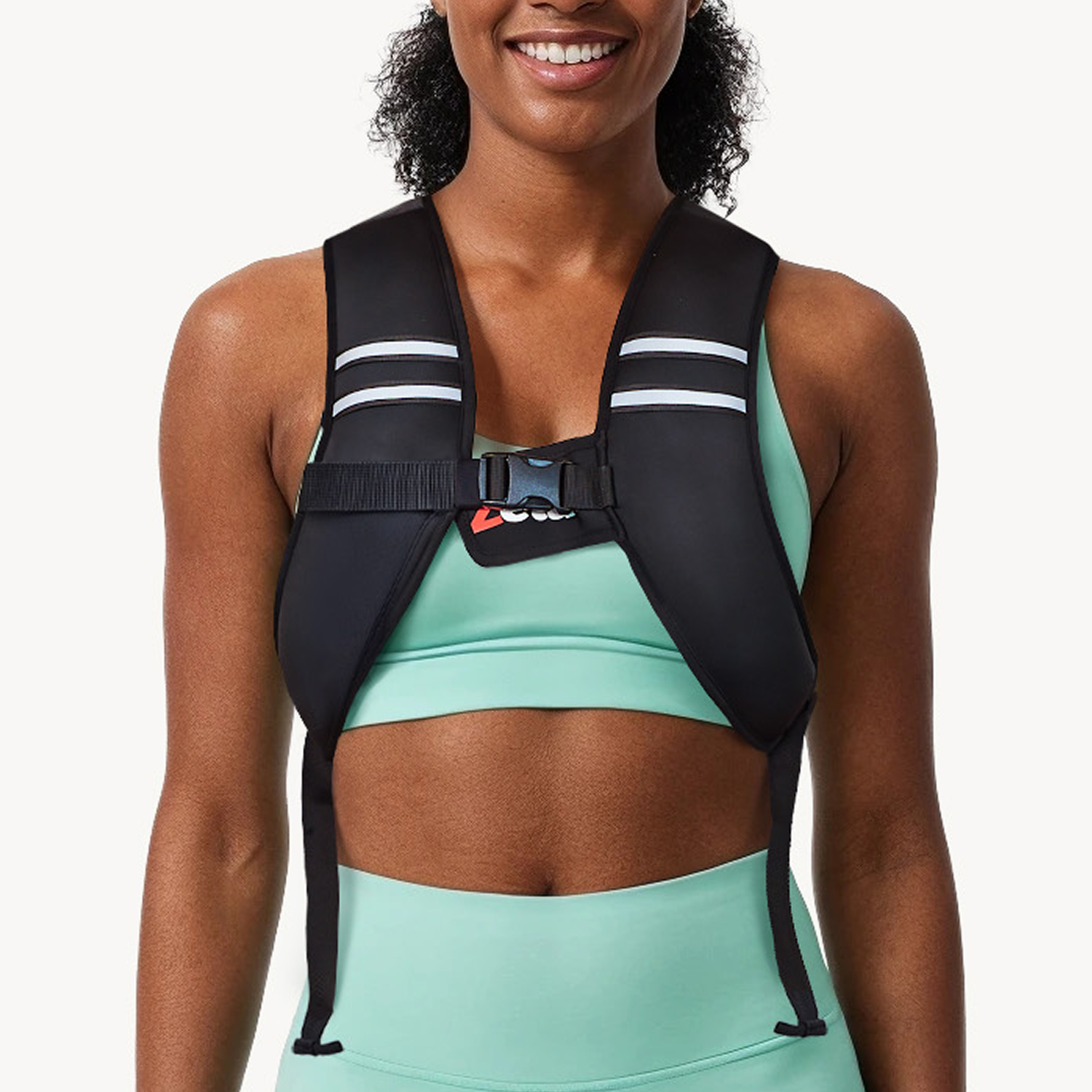
Are Light Weighted Vests (Under 10 lb) Even Worth Buying?
Adding a weighted vest to my walking routine has officially become my favorite ultimate fitness cheat code to spike calorie burn, level up bone density, and tone my core without ever hitting a gym. But when I was first sitting with a vest in my digital shopping cart, I asked myself the exact same question you are probably asking right now: Is a 10 lb weighted vest actually enough to make a difference, or is it a waste of money?
It is incredibly common to double-check yourself before hitting "buy" on fitness gear. In fact, based on a 2026 survey of 1069 weighted vest purchasers conducted by Zelus, 52% of fitness consumers state that real user reviews and feedback highlighting product comfort is the single most critical information they look for right before making a purchase. We all want definitive proof that adding extra pounds to our frame will actually translate into a sustainable, pain-free routine.
Is a 10lb Weighted Vest Enough? What I Learned
Yes, 10 lbs is more than enough. For women like me whose primary workouts consist of walking, hiking, dog walking, or low-impact home fitness, a 10 lb weighted vest is the absolute sweet spot.
In fact, one of the biggest mistakes I see beginners make is falling into the "more is better" trap and jumping straight to 15 or 20 lbs. I have learned that when a vest is too heavy or poorly fitted, it stops being a fitness tool and becomes an instrument of torture that ruins your posture and strains your lower back.
This isn't just my personal experience, either—the data backs it up. According to the Zelus February 2026 User survey, a massive 44% of consumers struggle with workout consistency precisely because traditional fitness equipment causes physical frustration, lower back fatigue, or shifting. When you overload your body too quickly, your muscles fatigue unevenly, forcing your lower spine to overcompensate for the heavy, sagging weight.
Furthermore, cranking the weight up usually means strapping the vest down painfully tight to keep it from bouncing around while you move. For women, this creates an entirely new set of problems. Data from the Zelus February 2026 User survey reveals that a staggering 48% of female fitness enthusiasts complain about traditional tactical vests choking their breathing or creating suffocating chest tightness.
True progressive overload doesn't mean suffocating yourself or inducing a back spasm. A streamlined, ergonomically balanced 10 lb vest allows you to spike your caloric burn and stimulate bone remodeling while maintaining 100% of your natural, upright posture and full lung capacity. Starting light ensures you build functional strength safely, keeping your fitness journey sustainable instead of frustrating.
Recommended reading:
What Size Weighted Vest Should I Get
Zelus Weighted Vest Size Chart for Men and Women
It Completely Shifts Your Metabolic Math
Adding 10 lbs to your frame changes your baseline physics. If you weigh 150 lbs, a 10 lb vest represents an immediate 6.6% increase in total body mass. My glutes, quads, calves, and core suddenly have to exert significantly more force with every single step. I have personally tracked that a 10 lb vest elevates my heart rate straight into the fat-burning zone on flat pavement, turning a casual neighborhood stroll into a high-yield cardio session.
Recommended reading: Does Walking With a Weighted Vest Burn More Calories?
It Safely Strengthens Bones
As women, keeping our bones strong is incredibly important. The skeletal system responds to axial loading—which is simply weight pressing vertically down through your shoulders and spine—by laying down new bone minerals. A 10 lb vest provides a safe, low-impact compression that signals your hips and spine to grow stronger, helping stave off bone density loss without the jarring impact of heavy powerlifting.
Recommended reading: How Weighted Vests Affect Bone Health and Weight Loss
Important Things I Learned to Watch Out For
While I completely recommend trying a weighted vest, I quickly realized that women face some distinct anatomical and practical challenges. If you are going to buy one, keep these personal lessons in mind:
Beware of Chest Compression & Chafing
Standard, boxy tactical vests are designed for a flat male chest. On a female frame, these rigid designs cause painful breast compression, restrict breathing, or ride up and dig into the neck and collarbones.
My Pro-Tip: Look for an adjustable vest designed with a flexible, body-contouring cut or an open Y-shape front layout. Brands that use flexible side straps or soft materials like silicone-iron blends allow your chest to expand naturally when you are breathing heavily.
The Storage Dilemma: Carrying Your Essentials
This is a massive oversight on many popular fitness vests: they completely lack functional pockets. If you buy a totally streamlined vest like I did, you might need to pair it with a separate running belt just to carry your keys and phone, or look specifically for a model that features a built-in phone pouch.
The Odor and Washing Problem
If you buy a cheap neoprene or thick canvas vest, it will absorb sweat like a sponge. Within a few weeks, it will smell terrible, and washing a heavy fabric vest usually requires tedious hand-washing and days of air-drying.
Because I plan to wear mine for daily walks or over my normal clothes, I recommend looking into modern alternatives like non-porous silicone vests that can simply be wiped down with a disinfectant cloth in five seconds.
Recommended reading: How To Wash and Maintain Your Zelus Weighted Vest
Who is a 10 lb Weighted Vest Built For?
While heavy-duty vests packed with 40 or 60 pounds of steel are great for elite military conditioning, they are completely counterproductive for the average fitness enthusiast. A 10 lb weighted vest is not just a "beginner's version" of heavier gear—it is a highly calibrated, specific training tool built for a completely different set of athletic goals.
If your primary focus is longevity, sustainable fat loss, and functional conditioning, a 10 lb load provides the perfect amount of resistance without compromising your biomechanics. Based on training data and physiological responses, I have found that a 10 lb vest is explicitly engineered for three distinct types of movers.
Everyday Walkers and Active Lifestyles
If your primary form of exercise is neighborhood walks, hiking local trails, or simply staying active while walking the dog, a 10 lb vest is your ultimate fitness hack. When you carry a heavy tactical vest for an hour or more, your posture inevitably collapses as your muscles fatigue, causing you to round your shoulders and strain your lower back.
A 10 lb vest serves as a micro-load that shifts your metabolic math just enough to elevate your heart rate into the fat-burning zone on flat pavement. It delivers a 10% to 15% spike in caloric burn while completely preserving your natural stride, turning a casual daily habit into a highly efficient, posture-correcting workout.
High-Velocity Runners and Joggers
Running with a weighted vest is a guaranteed recipe for chronic joint degradation. Every time your foot strikes the ground while running, your knees and ankles absorb an impact force equal to several times your body weight. If you introduce a 20 or 30 lb payload to that equation, you drastically increase the shock forces traveling through your patellar tendons and meniscus.
A form-fitting 10 lb vest is built perfectly for runners who want to increase their cardiovascular endurance and lung capacity without subjecting their lower-body joints to dangerous shear forces. It adds just enough resistance to challenge your aerobic baseline while keeping your joints completely safe.
Bone Density and Low-Impact Toning
For women navigating the physiological changes of perimenopause and menopause, protecting bone health is a top priority. Your skeletal system relies on axial loading—vertical pressure pressing down through your spine and hips—to signal your body to deposit new bone minerals and ward off osteoporosis.
A 10 lb adjustable vest offers the ideal "sweet spot" for this exact demographic. It applies safe, low-impact compression to the skeleton during daily activities or home calisthenics (like squats, lunges, and planks). It gives you all the bone-strengthening benefits of resistance training without requiring you to lift heavy, intimidating gym barbells.
Is a 10lb Weighted Vest Enough for Bone Health?
If you have been searching for accessible, drug-free ways to stimulate bone density, improve your posture, and ward off age-related bone loss, you have probably cross-paths with the concept of weighted walking.
When I first started looking into premium gear like Hyperwear, I noticed a steep financial curve. Their 10-pound starter kits are reasonably priced, but scaling up to a 15- or 20-pound chassis often doubles the upfront cost—and that is before you pay extra for the supplementary weight packets.
If you want the benefits of a premium, bounce-free fit without the overwhelming price tag or the hassle of dealing with tiny, tedious weight inserts, I highly recommend looking at a more streamlined alternative: the Zelus Z-Fit™ X-Shaped Weighted Vest.
If you are planning to wear a vest on a serious trek, like a 6-mile walk that takes about 2 hours, you are likely wondering the exact same thing I did: Is a 10 lb weighted vest actually enough to maintain or improve my bones, or do I need to splurge on the heavier model?
My short answer is yes, 10 pounds is absolutely enough to stimulate bone health, especially when paired with an endurance walking routine. Let’s look at the medical and biomechanical reasons why a 10 lb maximum capacity is a smart, highly effective investment.
Weight Vests for Osteoporosis: Dr. Doug Lucas studies
The Physics of Walking: Time Under Tension vs. Total Load
When it comes to building bone density, our bodies respond to a biological principle known as Wolff's Law, which states that bones remodel and grow stronger under mechanical stress. I used to assume you needed heavy, crushing gym weights to trigger this effect. However, bone remodeling actually relies on two co-equal factors: the magnitude of the load and the duration of the stimulus.
A 6-mile walk that takes 2 hours is an exceptional baseline of physical activity, and it completely changes the math on how much weight you need.
- The Accumulation of Force: Over a 2-hour walk, your feet strike the pavement thousands of times. When I add just 10 pounds to my torso, that extra load is multiplied across every single one of those thousands of steps.
- Safe Axial Loading: Because a weighted vest places the ballast directly over your shoulders, it creates a safe, vertical load through your spine, hips, and femur—the exact structural areas most prone to osteopenia and osteoporosis.
For a multi-hour endurance walk, a 10 lb load provides the ideal "sweet spot" of continuous mechanical stress without fatiguing your postural muscles.
Why Starting at 1 to 2 Pounds is the Smartest Strategy
When I look at progressive loading, starting small is the only way to avoid injury. Beginning with just 1 or 2 pounds inside your vest is the absolute best approach.
|
Training Phase |
Timeline |
Target Weight |
Focus & Goals |
|
Phase 1 |
Weeks 1–2 |
1 to 2 lbs |
Postural Baseline: Focus on maintaining an upright, neutral spine and adapting your natural walking stride to a micro-load. |
|
Phase 2 |
Weeks 3–6 |
4 to 5 lbs |
Joint Evaluation: Introduce moderate resistance. Monitor joint comfort, foot striking, and lower back stability during your long-distance walks. |
|
Phase 3 |
Month 2+ |
Up to 10 lbs max |
Progressive Overload: Begin making gradual, incremental additions (e.g., 0.5 to 1 lb at a time) to continuously stimulate bone density without breaking form. |
When you introduce weighted training to your skeletal system, your muscles and cardiovascular system will adapt much faster than your tendons, ligaments, and bone matrix.
Jumping straight into a 15- or 20-pound vest on a 2-hour trek is a recipe for repetitive strain injuries, plantar fasciitis, or lower back spasms. By starting at 1 to 2 pounds and utilizing an incrementally adjustable vest, you allow your joints to adapt safely. Because it will take you several weeks or even months of progressive adaptation just to reach the 10-pound limit safely, paying double the price upfront for a heavier vest is completely unnecessary.
Recommended reading:
How Long Should You Wear a Weighted Vest?
Can You Wear a Weighted Vest All Day? Benefits, Risks & Safe Tips
The Risk of Going Too Heavy
I have learned the hard way that more is not always better. If you load a vest past 10% to 15% of your total body weight on a long-distance walk, your posture will naturally begin to degrade as you tire.
When you get fatigued during hour two of a 6-mile trek, an excessively heavy vest will pull your shoulders forward, rounding your upper spine and causing you to lean forward at the hips. This structural collapse shifts the weight away from your bone matrix and forces your lower back muscles to painfully compensate. Keeping a compact, 10 lb adjustable vest ensures you can maintain a perfectly upright, neutral spine from mile one all the way to mile six.
Recommended reading: 6 Reasons Your Weighted Vest Might Be Hurting Your Body
What I Look For in a Premium Walking Vest
Since you are looking at a premium tier model like Hyperwear, you are already looking in the right direction. When choosing your specific model, I highly recommend prioritizing these three design features:
- High Increment Adjustability: Ensure the vest allows you to add weight in tiny increments (such as 0.5 lb or 2-ounce weight blocks) so you can easily honor your plan to start at the 1 to 2-pound baseline.
- A Snug, Form-Fitting Chassis: A loose vest that bounces against your collarbones or shifts your center of gravity during a 2-hour walk will cause painful skin chafing and disrupt your natural stride.
- Breathability: Moving with a vest for two hours straight generates a massive amount of body heat. I always look for ultra-breathable mesh or performance fabrics that won't trap sweat against my clothes.
Don't let fitness marketing convince you that you need an expensive, heavy tactical plate carrier. For long-distance walking aimed at maintaining bone density, a 10 lb adjustable weighted vest is completely sufficient.
Recommend Model
|
PRODUCT |
|
|
TECHNOLOGY |
Z-Fit™ X-Shape |
|
IMAGE |
|
|
RECOMMENDED SPORTS |
Running · Yoga · CrossFit · Daily |
|
WORKOUT INTENSITY |
💪💪 |
|
COMFORT |
★★★★★ |
|
SHAPE |
X-Shape |
|
WEIGHT TYPE |
Fixed |
|
WEIGHT RANGE |
5 / 10 / 15 lb |
|
FILL MATERIAL |
Z-Fit™ Silicone-Iron |
|
BUILD MATERIAL |
Soft Silicone Skin |
|
NOISE LEVEL |
Zero |
|
COLORS |
8 colors |
|
REFLECTIVE STRIPS |
Yes |
|
Cleaning Choice |
Hand wash |
|
POCKETS / STORAGE |
No |

My Final Verdict: Is it a Waste of Money?
If you are trying to maximize your limited workout time, a 10 lb weighted vest is absolutely worth the investment. It isn’t a gimmick; it is an active application of progressive overload. It turns the activities you are already doing—like walking the dog or cleaning the house—into active, posture-correcting resistance training.
My advice? Skip the massive, bulky military plate carriers. Find an adjustable vest that maxes out around 10 to 12 lbs, features a streamlined, anatomical fit, and is easy to clean. Start by loading it with just 4 to 5 lbs, and gradually build your way up to the full 10 lbs as your stamina grows. Your core, glutes, and joints will thank you!
Important Note
While adding external weight is a clinically proven method to spark bone remodeling and combat bone density loss, safety must come first. If you have been diagnosed with osteopenia, osteoporosis, or any pre-existing spinal or balance conditions, it is absolutely vital that you consult your primary care physician or physical therapist before purchasing or wearing a weighted vest.
Depending on your current T-score, placing an axial, vertical load over an already severely compromised skeletal structure can accidentally increase your risk of spinal compression fractures or falls. Always secure a professional medical evaluation to determine if a weighted vest is safe for your specific baseline, and to establish a medically approved starting weight and wear schedule.

Before You Go…
Here are a few handpicked articles to inspire your next self-care moment.