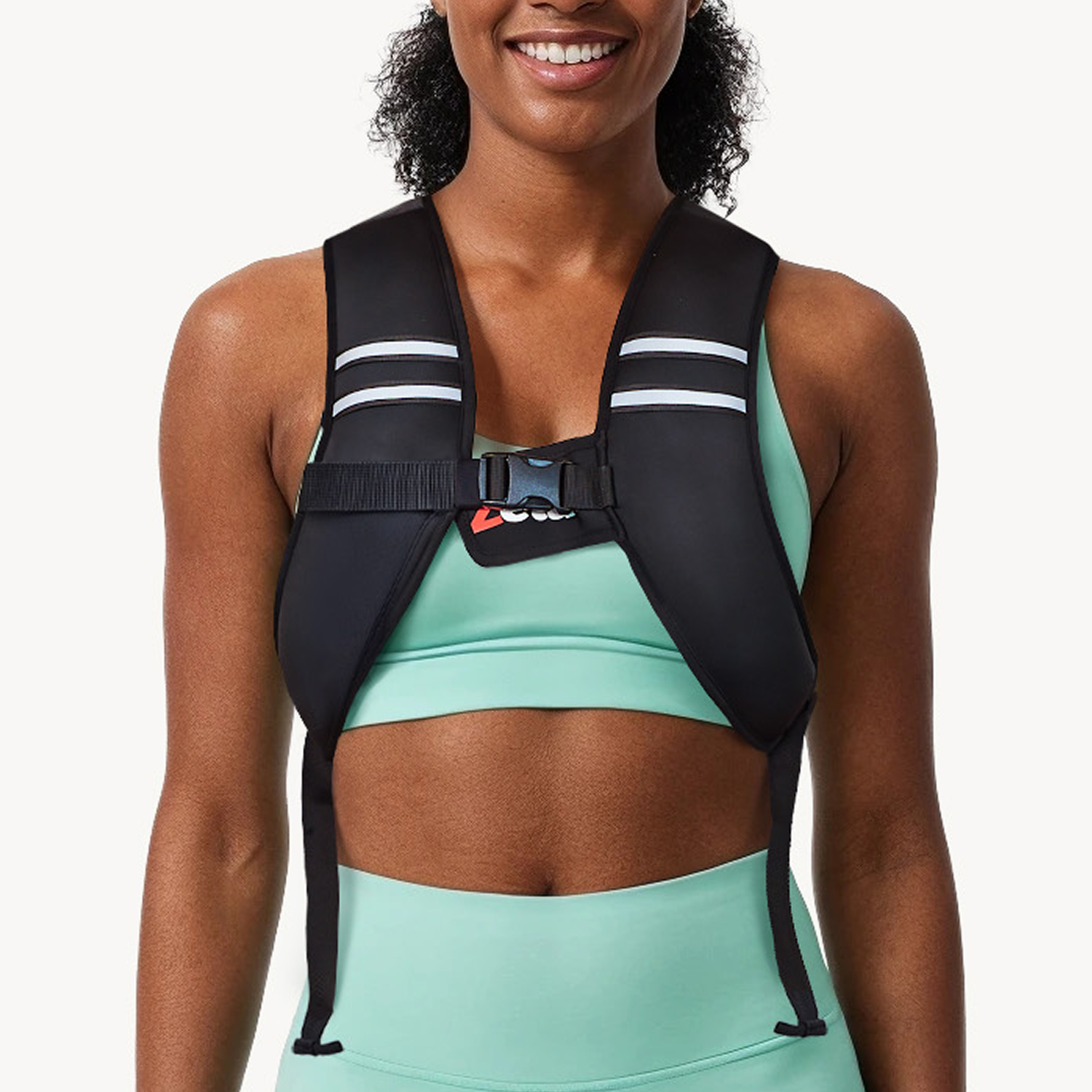
How Weighted Vests Affect Bone Health and Weight Loss
Weighted vests add extra body weight during movement, increasing mechanical load on the bones and effort during exercise. Because bones respond to stress, this has led to interest in whether weighted vests can help support bone density and overall skeletal strength, especially in older adults.
Research suggests potential benefits are strongest when weighted vests are combined with structured resistance or impact training, while effects are more limited during low-intensity activities like walking alone.
How Weighted Vests Influence Bone Health

Research into weighted vests has largely focused on whether adding external load to the body can stimulate bone remodeling and help preserve bone mineral density (BMD), especially in populations at risk of osteoporosis such as older adults and postmenopausal women. The underlying idea is based on bone adaptation: when bones are exposed to greater mechanical stress, they respond by becoming stronger. However, clinical evidence shows that the effectiveness of weighted vests depends heavily on how they are used and in what context.
Does a Weighted Vest Improve Bone Density?
Weighted Vest Study in Postmenopausal Women
One of the most frequently cited areas of research involves postmenopausal women, who are at higher risk of accelerated bone loss due to hormonal changes. Studies have examined whether wearing weighted vests during impact exercise such as jumping or resistance training can help slow this process.
In a long-term intervention study, postmenopausal women who performed jumping exercises while wearing weighted vests were able to maintain hip bone mineral density (BMD) more effectively than non-exercising control groups. Over time, the control group experienced the expected age-related decline in bone mass, while the weighted vest group showed significantly reduced bone loss, particularly in the hip region.
Weighted Vests for Menopause: What You Need to Know
A 5-year intervention study found that:
-
Women wearing weighted vests during jumping exercise maintained hip bone mineral density (BMD)
-
Control participants experienced significant bone loss over time
-
The vest-plus-impact group showed smaller declines or near maintenance of femoral neck and hip BMD
This supports the idea that impact loading combined with external weight may help reduce age-related bone loss in postmenopausal women.
Supporting research (Oregon State University-based trial summary):
-
Weighted vest + jumping exercise helped prevent hip BMD decline over 5 years compared with non-exercising controls
Key Limitation: Weight Loss Context Changes the Outcome
More recent, larger clinical evidence shows a different result when weighted vests are used during intentional weight loss.
A 12-month randomized clinical trial (150 older adults with obesity) tested:
-
Diet-induced weight loss alone
-
Weight loss + weighted vest (~7 hours/day use)
-
Weight loss + resistance training
Findings:
-
All groups lost ~10% body weight
-
All groups still experienced hip bone loss (about −1% to −2%)
-
The weighted vest did NOT prevent bone loss compared to weight loss alone
-
No significant advantage over resistance training either
Weighted Vests and Weight Loss Effects

More recent clinical research has examined whether weighted vests can help counteract bone loss during intentional weight reduction. This is particularly important because weight loss in older adults is often associated with a decline in bone density due to reduced mechanical loading on the skeleton.
A large randomized controlled trial published in a major medical journal found that older adults with obesity who underwent diet-induced weight loss still experienced measurable decreases in hip bone mineral density, even when they used weighted vests for several hours per day. Importantly, the vest intervention did not significantly outperform standard weight loss alone or resistance training in preventing bone loss. These findings suggest that simply increasing body load through external weight may not fully replicate the protective effects of natural body weight combined with muscular activity.
Weighted Vest vs. Vibration Plate: Which Is Better for Weight Loss?
Metabolic and functional effects
Some smaller studies suggest that wearing weighted vests during daily activities may slightly increase energy expenditure and help preserve metabolic rate during weight loss. However, these effects are generally modest and not yet strongly supported by large-scale clinical evidence.
From a musculoskeletal perspective, the key takeaway is that mechanical loading alone is not enough to fully protect bone during caloric restriction. Resistance training and adequate nutrition (especially protein and calcium intake) remain more consistently supported strategies in clinical guidelines and sports medicine literature.
Taken together, the current body of research indicates that weighted vests may have a supportive role in bone health when used in the right context—particularly during structured, high-impact exercise programs. However, their effectiveness is limited when used as a standalone strategy during weight loss interventions.
Best Types of Exercise for Bone Density
Bone density is strongly influenced by mechanical loading, meaning exercises that place stress on bones can help maintain or improve strength over time. The most effective routines combine impact, resistance, and balance training to support both bone health and fall prevention.
Impact Training (High-Impact Exercises)
High-impact exercises create strong forces through the skeleton, which can stimulate bone remodeling and help maintain bone mineral density. These movements are especially beneficial for the hips, spine, and lower limbs.
Common high-impact activities include jogging, jumping rope, hiking, tennis, dancing, and climbing stairs. Each of these activities increases ground reaction forces, which encourages bones to adapt by becoming denser and stronger over time.
However, impact training should be approached gradually, especially for individuals with low bone density or joint concerns, to reduce the risk of injury.
Strength Training (Resistance Exercises)
Resistance training is one of the most effective and widely recommended methods for improving bone strength. When muscles contract against resistance, they pull on bones, which helps stimulate bone formation and slows bone loss.
This category includes free weights, weight machines, and resistance bands, all of which can be adjusted to match different fitness levels. Exercises like squats, lunges, and presses are particularly effective because they engage multiple large muscle groups and load major bones in the body.
Over time, consistent strength training improves both muscle mass and skeletal strength, reducing fracture risk and supporting long-term mobility.
Specific Bone-Targeted Exercises
Certain exercises are designed to combine strength, balance, and impact to create a more direct stimulus for bone health. These movements are often used in rehabilitation or advanced training programs.
Examples include weighted vest exercises, single-leg hopping, and the side stomp with overhead press. Weighted vests increase overall load during movement, enhancing bone stimulation during walking or bodyweight exercises. Single-leg hopping introduces unilateral impact stress, which can improve bone adaptation in the lower limbs. The side stomp with overhead press combines coordination, resistance, and impact in a dynamic movement pattern.
Balance Training (Fall Prevention)
While balance training does not directly increase bone density as strongly as resistance or impact exercise, it plays a critical role in preventing falls, which are the leading cause of fractures in individuals with low bone density.
Practices such as tai chi and yoga improve coordination, stability, and posture. They help strengthen stabilizing muscles and enhance body awareness, reducing the likelihood of accidents during daily activities.
For older adults or individuals with osteoporosis risk, balance training is an essential complement to bone-strengthening exercises, providing a protective effect even when bone density gains are limited.
|
Exercise Type |
Examples |
Key Benefits for Bone Health |
Important Notes |
|
Impact Training (High-Impact Exercises) |
Jogging, jumping rope, hiking, tennis, dancing, climbing stairs |
Improves bone mineral density by increasing skeletal stress and encouraging bone adaptation |
Should be introduced gradually, especially for individuals with osteoporosis or joint issues to reduce injury risk |
|
Strength Training (Resistance Exercises) |
Free weights, weight machines, resistance bands, squats, lunges, presses |
Builds muscle and bone strength, improves mobility, and reduces fracture risk |
One of the most effective long-term strategies for maintaining bone density |
|
Specific Bone-Targeted Exercises |
Weighted vest exercises, single-leg hopping, side stomp with overhead press |
Enhances localized bone loading, improves coordination, and increases functional strength |
Often used in advanced training or rehabilitation; should be progressed carefully |
|
Balance Training (Fall Prevention) |
Tai chi, yoga, balance drills, single-leg stands |
Reduces risk of falls and fractures by improving stability and neuromuscular control |
Essential for older adults or those with low bone density; best combined with strength/impact training |
Does Walking with a Weighted Vest Improve Bone Health?
When you walk with a weighted vest, your body experiences higher ground reaction forces compared to normal walking. This added stress can slightly increase bone stimulation, particularly in the lower body.
However, walking is still considered a low-impact activity, so even with added weight, the stimulus is relatively mild compared to running, jumping, or resistance training. This means the bone-building effect is generally modest rather than dramatic.
FAQ
Are Weighted Vests Safe for Osteopenia or Osteoporosis?
Weighted vests can be safe for osteopenia or mild osteoporosis when used carefully, especially during low-impact walking or supervised exercise. However, they should not be used aggressively or as a standalone treatment. The safest and most effective approach for bone health remains a combination of strength training, balance work, and appropriately scaled weight-bearing exercise.
Is wearing a weighted vest good for bones?
Wearing a weighted vest can be moderately helpful for bone health, mainly by increasing mechanical load during movement. However, it is not as effective as resistance training or impact exercise. For meaningful improvements in bone density, it should be used as a supplement—not a replacement—for structured strength and weight-bearing exercise.
What is the number one vitamin to rebuild bone density?
The most important vitamin for bone health is vitamin D, because it enables calcium absorption and supports bone remodeling. However, the best results for improving bone density come from a combined approach: adequate vitamin D, sufficient calcium intake, and regular strength or weight-bearing exercise.
What is the best exercise to reverse osteoporosis?
Resistance (strength) training is considered the foundation of osteoporosis exercise programs because it directly loads the skeleton through muscle contraction.
When muscles pull on bones during exercise, they stimulate bone-forming cells, which helps maintain or gradually increase bone density over time.
Before You Go…
Here are a few handpicked articles to inspire your next self-care moment.