Best Weighted Vests for Pull-Ups and Calisthenics (2026 Review)
If you can easily smash out 15 clean pull-ups or 20 deep dips, standard bodyweight reps aren’t enough anymore. To keep building muscle and power, you need progressive overload. While dip belts can swing and disrupt your balance, a high-quality weighted vest distributes the load evenly across your torso, keeping your movements natural and your core engaged.
But not all vests are built for the bars. The wrong choice can chafe, restrict your breathing, or slap against your chest mid-muscle-up. In this review, we’ve field-tested the absolute best weighted vests on the market specifically designed for calisthenics, evaluating them for fit, mobility, and durability so you can crush your plateaus safely.
Are Weighted Vests Good for Pull-ups?
Yes, absolutely. In fact, pull-ups and dips are the absolute best movements to pair with a weighted vest.
Once you can comfortably crush 10 to 12 strict bodyweight pull-ups, your muscles adapt, and you shift from building raw strength to building muscular endurance. Adding a weighted vest introduces progressive overload, forcing your lats, biceps, core, and grip to recruit more muscle fibers and shatter strength plateaus.
Benefits of Weighted Vest Pull-ups

Incorporating a weighted vest into your pull-up routine is the ultimate way to shatter upper-body strength plateaus, trigger explosive muscle hypertrophy in your lats and arms, and force aggressive core stabilization without compromising your natural body mechanics.
By keeping the resistance perfectly centered and locked to your torso, a premium, well-fitted vest eliminates the awkward swinging of traditional dip belts while ensuring your shoulder blades can move through a full, unrestricted range of motion.
Ultimately, if you can already crush standard bodyweight repetitions, stepping into a weighted vest is the smartest, safest, and most efficient upgrade to transform your calisthenics routine into an elite powerhouse workout.
Massive Strength and Muscle Gains
Pull-ups are a closed-kinetic-chain movement (your hands are fixed, and your body moves). Adding weight to your torso increases the mechanical tension on your upper body muscles far more effectively than lat pulldowns, leading to rapid hypertrophy and raw pulling power.
Superior Comfort and Safety vs. Dip Belts
While a traditional dip belt with chain-linked plates is great for heavy lifting, it forces the weight to hang between your legs. This alters your center of gravity, causes the weights to swing, and can pull your lower back into an unsafe, exaggerated arch (hyper-extension). A weighted vest distributes the load evenly across your chest and upper back, keeping the weight close to your spine and moving with you.
Core Firepower
Carrying extra weight on your torso forces your abs and glutes to fire aggressively to keep your body rigid. This eliminates energy leaks and prevents you from using momentum or "kipping" to get over the bar.
What to Watch Out For
While weighted vests are excellent for pull-ups, they introduce a few unique challenges:
- The "Chin-Slap" Effect: Cheap, boxy, or poorly adjusted vests sit incredibly high on the chest. When you pull yourself up to the bar, the top of the vest can smash into your collarbones or chin.
- Shoulder Restriction: Standard tactical bulletproof-style vests often have wide, thick shoulder straps. These can pinch your shoulder blades (scapulae) and restrict your natural upward rotation, leading to shoulder impingement over time.
- The Bottom-Out: At the bottom of a pull-up (the dead hang), an extra 20 to 45 lbs puts an immense structural load on your rotator cuffs and elbows. If you drop down too fast without controlling the negative phase, you risk tearing or straining connective tissue.
6 Reasons Your Weighted Vest Might Be Hurting Your Body
Pro-Tips for Buying a Weighted Vest for Pull-Ups

If pull-ups, dips, and calisthenics are your primary goals, do not buy a generic, bulky fitness vest. Look for these specific features:
- An Ergonomic or Y-Shaped Cut: Vests with a tapered chest or a Y-shaped shoulder harness keep your joints completely free, allowing a full, natural range of motion.This structural design directly solves a massive industry pain point highlighted in a January 2026 quantitative survey of 1,069 active weighted vest owners across the United States. The research revealed that fit and stability are critical issues for strength athletes, as a staggering 45% to 62% of users engaged in heavy lifting and strength training complained that standard vests are far too bulky, unadjustable, and suffer from severe shifting or bouncing during dynamic movements.
- A Short Profile: Ensure the vest cuts off well above your belly button so it doesn't restrict your hips or hit your thighs at the bottom of the movement.
- Adjustable Solid Weights: Opt for a vest that uses removable iron blocks or plates rather than loose iron sand. Sand-filled vests tend to shift downward over time, making the vest sag and saggy gear ruins pull-up mechanics.
However, when choosing hard weights, you must be discerning about product quality. The 2026 consumer survey specifically tracked 270 users training with solid iron block vests and uncovered significant material vulnerabilities. Users noted that low-quality solid weights easily rust and are often too stiff, causing severe physical discomfort against the body.
Furthermore, 44% to 55% of respondents reported severe fabric flaws, including persistent chemical odors, heat trapping (lack of breathability), and an inability to easily wash the shell.
Therefore, look for a premium vest featuring high-density foam padding to cushion the solid iron, rust-resistant treatments, and a fully machine-washable fabric shell to eliminate sweat buildup and odor.
A Simple Guide to Buying Your First Weighted Vest
Zelus Weighted Vest Size Chart for Men and Women
The Weighted Vest Sizing Guide: Why 'One Size Fits Most' Isn't Always True
The 14 Questions to Ask Before Buying a Weighted Vest (Plus a 30-Sec Quiz)
Best Weighted Vests for Pull-Ups & Dips

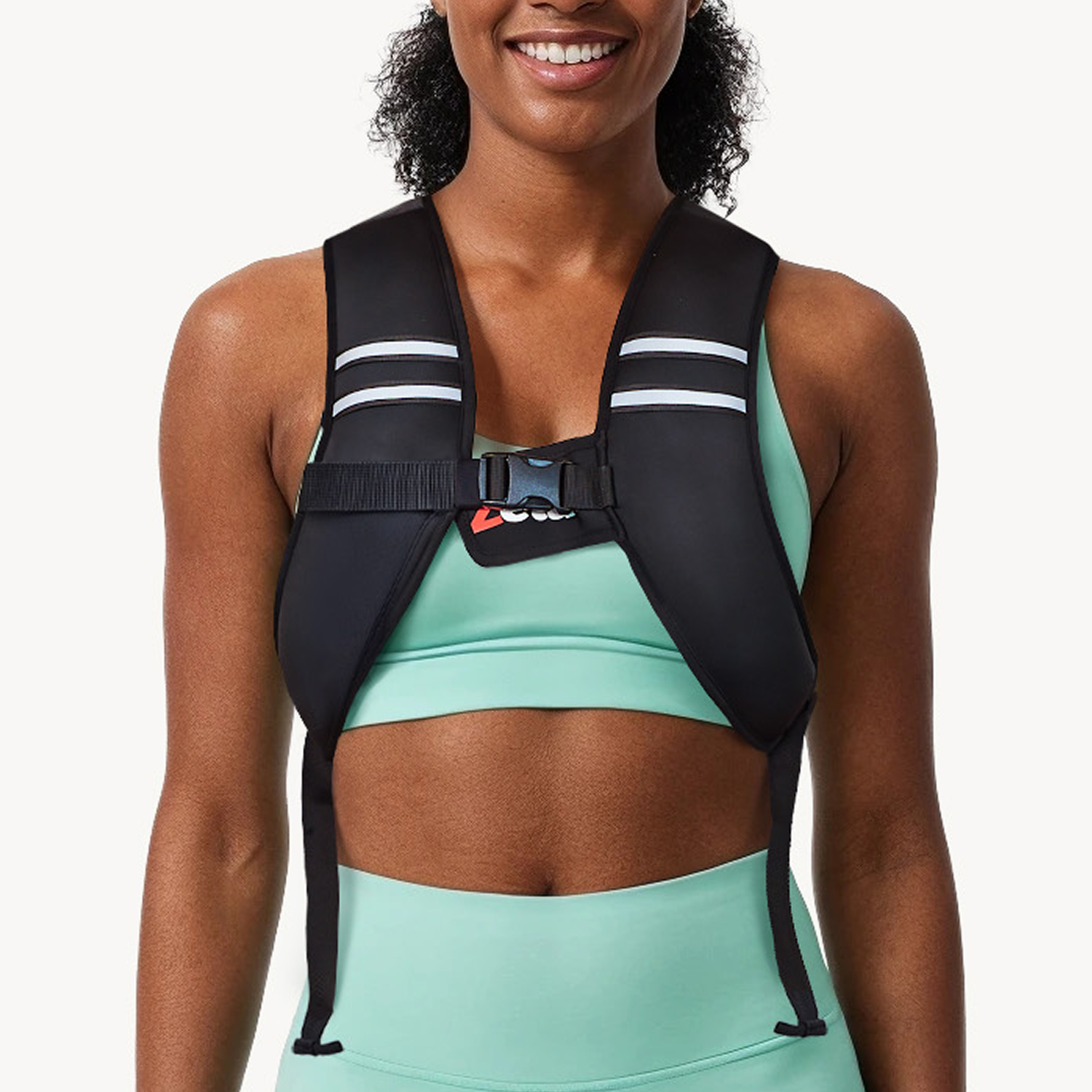
Performance Y-Shaped Weighted Vest
Engineered for maximum intensity. Features solid iron block adjustments up to 45 lbs, durable 900D Oxford fabric, and an ergonomic Y-shape for unhindered mobility.
Buy NowWhen you are hanging from a bar executing heavy pull-ups or deep dips, standard boxy vests fail. They ride up, hit your chin, and restrict your shoulder blades. The Performance Y-Shaped Weighted Vest is engineered specifically to eliminate these exact points.
- Unrestricted Range of Motion (Y-Shape)
Market data shows that Fit & Stability (44%) is the number one priority for athletes leveling up their gear. The specialized Y-shape cut keeps your upper chest and shoulders completely clear. You can achieve a full chest-to-bar pull-up and a maximum-depth dip without the vest ever interfering with your movement or hitting the bar.
- Zero Shift, High-Intensity Stability
Equipped with a secure weight-distribution system and streamlined contours, this vest completely solves the annoying "pendulum effect" common in cheap alternatives. It locks 45 lbs of dead weight tightly to your center of gravity, guaranteeing Minimal Bounce whether you are crashing a CrossFit AMRAP or grinding out miles on a heavy ruck.
- 900D Construction & Iron Blocks
Built for lifters hitting serious training plateaus, this vest drops sand fills entirely. Instead, it utilizes heavy-duty Solid Iron Blocks encased in rugged 900D Oxford Fabric and cushioned with thick foam padding. It protects your frame from pressure points while maintaining a slim, low-profile silhouette that won't make you look bulky.
- Machine Washable
The absolute biggest complaint among heavy vest owners is a foul, unhygienic buildup of sweat and odor. Unlike traditional tactical carriers that require tedious hand-scrubbing, the Performance Y-Shaped vest is fully machine washable. Just remove the solid iron blocks, throw the durable shell into the wash, and keep your training gear smelling as fresh as it looks.
What Users Say:

“Unlike many other weighted vests that I've tried, this one really is comfortable, or at least as comfortable as a weighted best can be. The padding on the shoulder straps is more than an inch thick and very soft. The vest is made of very high-quality materials and the Velcro closures provide a lot of options for adjustability.
Another nice feature of this vest is the reflective striping. If I had one suggestion, I would've made these stripes more visible throughout the vest for added nighttime safety.
Another thing that I really liked about this vest is that the weights are very easy to remove and replace. I've tried vests that have sandbags that are just fussy and difficult to work with. This product however, comes with heavy metal weights. They are easy to slip in and out of the many pockets on the front and back. If you're not a fan of the branding of this product, don't worry, it is a Velcro tab that can be easily removed. I plan to replace mine with an American flag patch, which I will enjoy displaying proudly.
For reference, I am 5 foot 10, and weigh 175 pounds.”
Weighted Vest vs. Dip Belt: Which Is Better for Pull-Ups?

If you have reached the point in your fitness journey where standard bodyweight pull-ups feel like a casual warm-up, it’s time to introduce progressive overload. To shatter your strength plateaus, you have two primary weapons of choice: The Weighted Vest and The Weighted Dip Belt.
Both tools will force your lats, biceps, and core to recruit more muscle fibers, but they alter the mechanics, physics, and intent of the exercise in completely different ways. So, which one deserves a spot in your gym bag? Let’s break down the tape.
The Weighted Dip Belt: The Ultimate Strength Builder
A dip belt features a heavy-duty strap or chain that loops around your waist, allowing you to suspend standard gym weight plates or kettlebells between your legs.
The Pros of Weighted Dip Belt for Pull-Ups
The biggest advantage of a belt is infinite scalability. You can easily chain on one, two, or three 45 lb plates as your strength grows. For maximizing raw strength, hitting heavy 1–5 rep maxes, and driving pure muscle hypertrophy, the belt has no physical ceiling. Furthermore, because the load hangs entirely from your hips, your shoulders, chest, and ribcage remain completely free and unconstricted during the pull.
The Cons of Weighted Dip Belt for Pull-Ups
The primary drawback of a dip belt is the "pendulum effect." Because the weight dangles freely, it is highly prone to swinging if your form slips. This requires strict tempo control and limits your ability to do explosive calisthenics. Additionally, a dip belt introduces heavy gym dependency—it is practically useless unless you have immediate access to external weight plates or kettlebells.
The Weighted Vest: The Core & Form Controller

A weighted vest distributes resistance evenly across your entire torso using solid iron blocks, steel plates, or integrated iron sand.
The Pros of Weighted Vest for Pull-Ups
A premium vest centers the weight tightly against your body’s true center of gravity. This completely eliminates swinging, allows for explosive or high-tempo movements, and forces your deep core and spinal stabilizers to fire aggressively to keep your torso rigid. It also offers extreme physical versatility; unlike a belt, a vest moves with you, allowing you to transition seamlessly from heavy pull-ups right into push-ups, planks, squats, or a cardio circuit without changing gear.
The Cons of Weighted Vest for Pull-Ups
Vests inherently have a strict weight ceiling based on their maximum pocket capacity. While a heavy 45 lb vest offers a massive challenge, you cannot easily scale it up to 90 or 100 lbs like you can with a belt. Furthermore, choosing a poorly designed, bulky vest can cause upper-body mobility restriction, where thick shoulder straps pinch your shoulder blades or squeeze your chest, subtly shortening your natural range of motion at the top of the bar.
Comparison: Finding Your Fit
|
Feature |
Weighted Dip Belt |
Weighted Vest |
|
Primary Focus |
Raw Strength & Mass (Low Reps) |
Endurance, Core, & Versatility |
|
Max Weight Capacity |
Virtually Unlimited |
Limited by Vest Design (e.g., 45 lbs) |
|
Weight Movement |
Dangles & Swings |
Locked & Form-Fitting |
|
Core Engagement |
Moderate (Anti-swing control) |
High (Continuous stabilization) |
|
Exercise Variety |
Pull-ups, Dips |
Pull-ups, Dips, Push-ups, Rucking, Cardio |
Which One Should You Buy?
Your choice ultimately comes down to your primary training goals, your current rep ranges, and your preferred workout environment.
Choose a Dip Belt
You should opt for a dip belt if you primarily train in a commercial gym or fully equipped home garage with plenty of weight plates, and your main objective is to build a massive back by pulling the heaviest weight humanly possible.
Choose a Weighted Vest
You should opt for a weighted vest if you favor functional calisthenics, train at home or in public parks, and want a single piece of gear that amplifies your entire workout—from pull-ups to push-ups and running. If you want to avoid the common mobility traps, look for modern designs like the Performance Y-Shaped Weighted Vest. Its unique ergonomic cut leaves your shoulders completely unconstricted, giving you the upper-body freedom of a dip belt combined with the form-fitting stability of an elite tactical vest.
FAQ
Is a 45lb weighted pull-up good?
Yes, a 45 lb weighted pull-up is an exceptional milestone that places you firmly in the advanced tier of upper-body strength. Pulling an extra 45 lbs requires immense neural drive and raw power from your lats, biceps, and grip. For an average-sized adult, hanging a full Olympic plate from your waist or wearing it in a heavy-duty vest represents adding roughly 20% to 25% of your total body weight to an already difficult exercise.
CrossFit Athletes: 23 lb, 36 lb, or 45 lb? Picking Your Competition Weight
The Heavy-Lifter's Guide to Weighted Vests: 30, 45, & 60 lbs Compared
How rare are 20 pull-ups?
Doing 20 strict, consecutive bodyweight pull-ups is incredibly rare, achieved by roughly less than 5% of the general population. While fitness enthusiasts on social media make high-rep calisthenics look commonplace, the reality is that the average untrained adult struggles to complete even 1 to 5 proper dead-hang repetitions. Cracking the 20-rep mark requires a near-perfect storm of a high strength-to-weight ratio, low body fat, and dedicated conditioning.
This milestone is highly respected because it cannot be faked with momentum or "kipping." It is the standard gold fitness metric utilized by elite military groups, such as the U.S. Marine Corps, to denote peak physical readiness. If you can perform 20 clean, chest-to-bar repetitions without stopping, you possess superior relative strength than the vast majority of people worldwide.
How many pull-ups should a 200lb man be able to do?
For a man weighing 200 lbs, being able to complete 6 to 10 strict pull-ups is a solid, highly respectable benchmark for a healthy and active lifestyle. The physics of the pull-up heavily penalize absolute mass; pulling 200 lbs against gravity requires vastly more absolute force than a lighter individual pulling 150 lbs, even if both have similar body compositions.
If a 200 lb man is lean and muscular (such as an athlete or advanced lifter), that benchmark shifts upward to 12 to 15 repetitions. However, if that weight includes a higher body fat percentage, even hitting 1 to 3 clean repetitions can be an uphill battle. Ultimately, hitting double digits at a rock-solid 200 lbs proves you possess an incredibly powerful upper back and a well-conditioned frame.
Is it impressive to do weighted pull-ups?
Weighted pull-ups are one of the most universally respected displays of upper-body power in the entire fitness community. Unlike machine-based exercises like the lat pulldown, strapped-on weight forces your entire body to work as a single, rigid unit. When an athlete clips on a belt or buckles into a heavy vest, it signals to everyone in the room that they have fully mastered their own body weight and are moving on to elite territory.
The visual impact of watching someone pull themselves up with heavy iron plates dangling beneath them or secured to their torso is undeniable. It showcases a bulletproof upper back, crushing grip strength, and bulletproof shoulders, making it a definitive benchmark of a truly high-level physical coordinator.
Will a weighted vest give me abs?
A weighted vest will aggressively strengthen and harden your abdominal muscles, but it cannot give you a visible six-pack on its own. When you wear a vest during pull-ups, push-ups, or running, your core is forced to contract dynamically to stabilize the shifting load and protect your spine. This constant tension builds thick, powerful abdominal walls and improves functional core stability.
However, visible abs are entirely dependent on having a low body fat percentage (typically below 12% to 15% for men and 20% to 22% for women). While the vest helps increase your caloric burn and builds the underlying muscle, you must pair your heavy-duty training with a structured nutritional deficit to strip away the overlying body fat and reveal the muscle definition underneath.

Before You Go…
Here are a few handpicked articles to inspire your next self-care moment.