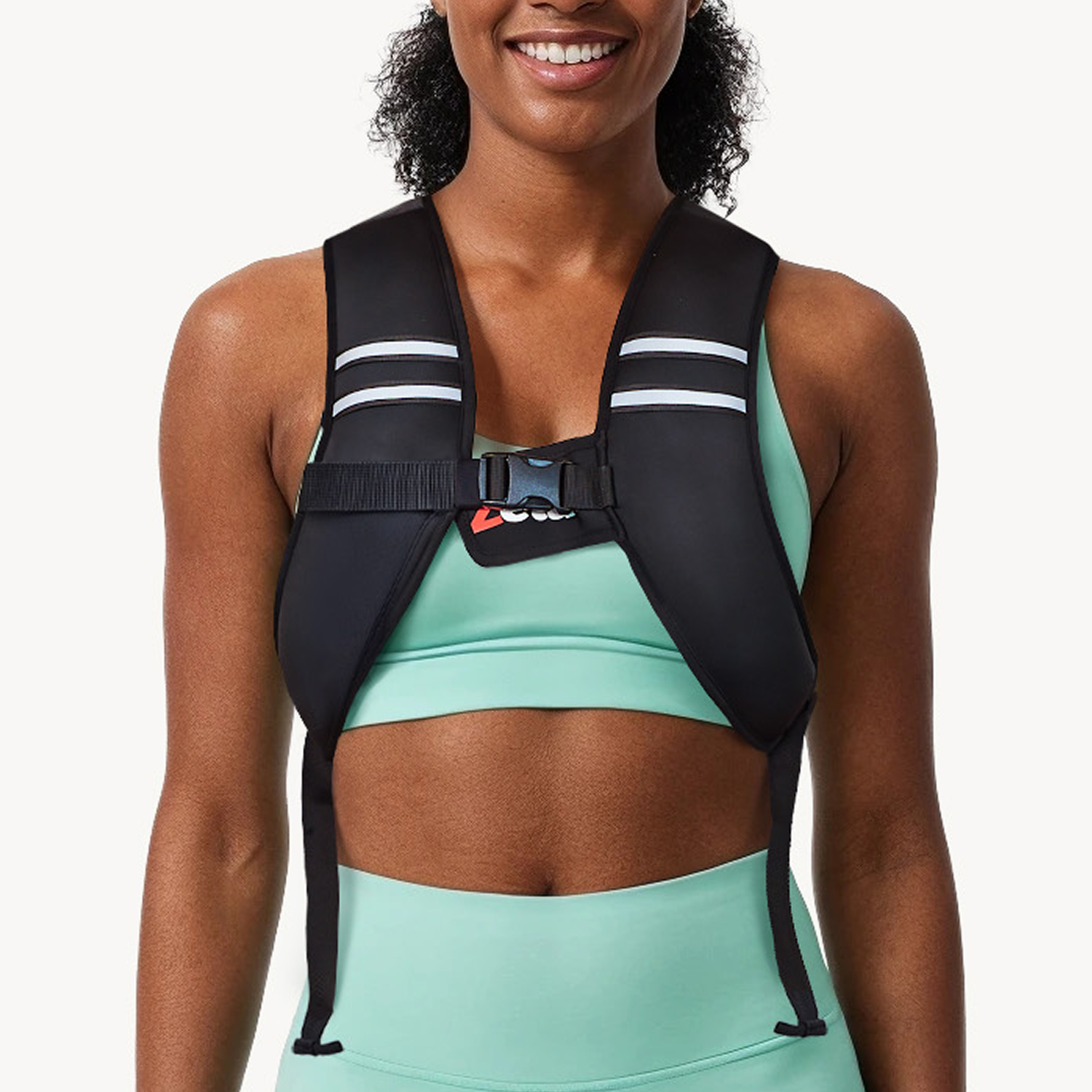
Is a 5 lb Weighted Vest Even Worth It? (Yes, here's the science)
If you are a beginner, a petite individual, or a woman navigating perimenopause and menopause, starting with a 5 lb weighted vest isn't just "enough"—it is a highly effective, science-backed sweet spot for your health.
You don't need a crushing amount of weight to fundamentally transform your skeletal health. According to a quantitative survey of 1,069 verified US-only weighted vest purchasers (61% Female, 39% Male, Average Age 41, including 40% mothers caring for minor children) conducted via post-purchase digital questionnaires between January 15 and February 1, 2026, a staggering 37% of users prioritize a weighted vest specifically to combat bone density loss.
Tracking these real-world fitness motivations and long-term usage habits reveals that a manageable 5 lb load provides the exact gentle, consistent axial stress your skeleton needs to spark mineral deposition and protect bone health without triggering joint pain.
Is a 5 lb Weighted Vest Enough? (The Surprising Truth About Light Weights)

A 5 lb weighted vest is more than enough to deliver powerful health transformations if you are a beginner, a petite individual, or recovering from an injury.
While advanced athletes or those seeking to build maximal muscle mass will eventually outgrow it, a 5 lb weighted vest represents the perfect, low-risk entry point to improve your posture, step up your daily calorie burn, and build a safer, sustainable foundation for long-term physical longevity.
When a 5-lb Vest is More Than Enough
Don't underestimate what adding 5 pounds to your upper torso can do. Because that weight sits directly over your shoulders and wraps around your chest, it loads your axial skeleton and impacts your body differently than holding a pair of light dumbbells.
1. Daily Walking & Cardiovascular Conditioning
If your main goal is to level up your daily steps, a 5 lb vest is excellent for adding slight resistance to neighborhood walks, stair climbing, or low-impact aerobics. It naturally forces your heart and lungs to work just a little bit harder, boosting your calorie burn and cardiovascular endurance without throwing off your natural walking gait or pounding your joints.
2. High-Rep Bodyweight Exercises (Calisthenics)
For conditioning workouts, form is everything. A 5 lb vest is perfect for slightly increasing the gravitational difficulty of push-ups, squats, pull-ups, and lunges. It forces your stabilizing muscles to fire without being so heavy that it causes your form to break down, protecting you from acute injury during high-volume sets.
3. Injury Rehabilitation & Physical Therapy
When you are recovering from an injury, safely reloading your joints and muscles is a delicate balancing act. A light vest provides just enough progressive stimulus to signal bone remodeling and muscle activation without overloading healing tissues. It's an exceptional tool for safely transitioning back into loaded movements.
4. Beginners, Posture Correction, and Core Deficits
If you are completely new to resistance training or have a weaker core, your stabilizing muscles need a mild challenge, not a crushing load. In my own 30-day vest experiment, I learned the hard way that jumping straight to a heavy vest causes terrible lower back strain. A 5 lb vest gently pulls your shoulders back, engaging your core and improving posture without compressing your spine.
When a 5-lb Vest is NOT Enough
While 5 pounds is a fantastic starting point for many, it does have its physical limitations. If your goals fall into the categories below, a 5 lb vest will quickly become obsolete.
1. Building Maximal Strength and Muscle Mass (Hypertrophy)
If your primary goal is to build significant muscle tissue or raw strength, a 5 lb vest simply cannot provide the mechanical tension required for progressive overload. To force a muscle to grow, you need to continually subject it to heavier loads over time. For strength goals, 5 pounds will rapidly turn into a purely cardiovascular challenge rather than a muscular one.
2. Larger Body Sizes or Advanced Athletes
In the fitness world, the gold standard recommendation for a weighted vest is to start with a load that equals 5% to 10% of your total body weight to achieve a noticeable training effect.
Weight is entirely relative to your size:
- If you weigh 100 to 110 lbs: A 5 lb vest represents about 5% of your body weight—making it an ideal, notice-the-difference baseline.
- If you weigh over 150 lbs: A 5 lb vest is less than 3.3% of your body weight.
- If you weigh 200 lbs: It is a mere 2.5%.
If you have a larger frame or are already highly active, your body is already accustomed to moving a significant amount of mass. A 5 lb vest will likely feel imperceptible on a walk and won't offer enough resistance to trigger major physiological changes like improved bone mineral density or muscle growth.
What the Research Says About Light Weights

When I first started looking into the clinical research surrounding weighted vests—especially their impact on women over 45, perimenopausal, and postmenopausal women—I discovered something highly encouraging: you do not need a massive amount of weight to see dramatic health benefits.
In one of the most prominent studies on postmenopausal bone density, women wore vests that averaged only around 11 lbs—and they only wore them three times a week for short durations. The control group saw a dramatic increase in bone mineral density and a significantly reduced risk of hip fractures.
According to Dr. Korsh Jafarnia, chief of Houston Methodist Orthopedics and Sports Medicine at Houston Methodist West Hospital, wearing a weighted vest during your workouts actively triggers bone formation while slowing down bone loss. Think of your skeletal system as a smart machine: when you safely stress it with extra weight, it signals your body to build stronger, denser bones. On the flip side, if you don't give your bones a physical challenge, they naturally begin to weaken over time.
For anyone worried about thinning bones, these two studies are a massive dose of hope. Way back in 2007, researchers discovered that just 12 weeks of vest-loaded exercise could put the brakes on bone loss for postmenopausal women. Fast forward to 2015, another study took women who already had osteopenia and put them through a six-month weighted vest routine. Guess what happened? They didn't just stop the damage—they actually achieved a significant increase in their bone mineral density. It just proves that it's never too late to start remodeling your strength!
If you are a petite person, someone recovering from an injury, or completely new to resistance training, 5 lbs provides a highly effective, safe baseline of skeletal strain to kickstart that exact same bone-remodeling process.
The Big Benefits of a 5 lb Weighted Vest
It is a common misconception in the fitness world that when it comes to weight, heavier is always better. We see influencers rucking with 30-pound tactical packs or athletes grinding through workouts in massive, bulky gear. In that context, a 5 lb weighted vest can look almost insignificant.
But don't let its modest size fool you. Placing just 5 pounds directly over your shoulders and wrapping it around your torso alters your center of gravity and applies a unique physical stimulus to your skeletal system.
If you are a beginner, a petite individual, or focused on long-term wellness, the health rewards of a 5 lb vest are incredibly profound.
Safely Stimulates Bone Density
For women over 45, perimenopausal, and postmenopausal individuals, protecting bone mineral density is a top health priority. Conditions like osteopenia and osteoporosis turn bones brittle, but your skeletal system responds beautifully to axial loading—meaning weight placed vertically over your spine and shoulders.
A 5 lb vest provides that exact vertical compression. It sends a gentle signal to your cells to initiate bone remodeling, helping to strengthen your hips and spine and reduce fracture risks, all without overloading fragile joints.
Does a Weighted Vest Improve Bone Density?
Combats Muscle Loss (Sarcopenia)
As we age, we naturally begin to lose lean muscle mass—a process called sarcopenia. This risk skyrockets if you are in a calorie deficit or losing weight quickly on GLP-1 medications like Ozempic or Wegovy.
When you wear a 5 lb vest during daily movement, you introduce a mild baseline of resistance. This constant, low-level muscular engagement tells your body to preserve its existing muscle tissue rather than burning it for fuel during weight loss.
Posture and Balance
Unlike holding a pair of dumbbells, which can pull your body forward and strain your lower back, a well-fitting weighted vest distributes weight evenly across your chest and upper back.
Does a Weighted Vest Improve Posture?
Best weighted vest for posture
- The standard posture habit: Many of us naturally slouch forward due to phone and computer use.
- The vest effect: Even just 5 pounds forces your upper back muscles to fire, naturally pulling your shoulders back and engaging your core. Over time, this builds the neurological pathways and muscular endurance needed for excellent, upright posture.
The Danger of Going Too Heavy, Too Fast
In my own 30-day weighted vest experiment, my biggest mistake was arrogance. I thought, "I have a strong core, let's buy a 30 lb vest!" It was a total disaster. I almost threw my shoulder out just putting it on, it completely ruined the joy of my daily walks, and it caused terrible lower back strain. I immediately had to return it.
It is infinitely better to wear a 5 lb vest consistently and enjoy it than to buy a 15 lb vest that sits in your closet because it hurts to wear.
A 5 lb vest is the perfect tool to prevent injury. It allows your joints, connective tissues, and lower back to adapt to carrying extra load without triggering chronic pain.
How to Know If 5 lbs is Right for You
Choosing the right starting weight can make or break your weighted vest experience. If you go too heavy, you risk injury and lower back strain; if you go too light, you won’t trigger the physiological changes you are looking for.
To determine if a 5 lb vest is the perfect match for your body and goals, run through this quick three-step checklist.
1. Check Your Body Weight (The 5% Rule)
In sports science and physical therapy, the golden rule for choosing a starting vest is to look for a load that represents roughly 5% of your total body weight. This provides enough resistance to stimulate your bones and muscles without altering your natural walking gait or posture.
- It’s right for you if: You weigh between 100 and 130 lbs. At this size, 5 lbs falls perfectly into that ideal 4% to 5% therapeutic window.
- It might be too light if: You weigh 150 lbs or more. At this threshold, a 5 lb vest is less than 3.3% of your body weight. Your body is already accustomed to carrying more mass, meaning 5 lbs will quickly feel imperceptible and won't offer a significant training effect.
2. Assess Your Current Fitness Level & Health Status
Weight isn't the only factor; your skeletal health, injury history, and baseline strength matter immensely. A 5 lb vest is uniquely suited for specific health profiles:
- The Fitness Beginner: If you are completely new to resistance training or haven't worked out in years, your core and stabilizing muscles need a gentle wake-up call, not a crushing weight.
- The Rehab Patient: If you are recovering from a lower back, knee, or hip injury, your joints need to be reloaded with extreme caution. A 5 lb vest provides a safe, low-impact way to reintroduce progressive overload.
- The Bone Density Focus: If you are a petite woman diagnosed with osteopenia or osteoporosis, jumping straight into heavy weights can be dangerous. A 5 lb vest safely applies that necessary vertical, axial load to your skeletal system to signal bone remodeling without risking injury.
3. Identify Your Primary Use Case
How and where do you plan to wear the vest? Your daily strategy will dictate whether 5 lbs is enough.
- Passive Wear (Around the House): If you want to wear your vest while brushing your teeth, doing the dishes, making coffee, or standing at a desk, 5 lbs is perfect. It is light enough that you can wear it for an hour or two passively without fatiguing your lower back or causing your posture to collapse.
- Active Workouts (Strength & Hypertrophy): If your primary goal is to make push-ups, pull-ups, and lunges drastically harder to build serious muscle mass, you will outgrow a 5 lb vest in a matter of weeks.
The Takeaway
If you are petite, a beginner, recovering from an injury, or looking for a comfortable vest to wear around the house, a 5 lb vest is absolutely right for you.
However, if you are a larger individual, already lift heavy weights, or want to build significant muscle, you should skip the fixed 5-pounder and invest in an adjustable vest that starts at 5 lbs but allows you to add weight increments as you get stronger.
Recommend Model

Based on everything we’ve discussed about finding the perfect fit, starting light, and maximizing comfort, the FWV-SX with Z-Fit™ Technology is highly recommended, especially if you are leaning toward starting with a 5 lb or 10 lb option.
1. The X-Shape is a Game-Changer for Women
Many traditional weighted vests feature a center-chest weight distribution that is incredibly uncomfortable for women because it squishes the breasts. The Z-Fit™ X-Shape design is specifically engineered to curve around your natural anatomy, sitting perfectly on your shoulders and torso without causing restrictive chest compression.
2. Premium Comfort & Zero Noise
Traditional canvas vests are often filled with loose steel shot or iron sand that shifts around, creating a distracting clanking noise with every step.
Z-Fit™ Series Explained: Why Silicone-Iron is a Game Changer
- Z-Fit™ Silicone-Iron Fill: The solid silicone-iron blend ensures the weight is completely fixed and evenly distributed.
- Soft Silicone Skin: With a 5-star comfort rating and a soft silicone exterior, this vest won’t chafe against your skin or ruin your clothing—whether you wear it over a tank top during CrossFit or over a robe while doing chores around the house.
3. Extremely Hygienic & Easy to Clean
One of the biggest pain points of fabric weighted vests is that they absorb sweat like a sponge and rapidly develop an odor. Because this vest is built with a Soft Silicone Skin, it won't trap sweat, self-tanner, or body oils. When it gets dirty, you don't have to worry about a complex washing cycle—a quick hand wash or rinse in the shower is all it takes to keep it perfectly clean.
How To Wash and Maintain Your Zelus Weighted Vest
4. Ideal Weight Range for Longevity
The available fixed weights (5 lb, 10 lb, and 15 lb) align perfectly with safe progression guidelines:
- If you are a beginner, petite, or focused on bone density/rehab, the 5 lb option is your perfect starting point.
- If you weigh over 150 lbs or already have a strong core, you can safely debut with the 10 lb option.

Before You Go…
Here are a few handpicked articles to inspire your next self-care moment.