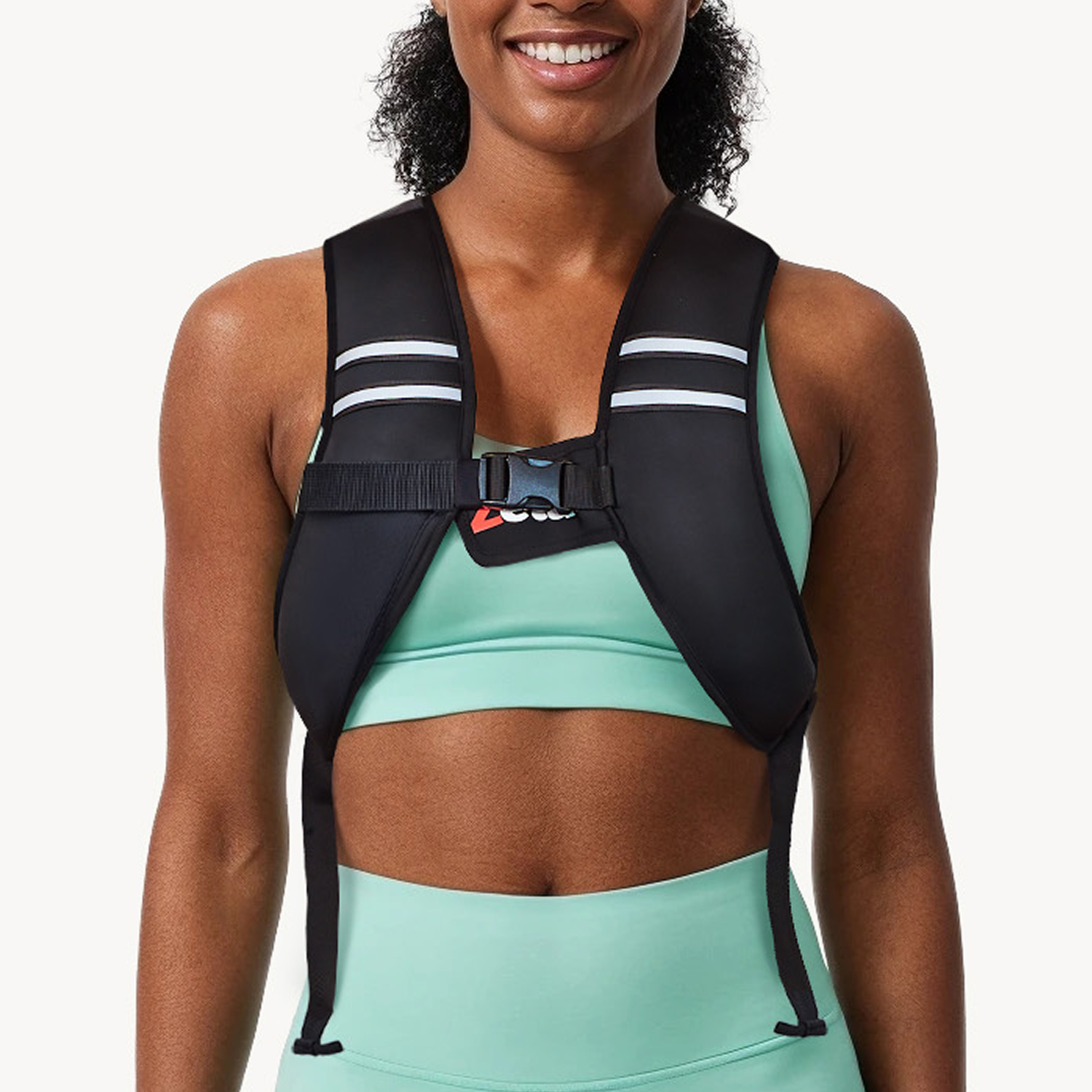
The Complete Women's Weighted Vest Guide (2026): Find Your Perfect Fit
Weighted vests are the ultimate cheat code for skyrocketing your calorie burn, building lean muscle, and boosting bone density. But let’s be honest—most vests on the market are designed for military tactical training, meaning they are bulky, bounce aggressively against your chest, and smell like a gym locker after one sweaty session.
Based on a 2026 survey of 1069 weighted vest purchasers conducted by Zelus, a staggering 48% of female users report experiencing suffocating chest tightness or severely restricted breathing when trying to strap down traditional, rigid vests tightly enough to prevent movement.
You need gear tailored to the female anatomy that moves with you, not against you. Whether you want to tone up during your morning walks, level up your home yoga sessions, or crush a high-intensity CrossFit WOD, here is the ultimate breakdown of the best women's weighted vests for every lifestyle and fitness level.
7 Best Zelus Weighted Vests Sculpted for Women
|
Best For |
Product |
Image |
Shape |
Weight Type |
Comfort |
Lifestyle |
|
Best for Ultimate Comfort |
 |
Flex / Body-fit |
Adjustable (10/15 lb) |
★★★★★ |
All-day wear, Yoga, Rucking |
|
|
Best for Low-Intensity Progress |
 |
U-Shape |
Adjustable (4–32 lb) |
★★★★☆ |
Progressive rucking & walking |
|
|
Best for Multi-Sport & Style |
 |
X-Shape |
Fixed (5/10/15 lb) |
★★★★★ |
CrossFit, Running, Fashion |
|
|
Best for HIIT & CrossFit |
 |
Y-Shape |
Adjustable (8–32 lb) |
★★★★★ |
Intense training, Zero noise |
|
|
Best Budget Daily Essential |
 |
U-Shape |
Fixed (6–20 lb) |
★★★☆☆ |
Light jogging, Daily walks |
|
|
Best for Beginners & Home Gyms |
 |
X-Shape |
Fixed (6–30 lb) |
★★★☆☆ |
Home workouts, 6 color choices |
|
|
Best for Hiking & Outdoors |
 |
Y-Shape |
Adjustable (4–32 lb) |
★★★☆☆ |
Trail hiking, Heavy load scaling |
Women's Weighted Vest for Daily Wellness & Body-Shaping Wear
Best for everyday lifestyle, light fitness, and prioritizing zero-bulk comfort.
FWV-SQ: Best Overall for Ultimate Comfort & Luxury Feel
Based on a 2026 survey of 1069 weighted vest purchasers conducted by Zelus, the silicone-iron model captures a distinct 10% of the weighted vest market—yet today's designs are missing the mark on comfort and style.

Users frequently report a frustrating trade-off: a bulky, overly noticeable profile that ruins any chance of discreet wear, a high risk of sweat-trapping bacterial buildup due to poor washability, and a tight, suffocating pressure directly across the chest.

No one wants a conspicuous, bulky vest that traps sweat bacteria and painfully compresses the chest. The FWV-SQ addresses these everyday frustrations with its premium Z-Fit™ Slim Soft Silicone Skin and sleek Silicone-Iron filling. This low-profile design eliminates chest pressure and contours beautifully as a discreet 'second skin'—ensuring absolute silence and zero bounce. To make maintenance completely hassle-free, it is 100% machine-washable, keeping your gear hygienic, odor-free, and ready for your next walk.
Here is the reddit user’s comments:
"I have had the Zelus weighted vest for a month now, and like it. I like the padding. I got used to the feeling of wearing it the more I used it. I would recommend it."
"For reference, I bought the zelus vest on amazon, and there are a bunch of other good options. It feels good, and doesn’t dig into me." - Comments from Reddit
- Best For: Smooth, distraction-free wear during daily errands, walks, and yoga.
- Specifications: Flex / Body-fit Shape | Adjustable (10 / 15 lb) | Machine Washable
Weighted Vest for Daily Activities: Does it Work?
FWV-VB: Best for Low-Intensity Progressive Training
The 2026 survey of 1069 weighted vest purchasers conducted by Zelus shows that the iron-sand model dominates the market, with 61% of weighted vest users selecting it as their primary choice.
Despite its popularity, consumers identified three critical areas requiring product optimization: upgraded odor control, expanded sizing options, and more balanced weight distribution.

Notably, the data reveals a strong consumer willingness to pay a premium for lightweight alternatives, advanced antimicrobial odor protection, and specialized cooling fabrics.
 The FWV-VB radically upgrades your workout experience by packing a massive 4 to 32 lb adjustable weight range into an advanced, perfectly distributed U-shape frame that eliminates shifting and pressure points.
We’ve integrated premium odor-control technology and ultra-breathable cooling fabric to keep you fresh, dry, and bacteria-free during intense summer hikes.
Available in an expanded range of sizes for a truly customized, no-chafing fit, this lightweight yet heavy-duty vest allows you to seamlessly add micro-loads as your stamina increases—saving you money while offering the ultimate premium comfort your body deserves.
Reviews by Ben Davies:
"As a veteran, I appreciate a good ruck. This vest is comfortable, sits high on the torso, and doesn't bounce. The weight adjustment is simple and secure. The vest was flexible and gave massive back and shoulder support. Encourage anybody to try it out." - Comments from Trustpiot
- Best For: Walkers and rucking enthusiasts who want a single investment that grows with their strength.
- Specifications: U-Shape | Adjustable (4 – 32 lb) | Breathable Fabric
FWV-UD: Best Budget-Friendly Daily Essential
If you are new to weighted training, you shouldn't have to fumble with complicated weight inserts or worry about where to stick your phone and keys during a walk. The FWV-UD features a classic U-Shape design that naturally bypasses the chest area to prevent uncomfortable crushing. With a fixed, ready-to-go weight and built-in storage pockets, it eliminates all pre-workout guesswork. It also features bright reflective strips, so you can head out for evening jogs completely worry-free.
- Best For: Beginners looking for an easy, grab-and-go walking and jogging companion.
- Specifications: U-Shape | Fixed (6 – 20 lb) | Breathable Fabric with Pockets
Women's Weighted Vest for Daily Fitness & Versatile Wear
Best for casual to mid-intensity training and seamless day-to-all-day wearability.
FWV-SX: Best for Multi-Sport Versatility & Aesthetics
Traditional weighted vests are often clunky and visually unappealing, making them impossible to style with your favorite activewear. The FWV-SX changes the game as the ultimate fashion-meets-function piece, offered in 8 gorgeous colors. Its streamlined X-Shape structure frees up your shoulders and chest entirely, allowing you to flow through yoga poses or transition into dynamic CrossFit movements without feeling restricted. Made with Z-Fit™ Slim silicone, it stays perfectly quiet and won't rub or chafe against your skin.
- Best For: Style-conscious fitness lovers shifting between cardio, studio classes, and daily wear.
- Specifications: X-Shape | Fixed (5 / 10 / 15 lb) | 8 Color Options | Zero Noise
FWV-ZD: Best for Beginners & Home Gyms
Fumbling with adjustable dumbbell plates during a fast-paced home workout video can completely break your momentum. The FWV-ZD offers a perfectly balanced X-Shape layout that evenly distributes 6 to 30 lb of fixed resistance across your core, taking the pressure off your lower back. Available in 6 vibrant colors and equipped with spacious pockets, it acts as your hands-free resistance partner whether you are working out in your living room or heading to a local park.
- Best For: Seamless home workouts, core conditioning, and outdoor bodyweight exercises.
- Specifications: X-Shape | Fixed (6 – 30 lb) | 6 Color Options | Built-in Pockets
Women's Weighted Vest for Active Training & Endurance
Best for progressive training, explosive movements, and heavy, adjustable loads.
FWV-SY: Best High-Performance Beast for HIIT & CrossFit
If you’ve ever tried doing burpees, box jumps, or sprints in a standard vest, you know the nightmare of the gear slapping against your collarbones and making loud, shifting noises. The FWV-SY stops the chaos with its specialized Y-Shape back and premium silicone lock-down fit. It remains 100% silent and entirely motionless, even during the most explosive movements. Capable of scaling up to 32 lb, it withstands elite training sessions and can be fully washed down afterward to eliminate stale sweat odors.
- Best For: Serious athletes crushing high-intensity interval training, heavy running, and CrossFit.
- Specifications: Y-Shape | Adjustable (8 – 32 lb) | Zero Noise | Water Washing
FWV-ZB: Best Heavy-Duty Vest for Hiking & Rugged Outdoors
When you are miles deep into a mountain trail, a poorly ventilated vest will cause overheating rapidly, and shifting weights can throw off your balance on uneven terrain. Built with heavy-duty, highly breathable fabric, the FWV-ZB is built to handle the elements. Its Y-Shape load-bearing design anchors up to 32 lb safely to your core, relieving your shoulders from fatigue. Handy storage pockets keep your energy gels and trail essentials easily accessible.
Check real user reviews from Trustpilt:
"I bought this to add some resistance to my weekend hikes. The weight distribution is perfect and it doesn't shift around. My calves are feeling it!"
Source: Trustpilot
- Best For: Rugged outdoor hiking, trail running, and long-distance endurance conditioning.
- Specifications: Y-Shape | Adjustable (4 – 32 lb) | Heavy-Duty Breathable Fabric
Recommended reading:
Hiking with a Weighted Vest: Pros and Cons
How to Choose a Women’s Weighted Vest

To get the most out of your training, you need gear tailored to the female anatomy that moves with you, not against you. Below, we break down exactly how to choose your perfect vest to find the exact model for your lifestyle.
Before diving into specific models, keep these five essential buying factors in mind to ensure you get a vest that feels like a natural extension of your body.
1. The Right Weight & Progression
- The 5% to 10% Rule: As a golden rule of thumb, your starting vest should weigh between 5% and 10% of your current body weight. For example, if you weigh 150 lbs, your ideal sweet spot is a 7.5 to 15 lb vest. Also Check: Zelus Weighted Vest Size Chart for Men and Women
- Fixed vs. Adjustable: Fixed-weight vests are fantastic for grab-and-go convenience. However, if your budget allows, prioritizing adjustable options over fixed ones lets you progress seamlessly as you build strength. Look for vests that offer micro-loading increments so you can scale up gradually without putting sudden, jarring stress on your joints.
Best Zelus Adjustable Weighted Vests for Women [Ultimate Guide]
2. Fit and Body Shape (The Female Anatomy Factor)
- Ergonomic Cuts (X, U, or Y-Shapes): Standard rectangular vests put uncomfortable, suffocating pressure on the chest and cause severe underarm chafing. Prioritize an ergonomic, female-specific cut that hugs your torso, follows your curves, and accommodates narrower shoulder frames.
- Anti-Bounce Security: A loose vest is a recipe for friction burns. Ensure your vest features highly adjustable straps or an elasticized body-fit design so you can cinch it down tightly against your core.
- Torso Length: If you have a shorter torso, look for cropped or high-cut styles. Vests that sit too low will bang against your hip bones or restrict your natural stride when walking or running.
Best Weighted Vest Sizes for Plus-Sized Women
Best Weighted Vests for Large-Busted Women
3. Materials, Comfort, and Maintenance
- Next-to-Skin Comfort: Look for padded shoulder straps to distribute the load evenly and prevent the vest from digging into your collarbones.
- Breathability: Heavy workouts generate serious heat. Opt for moisture-wicking fabrics, mesh panels, or premium non-porous silicone that won't absorb sweat.
- The Wash Test: Sweat and metal fillings do not mix well. Always check the maintenance profile—whether it’s an easy-wipe surface, hand-washable material, or a machine-washable fabric with removable weights.
Recommended reading: How To Wash and Maintain Your Zelus Weighted Vest
4. Activity Optimization
- Walking & Rucking: These low-impact, steady-state activities allow you to carry a bit more weight safely. Look for heavy-duty, core-centered designs.
- Running & Agility: Dynamic cardio requires low-profile, ultra-snug running vests that sit high on the chest—similar to a hydration pack—to eliminate vertical bounce.
- Cross-Training & Yoga: Look for soft, highly flexible fabrics and premium fillings (like silicone-iron) so you can bend, squat, twist, and plank naturally without being restricted by stiff, rigid plates.
4 Best Weighted Vest for Rucking: Zelus Top Picks
5. Features and Safety
- Storage & Visibility: Don't forget the practical details! Integrated zippered pockets keep your smartphone and keys secure, while 360-degree reflective strips keep you visible and safe during early morning or dusk outdoor sessions.
Medical Disclaimer: If you suffer from joint pain, existing osteoporosis, or lower back issues, always consult a healthcare provider or physical therapist before adding resistance to your routine.
How Long Should a Woman Wear a Weighted Vest?
For a woman starting out, the ideal duration to wear a weighted vest during low-impact activities like walking or rucking is 15 to 20 minutes, 2 to 3 times a week. Because your musculoskeletal system and joints need time to adapt to the added axial compression, treating the vest as a progressive workout rather than all-day clothing is crucial for preventing overuse injuries.
As your core, back, and lower body adapt over several weeks, you can gradually increase the wear time by 5-minute increments up to a maximum of 45 to 60 minutes per session.
Activity-Specific Guidelines
|
Activity |
Beginner |
Intermediate |
Advanced |
|
Walking / Daily Use |
10–15 min |
20–40 min |
45–60 min |
|
Running / HIIT |
5–10 min |
10–20 min |
20–30 min |
|
Strength Training / Bodyweight |
10–15 min |
20–40 min |
30–45 min |
|
Yoga / Pilates |
5–15 min |
15–30 min |
30–40 min |
|
Rucking / Hiking |
15–20 min |
30–60 min |
60+ min |
Unless specifically prescribed by a physical therapist for a condition like osteoporosis, it is generally discouraged to wear a weighted vest for multi-hour stretches or all day long, as prolonged loading can fatigue your postural muscles, leading to slumped mechanics, lower back strain, and excessive pressure on the pelvic floor.
How Long Should You Wear a Weighted Vest?
What Does Wearing a Weighted Vest Do for a Woman?

Adding a weighted vest to your walking routine—a practice known as rucking—instantly transforms a basic cardio session into a powerful, full-body workout designed to crush key female health goals.
The added vertical load provides crucial axial resistance that stimulates bone remodeling to ward off age-related bone thinning and osteoporosis, particularly in the vulnerable hip and lower spine areas.
Simultaneously, it acts as a hands-free metabolic accelerator that amplifies caloric burn and heart health without the joint-jarring impact of running, while forcing the deep core, glutes, and posterior chain to constantly engage—ultimately sculpting lean muscle, improving posture, and elevating overall physical stamina in a highly time-efficient manner.
1. Combats Age-Related Bone Thinning (Osteoporosis)
One of the most profound weighted vest benefits for women is structural. Due to hormonal shifts, women naturally face a higher risk of bone density loss and osteoporosis as they age. Walking with a weighted vest introduces safe, vertical axial loading. This downward gravity mimics resistance training, signaling cells called osteoblasts to lay down new bone minerals. By targeting the hip, femur, and lower spine—the areas most vulnerable to fractures—weighted walking acts as a powerful, non-pharmacological shield to maintain skeletal strength.
2. Accelerates Caloric Burn Without Joint-Jolting Cardio
Many women look to amplify their walking routines for weight management but want to avoid the high-impact joint stress of running, which can be tough on the knees and ankles. A weighted vest acts as a metabolic accelerator. By forcing your body to carry 5% to 10% more mass, your muscles must burn significantly more energy to move you forward. This elevates your heart rate into a steady fat-burning zone, turning a standard, comfortable walk into a high-yield caloric workout without the wear-and-tear of high-impact cardio.
Recommended reading: Does Walking With a Weighted Vest Burn More Calories?
3. Sculpts the "Posterior Chain" and Core
Rather than just building endurance, adding a vest transforms a walk into a functional strength session. To keep you upright under the added load, your posterior chain—specifically your glutes, hamstrings, and calves—must contract with much greater force. Simultaneously, your deep core, including your abdominals and lower back stabilizers (spinal erectors), must remain constantly engaged to keep you balanced. Over time, this naturally sculpts and tones the lower body while pulling your posture into better alignment.
Recommended reading:
Best Weighted Vests for Posture: Expert Guide & Reviews
Weighted Vest Core Strength: Benefits, Exercises & Workouts Guide
4. Preserves Lean Muscle Mass During Weight Loss
When women lose weight through traditional cardio and diet alone, a portion of that loss unfortunately comes from lean muscle tissue, which can inadvertently slow down the metabolism. The resistance provided by rucking signals to your body that your muscles are actively needed. This preserves—and can even build—lean muscle mass. A higher muscle-to-fat ratio boosts your resting metabolic rate, meaning your body burns more calories around the clock, even when you are resting.
5. Seamlessly Fits the Female Anatomy
While traditional weighted vests were bulky, boxy, and designed for military tactical training (often compressing the chest uncomfortably), modern women's vests are engineered for the female frame. Utilizing contoured X-shape, U-shape, or body-flex designs, they distribute weight evenly across the shoulders and core while completely bypassing and freeing up the chest area. This ensures women can reap all the cardiovascular and strength benefits of rucking with zero chafing, zero bounce, and total freedom of movement.
Who Should Avoid a Weighted Vest? The Hidden Structural Risks of the Rucking Fad
From social media feeds to local neighborhoods, weighted vests have officially taken over the fitness world. Championed by lifestyle influencers and wellness advocates as the ultimate "hack" for boosting calorie burn, toning muscle, and preserving bone density during perimenopause and menopause, these vests are everywhere.
However, exercise science and orthopedic experts are issuing a collective warning: Exercise is a prescription, and a weighted vest is not a one-size-fits-all tool.
Before you buy into the trend, it is critical to look past the hype. Here is a highly detailed, comprehensive breakdown of exactly who should avoid a weighted vest and why.
1. Underlying Medical Conditions
Strapping an external load onto your torso forces your internal organs and cardiovascular system to work under hyper-stressed conditions. If you manage any of the following medical profiles, a weighted vest presents hidden, dangerous risks:
- Heart Disease: When you carry extra weight, your muscles demand significantly more oxygenated blood. Your heart is forced to pump harder and faster to meet this demand, which can dangerously overwork a compromised cardiovascular system and trigger adverse cardiac events.
- High Blood Pressure (Hypertension): Carrying an unyielding, compressed load tightly against your chest and core restricts natural thoracic expansion. This artificial resistance can cause a sudden, sharp spike in blood pressure during exertion, putting undue stress on your blood vessels.
- Severe Osteoporosis: While light, progressive loading under medical supervision can stimulate bone growth, individuals with advanced, severe osteoporosis face a highly fragile skeletal structure. The abrupt, heavy gravitational impact of a weighted vest can compress weak vertebrae or overstress thinning hip bones, ironically increasing the risk of stress fractures instead of preventing them.
- Obesity: Living with obesity means your musculoskeletal system is already operating at or near its maximum safe weight-bearing baseline. Forcing your knees, hips, and lower back to accommodate additional artificial pounds compounds joint compression to a dangerous degree, rapidly inviting overuse injuries like shin splints, plantar fasciitis, and tendonitis.
- Balance Disorders & Vertigo: Your brain relies on your natural center of gravity to keep you upright. Adding a weighted vest alters your weight distribution, particularly if the vest shifts when you move. If you already suffer from poor balance, inner ear issues, or vertigo, a vest makes it incredibly easy to lose your footing, dramatically increasing your risk of a dangerous fall.
2. Chronic Joint and Bone Issues
Your joints act as natural shock absorbers. Adding external weight when these shock absorbers are already damaged accelerates wear-and-tear, breaking down tissue that cannot easily be replaced.
- Hip or Knee Arthritis: Walking with extra weight on arthritic joints directly destroys remaining joint cartilage. The constant, magnified grinding of bone-on-bone friction causes immediate inflammation, severe pain, and speeds up the timeline toward total joint degradation.
- Chronic Lower Back Pain & Herniated Discs: The human spine is comprised of delicate, fluid-filled discs designed to cushion movement. A weighted vest exerts continuous axial loading, effectively crushing these spinal discs together. For chronic back pain sufferers, this compression pinches nerves, triggers severe muscle spasms, and inflames surrounding ligaments.
- Neck Injuries & Cervical Strain: Weighted vests hang heavily from the shoulders. This downward pull strains the trapezius and cervical muscles, compressing the delicate nerves in the neck. If you have a history of whiplash, cervical disc herniation, or chronic neck tension, a vest will rapidly trigger tension headaches and radiating nerve pain.
- Recent Surgeries or Orthopedic Injuries: If you are recovering from a recent surgery or injury—whether it's an ankle sprain, knee arthroscopy, or abdominal surgery—your healing tissues are highly vulnerable. Your body lacks the stabilizing strength required to handle extra resistance, and overloading a healing joint can permanently compromise your recovery.
3. High-Risk Activities and Situations to Avoid
Even if you consider yourself completely healthy, wearing a weighted vest during the wrong type of movement can ruin your biomechanics and cause sudden injury.
- High-Impact Running & Jogging: When you run, the impact force traveling through your lower joints is roughly three to four times your body weight. Jogging with a weighted vest amplifies this force exponentially. It slams immense, unnatural shock waves directly into your knee cartilage and ankles, destroying your natural running gait.
- Dynamic Bending or Twisting Sports: Activities that require rapid changes of direction, rotational power, or sudden twisting—such as tennis, pickleball, golf, or dance—should never be performed with a weighted vest. The extra mass creates an uncontrollable centrifugal force, generating unhealthy joint torque that can easily tear ligaments like the ACL or severely strain your oblique muscles.
- Yoga, Pilates, or Deep Stretching: Yoga demands fluid movement, spinal flexibility, and frequent inversions (like down-dog or headstands). Wearing a rigid, heavy vest completely disrupts your equilibrium, restricts your lungs from expanding during deep breathing, and puts dangerous, localized strain on your neck and back when moving through deep extensions.
6 Reasons Your Weighted Vest Might Be Hurting Your Body
FAQs
Should you wear a weighted vest if you have scoliosis?
If you have scoliosis, you should not wear a weighted vest without first consulting your doctor or physical therapist, as unguided spinal loading can worsen your condition.
Because scoliosis involves an asymmetrical lateral curvature of the spine, adding axial weight can increase compressive forces on uneven spinal segments, potentially accelerating spinal misalignment, inducing muscle spasms, and causing severe localized pain.
However, under professional supervision, a highly customized, low-profile vest with balanced weight distribution may sometimes be integrated into specific physical therapy regimens to stimulate bone density and strengthen weak postural stabilizers.
What are the negatives of wearing a weighted vest?
The primary negatives of wearing a weighted vest revolve around increased joint compression, heightened risk of overuse injuries, and potential strain on your musculoskeletal system if the vest is too heavy or poorly fitted.
Added resistance multiplies the impact forces traveling through your spine, hips, knees, and ankles, which can trigger or exacerbate joint degeneration, shin splints, and lower back strain.
Furthermore, oversized or boxy designs can cause severe skin chafing, restrict natural lung expansion during heavy breathing, compress the breast tissue uncomfortably, and alter your natural biomechanics, leading to improper movement patterns that invite injury.
Should women wear a weighted vest when walking?
Yes, women can highly benefit from wearing a weighted vest when walking, as it is a low-impact, accessible way to amplify the health benefits of a standard walking routine. Walking with an ergonomic, female-specific vest increases cardiovascular demand and caloric burn without the high-impact joint stress associated with running.
This practice is exceptionally beneficial for women looking to combat age-related muscle loss and bone thinning, as the vertical resistance stimulates osteoblast activity to build bone density while simultaneously engaging the core, glutes, and postural muscles.
Benefits of Running With a Weight Vest: Pros and Cons Explained
How heavy should a weighted vest be for a female?
As a general rule of thumb, a female should start with a weighted vest that equals 5% to 10% of her total body weight—meaning a 150-pound woman should target a vest between 7.5 and 15 pounds.
For beginners, seniors, or those focusing on high-speed agility and running, staying closer to the lower 5% baseline ensures that your running gait and posture are not compromised.
Fitness enthusiasts engaging in low-impact walking, rucking, or progressive strength training can safely scale up to 10% or slightly more, ideally using an adjustable vest with micro-loading increments to give the joints time to adapt to the added stress.
What weighted vest is best for osteoporosis?
The best weighted vest for osteoporosis is an adjustable, cropped, or high-cut model that provides a secure, body-hugging fit to prevent bouncing while keeping the load centered over the spine and hips.
A premium model like the Zelus FWV-SQ Z-Fit™ Slim Flex is highly recommended because its soft silicone skin contours closely to a woman's frame, minimizing spinal friction, while its micro-loading adjustable weights allow women to start very light (avoiding sudden joint shock) and progress safely.
Vests designed with a shorter torso length are crucial for osteoporosis because they prevent the weights from knocking against the hips and throwing off balance, which could increase the risk of a fall.
Can I wear a weighted vest if I have a prolapse?
If you have a pelvic organ prolapse (POP), wearing a weighted vest is generally discouraged because adding extra weight increases intra-abdominal pressure, which can push down heavily on a compromised pelvic floor.
This heightened internal pressure can exacerbate prolapse symptoms, causing increased pelvic heaviness, pain, or further tissue descent during movement.
You should avoid weighted vests until you have been evaluated by a pelvic floor physical therapist, who can assess your deep core control and dictate whether your pelvic floor can safely handle increased axial resistance.
Does walking with a weighted vest help you lose weight?
Yes, walking with a weighted vest is highly effective for weight loss because it increases your metabolic rate and caloric expenditure during steady-state cardio.
What are the worst exercises for pelvic prolapse?
The worst exercises for pelvic organ prolapse are high-impact or heavy abdominal-straining movements that excessively increase intra-abdominal pressure and slam weight down onto the pelvic floor muscles. This includes running, jumping jacks, heavy barbell squats, leg presses, and high-impact HIIT movements like burpees or box jumps.
Additionally, direct abdominal crunches, sit-ups, double leg lifts, and heavy lifting while holding your breath (Valsalva maneuver) should be strictly avoided, as they forcefully push the pelvic organs downward against a weakened muscular support system.
What does walking with a weighted vest target?
Walking with a weighted vest targets your entire posterior chain and core musculature while demanding more from your cardiovascular system.
The added downward force forces your glutes, hamstrings, calves, and quadriceps to contract with more power to propel you forward, while your spinal erectors and abdominal muscles must actively engage to maintain an upright, stable posture.
It also heavily targets your stabilizing hip and ankle muscles, strengthening your overall balance mechanism and stimulating structural bone remodeling in the femur, hips, and lower spine.
What Muscles Does a Weighted Vest Work? Full Body Guide
Does walking with a weighted vest help the pelvic floor?
Walking with a weighted vest generally does not help a weak pelvic floor and can actually be counterproductive, as the added axial resistance increases intra-abdominal pressure that presses down on those muscles. If your pelvic floor is already unconditioned or hypertonic, the extra weight can overload its structural capacity, leading to issues like stress urinary incontinence or pelvic heaviness.
Is walking good for uterine prolapse?
Yes, flat and gentle walking is considered one of the best and safest cardiovascular exercises for women managing a uterine prolapse, provided it is kept at a low-to-moderate intensity. Because walking is a low-impact activity, it avoids the jarring downward gravitational shocks caused by running or jumping, allowing women to maintain cardiovascular fitness and circulation without overloading the pelvic floor.
Before You Go…
Here are a few handpicked articles to inspire your next self-care moment.