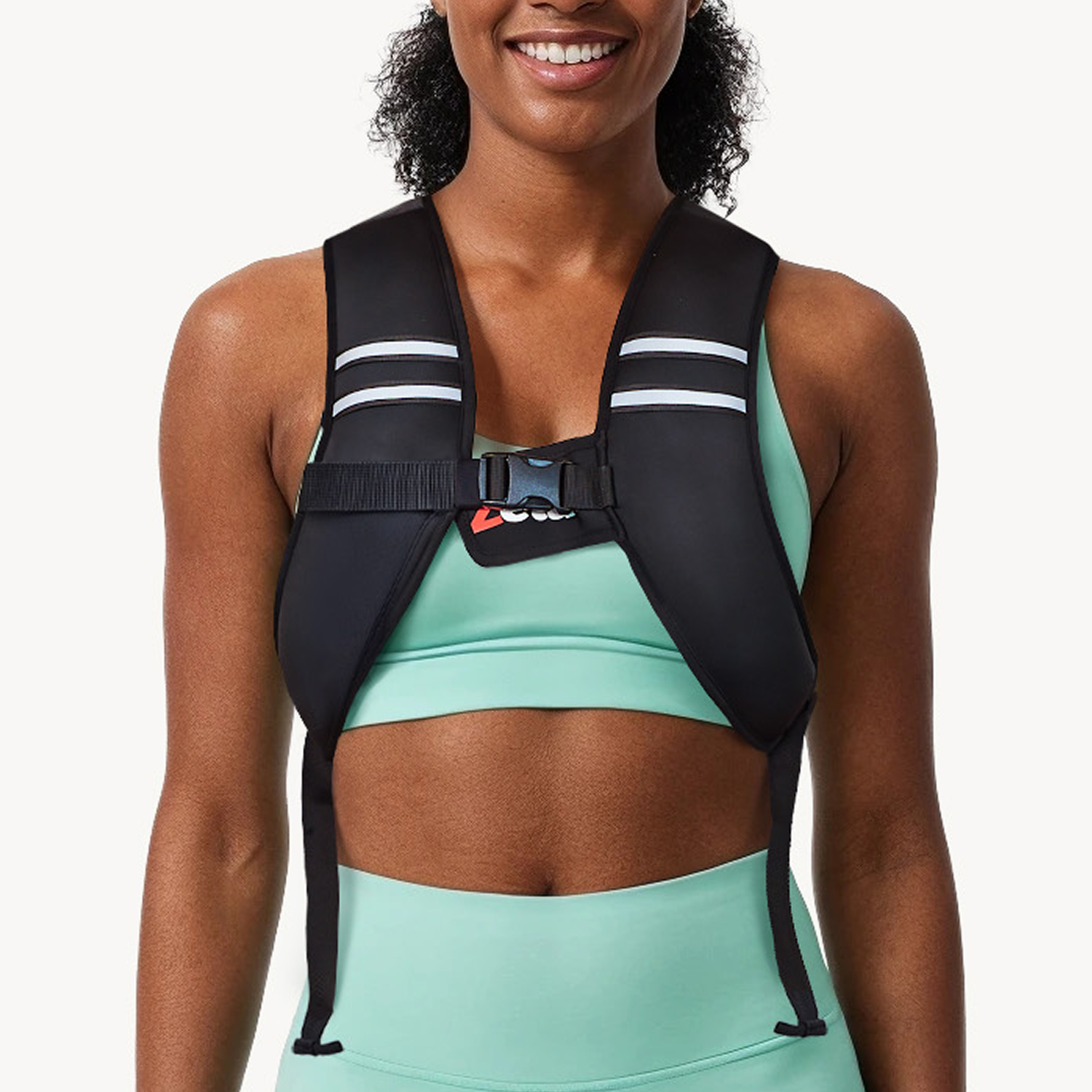
Fixed vs Adjustable Weighted Vests: Which One Should You Choose?
The weighted vest has surged across the fitness landscape, serving as a go-to tool for everyone from casual walkers looking to boost metabolic burn to CrossFit athletes. However, if you are investing in your very first vest, you will immediately face a critical crossroads: should you choose a fixed or an adjustable weighted vest first?
While fixed vests offer a streamlined, "plug-and-play" simplicity, adjustable vests provide the modular flexibility required to scale your workouts as you get stronger. Deciding which one to buy first isn't just about preference—it is a choice that directly shapes your training trajectory. In fact, according to the February 2026 Weighted Vest User Quantitative Research Report by Zelus, which surveyed 1,069 fitness enthusiasts, weight adjustability emerged as a top-tier priority, with approximately 33–34% of users identifying it as a critical factor in their training gear decisions.
In this guide, we will break down the pros, cons, and real-world performance of both styles, helping you match the right vest to your immediate fitness level, budget, and long-term training goals.
Fixed vs Adjustable Weighted Vests: Comparison Table
|
Feature |
Fixed Weighted Vest |
Adjustable Weighted Vest |
|
Image |
|
|
|
Model |
||
|
Weight Adjustment |
Permanent load |
Modular system |
|
Ease of Use |
⭐⭐⭐⭐⭐ (Put on and go) |
⭐⭐⭐ (Requires manual loading) |
|
Workout Flexibility |
⭐⭐ (Best for single-modality) |
⭐⭐⭐⭐⭐ (Adapts to any exercise) |
|
Comfort for Walking |
⭐⭐⭐⭐⭐ (Soft, contoured fit) |
⭐⭐⭐ (Can feel rigid or bulky) |
|
Strength Training |
⭐⭐ (Hard to scale resistance) |
⭐⭐⭐⭐⭐ (Perfect for progressive overload) |
|
Beginner-Friendly |
Excellent |
Moderate learning curve |
|
Long-Term Progression |
Limited |
Excellent |
|
Price Point |
Budget-friendly |
Premium investment |
What Is a Fixed Weighted Vest?

A fixed weighted vest is a vest with a built-in weight that cannot be changed. The weight is permanently distributed throughout the vest, allowing users to put it on and start training immediately without adjusting plates or inserts.
Fixed weighted vests are commonly available in weights such as 5 lb, 10 lb, 15 lb, and 20 lb. They are often designed with compact shapes and comfortable materials to support everyday workouts.
Fixed weighted vests add resistance by increasing the amount of weight your body carries during movement. This extra load forces your muscles to work harder during activities such as walking, jogging, stair climbing, and strength exercises.
Because the weight is evenly distributed, fixed vests can feel natural during repetitive movements. This makes them a popular choice for beginners and people who want a simple way to add intensity to their workouts.

Real Users Say:
“Great value for the money. I have no complaints. I don’t like to workout much, so this is a great addition to me walking. I like that it snaps closed versus a Velcro closure. It is versatile because it can be worn under a coat, although I got some stares in the store because it looks like I’m wearing a bomb vest. It looks nice enough to wear on the outside of clothes when hiking or walking. My husband has been using it more than me, so I will have to get him his own.”
Benefits of Fixed Weighted Vests
Easy to Use
One of the biggest advantages of a fixed weighted vest is convenience. There is no need to add or remove weights before training. Simply wear the vest, adjust the straps, and begin your workout.
This makes fixed vests ideal for daily activities such as walking, outdoor training, and quick home workouts.
Comfortable for Cardio Workouts
Fixed weighted vests usually have a streamlined design that reduces movement restrictions. For activities like walking, light jogging, or aerobic workouts, a fixed vest can provide consistent resistance without requiring frequent adjustments.
Great for Beginners
For people new to weighted training, a fixed vest offers a simple introduction. Starting with a lighter vest, such as 5–10 lb, allows beginners to improve endurance and build strength gradually without worrying about complicated settings.
Limitations of Fixed Weighted Vests
- No Room for Progression: The main disadvantage of a fixed weighted vest is limited flexibility. Since the weight cannot be changed, users may need to purchase another vest as their fitness level improves. For example, someone who starts with a 10 lb vest may eventually need a heavier vest to continue increasing resistance.
- Lack of Exercise Versatility: A weight that feels challenging for a pull-up might be completely unnoticeable during a squat, leaving you compromised on one exercise or the other.
What Is an Adjustable Weighted Vest?

An adjustable weighted vest allows users to modify the amount of resistance by adding or removing weight plates, blocks, or inserts.
Unlike fixed vests, adjustable models are designed to support progressive training. Users can start with a lighter load and gradually increase weight as their strength and endurance improve.
Adjustable weighted vests typically use removable weight systems. Depending on the design, users can add plates to the front, back, or sides of the vest to customize the total load.
This flexibility makes adjustable vests popular among athletes, strength trainers, and people who use weighted vests for challenging workouts.

Real User Say:
“I do a lot of walking and was looking for a way to increase its intensity. At first I tried adding weight to a backpack. Although it worked, the straps were hard on my shoulders. So, I started looking at rucking packs but found them to be very expensive. Finally, I decided to check out a weighted vest. I'm so glad that I did! Whereas the weighted backpack puts all of the weight on the back, the weighted vest distributes the weight very more evenly. I noticed right away less pain in my shoulders in carrying a weighted vest as opposed to a backpack. The adjustment straps on this vest are a little clunky. They don't cinch up easily, but they do work. At first I felt disappointed that I only bought a 20 lb vest because it didn't feel heavy enough. However, after pulling a few hills I discovered that I was wrong. Twenty pounds gives a very nice workout. I also like that it has reflective material because I often walk before it gets light. I've only used it a week. I will update after more use.”
Benefits of Adjustable Weighted Vests
Supports Progressive Overload
Progressive overload is an important principle for improving strength and endurance. Adjustable weighted vests allow users to gradually increase resistance instead of purchasing multiple vests.
For example, you can start with 10 lb for walking workouts and later increase to 20 lb or more for strength training.
More Versatile for Different Workouts
An adjustable vest can adapt to different activities. A lighter setting may work well for cardio, while a heavier setting can provide more challenge for:
- Push-ups
- Pull-ups
- Squats
- Lunges
- Hiking
- Rucking
This makes adjustable vests a good option for people who want one product for multiple training goals.
Better for Advanced Training
Experienced athletes often prefer adjustable weighted vests because they can customize resistance based on workout intensity.
For example, a user may choose a lighter load for endurance training and a heavier load for strength-focused sessions.
Limitations of Adjustable Weighted Vests
- The biggest drawback of adjustable weighted vests is that they can require more setup. Changing weight plates takes extra time compared with simply wearing a fixed vest.
- Some adjustable models may also feel bulkier, especially when loaded with heavier plates.
Fixed vs Adjustable Weighted Vests: Key Differences
Weight Adjustment
The biggest difference between the two types is weight flexibility.
Fixed weighted vests come with a predetermined weight. This makes them simple but limits customization.
Adjustable weighted vests allow users to control resistance based on their workout goals. This makes them better for long-term training progression.
Comfort and Mobility
Fixed weighted vests often provide excellent comfort because the weight distribution remains consistent. They are especially suitable for walking, light cardio, and everyday fitness.
Adjustable weighted vests can provide great comfort when properly fitted, but heavier loads may feel more noticeable during movement.
Training Flexibility
If you mainly perform one type of workout, a fixed vest may be enough.
However, if you participate in multiple activities and want to gradually increase resistance, an adjustable vest offers more options.
Fixed vs Adjustable Weighted Vest for Different Workouts
|
Workout Type |
Fixed Weighted Vest Performance |
Adjustable Weighted Vest Performance |
Best Choice |
|
Walking & Everyday Fitness |
Excellent. Slim, body-hugging design requires zero prep. Distributes weight evenly for a natural walking gait. |
Moderate. Can feel overly rigid or bulky for casual daily wear or long, low-intensity walks. |
Fixed Weighted Vest |
|
Running & Cardio Training |
Good. Compact and form-fitting, which minimizes the "bounce factor" and reduces skin chafing during high-movement cardio. |
Fair. Heavy metal plates or blocks can shift or bounce during high-velocity impacts unless perfectly strapped down. |
Fixed Weighted Vest (Kept under 5–10% of body weight) |
|
Strength Training & Calisthenics |
Poor. Severe limitations for progressive growth. A fixed weight cannot scale to match different movements (e.g., pull-ups vs. squats). |
Excellent. Built for progressive overload. Allows you to precisely dial in heavy resistance for squats and scale back for push-ups. |
Adjustable Weighted Vest |
|
Hiking & Rucking |
Good. Ideal for casual, recreational hikers who want a simple, set-and-forget conditioning boost on shorter trails. |
Excellent. The premier choice for serious ruckers who want to systematically add small weight increments week over week. |
Adjustable Weighted Vest (For progression) |
Walking and Everyday Fitness
For walking workouts, many users prefer fixed weighted vests. They are easy to wear, comfortable, and require no preparation.
A lightweight fixed vest can increase workout intensity while still allowing natural movement.
For beginners, experts often recommend starting with around 5–10% of body weight and increasing gradually.
Does Walking With a Weighted Vest Burn More Calories?
Running and Cardio Training
When performing cardio exercises, comfort and stability are important.
A fixed weighted vest may be a better choice for shorter cardio sessions because the weight remains consistent and the design is often more compact.
However, runners should choose lighter weights to reduce unnecessary stress on joints.
Strength Training
For strength-focused workouts, adjustable weighted vests usually provide more benefits.
Exercises like push-ups, pull-ups, and squats become more challenging as additional weight is added. The ability to increase resistance makes adjustable vests better suited for muscle endurance and strength development.
Hiking and Rucking
Both types can work well for hiking and rucking.
A fixed vest is convenient for casual hikes, while an adjustable vest is better for people who want to gradually increase their carrying weight over time.
Hiking with a Weighted Vest: Pros and Cons
Which Weighted Vest Is Better for Beginners?
For beginners, a fixed weighted vest is often the easiest option. New users can focus on learning proper movement patterns, improving endurance, and building consistency without worrying about adjusting weights.
A good beginner approach is:
- Start with a lighter weight
- Use the vest during walking or basic workouts
- Increase intensity gradually
- Focus on comfort and proper fit
Once users become more experienced, an adjustable vest may provide more training opportunities.
A Simple Guide to Buying Your First Weighted Vest
Which Weighted Vest Should You Buy?
Choosing the right weighted vest depends on your training goals, preferred activities, and how much flexibility you need from your equipment. Both fixed and adjustable weighted vests offer effective resistance training, but each design is better suited for different workout styles.
|
MODEL |
||
|
IMAGE |
|
|
|
WEIGHT TYPE |
Fixed |
Adjustable |
|
SERIES |
Classic X-Shape |
Classic + U-Shape |
|
RECOMMENDED SPORTS |
Beginner · Home Gym · Outdoor |
Walking · Rucking · Yoga |
|
WORKOUT INTENSITY |
💪💪💪 |
💪💪💪 |
|
COMFORT |
★★★☆☆ |
★★★★☆ |
|
SHAPE |
X-Shape |
U-Shape |
|
WEIGHT RANGE |
6 – 30 lb |
4 – 32 lb |
|
FILL MATERIAL |
Iron Sand |
Iron Sand |
|
BUILD MATERIAL |
Breathable Fabric |
Breathable Fabric |
|
NOISE LEVEL |
Low |
Low |
|
COLORS |
6 colors |
1 (Black) |
|
REFLECTIVE STRIPS |
Yes |
Yes |
|
Cleaning Choice |
Wipe |
Wipe |
|
POCKETS / STORAGE |
Yes |
Yes |
Choose the FWV-ZD Fixed Weighted Vest If You:
- Want a simple, ready-to-use weighted vest with no weight adjustments
- Are new to weighted training and want an easy way to get started
- Mainly perform walking, yoga, cardio, or light home workouts
- Prefer a lightweight, compact design for everyday fitness
- Value convenience and want to start training immediately
The FWV-ZD Fixed Weighted Vest is ideal for beginners and everyday athletes who want consistent resistance without the need to change weights.
Choose the FWV-VB Adjustable Weighted Vest If You:
- Want to increase resistance as your fitness level improves
- Perform strength training, rucking, or higher-intensity workouts
- Need one vest that adapts to different exercises
- Want more control over workout difficulty and progression
- Prefer a more versatile option for long-term training
The FWV-VB Adjustable Weighted Vest is designed for users who want flexibility, allowing them to customize resistance for different workouts and training stages.
Final Verdict
Both fixed and adjustable weighted vests can improve your workouts, but they serve different purposes. A fixed weighted vest is ideal for beginners, walking, cardio, and users who value convenience. It provides a simple way to add resistance without extra adjustments. An adjustable weighted vest is better for experienced users who want flexibility, progressive overload, and a vest that can adapt to different training goals.
If you are just starting weighted training, a fixed vest may be the best choice. If you want a long-term training tool that grows with your fitness level, an adjustable weighted vest is likely the better investment.
FAQ
Are fixed weighted vests better than adjustable weighted vests?
Neither is objectively better; it depends on your application. Fixed vests are superior for long, steady cardio, running, and casual walking due to their streamlined comfort and zero bounce. Adjustable vests are superior for strength training and calisthenics because they allow you to change the resistance to match different exercises.
Can you build muscle with a fixed weighted vest?
Yes, but only to a point. A fixed vest will help beginners build initial muscle endurance and strength. However, because you cannot increase the weight once your body adapts, your muscle growth will eventually plateau due to the lack of progressive overload options.
What Muscles Does a Weighted Vest Work? Full Body Guide
What weight should a beginner start with for a weighted vest?
A beginner should start with a vest that weighs roughly 5% to 10% of their current body weight. For a 160 lb individual, a 10 lb vest is an ideal starting point. Starting too heavy can cause excessive joint strain on your knees, ankles, and lower back.
What Weighted Vest Should I Get
Is an adjustable weighted vest worth it?
Yes, if you plan on training consistently over the long term. While they cost more initially, an adjustable vest scales with your strength gains and replaces the need to purchase three or four separate fixed vests as you get stronger.
Can you run with an adjustable weighted vest?
Yes, but you need to ensure a secure fit. Look for adjustable vests that use tight tactical plate designs or heavy-duty compression straps. If the vest has loose weight pockets, running will cause the internal weights to bounce around, which can lead to severe skin chafing and altered running mechanics.
Benefits of Running With a Weight Vest: Pros and Cons Explained
Before You Go…
Here are a few handpicked articles to inspire your next self-care moment.