The Heavy-Lifter's Guide to Weighted Vests: 30, 45, & 60 lbs Compared
Based on a 2026 survey of 1069 weighted vest purchasers conducted by Zelus, heavy-duty training demands are undergoing a critical shift. The data shows that 63–65% of advanced users leverage vests for rigorous strength training, while 33–38% push heavy payloads during intense hiking or rucking events. Standard, off-the-shelf light vests simply cannot survive these high-strain training loads.
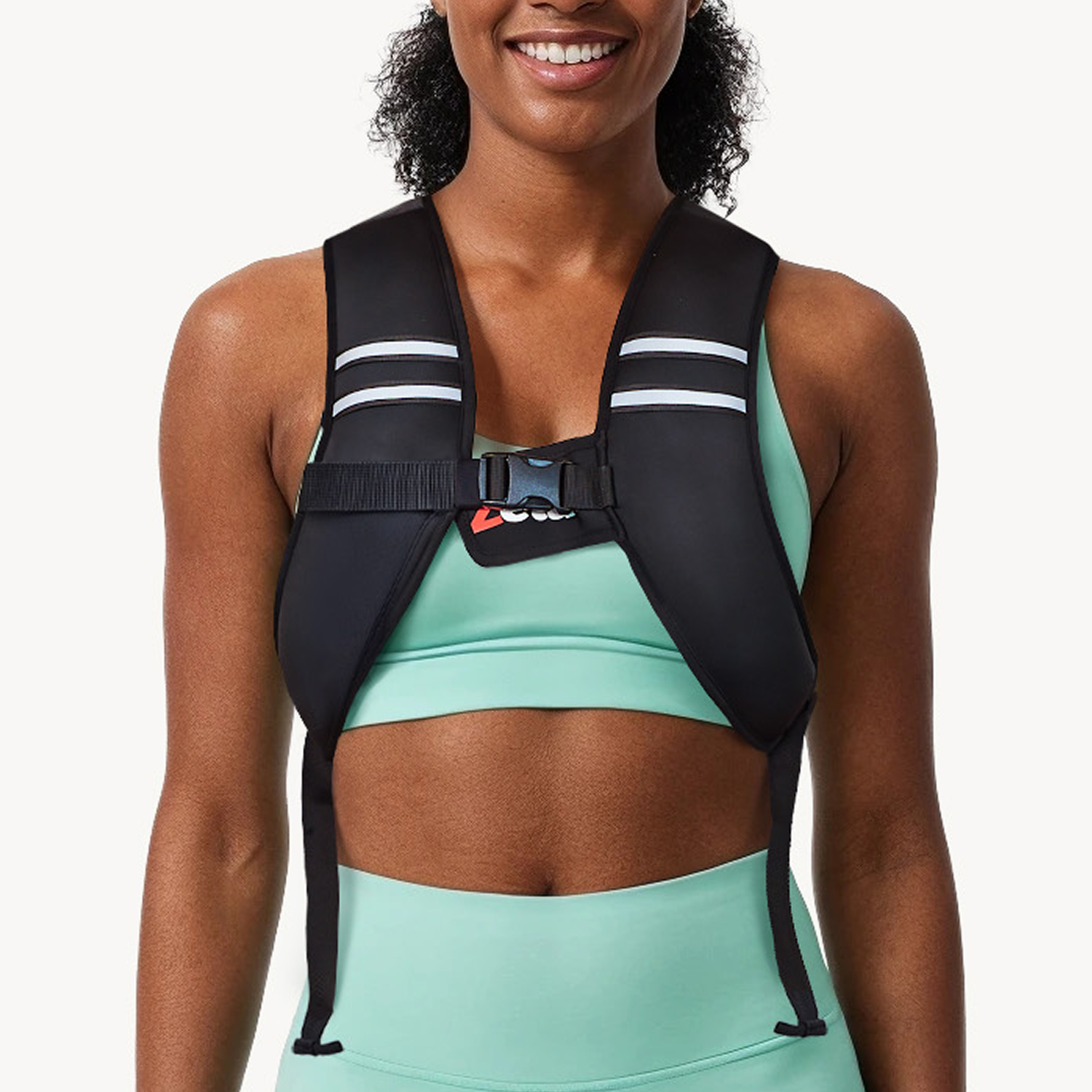
For the dedicated male lifter or tactical athlete, purchasing the wrong equipment is not just an efficiency loss—it is an injury risk. To address these specific needs, Zelus has designed three specialized, heavy-duty weighted vests for men. Each model is anatomically tailored to eliminate shifting, breathing restrictions, and fabric degradation under extreme workloads.
Which Heavy Weighted Vest Fits Your Training Style?

A 2026 survey of 1069 weighted vest purchasers conducted by Zelus highlights 67–75% of dissatisfied users singling out "poor wear comfort, difficult adjustments, and severe shifting during movement" as their primary complaints.
Weighted vest users believe the main areas for improvement are more even weight distribution, more size options, and better adjustability design.
They are willing to pay a premium for cooling (breathable/temperature-regulating) fabric, and are willing to pay more than a 50% price premium for it.

Specifically, in high-intensity strength environments, rigid weight distributions alter the body's natural center of gravity for 29% of athletes, while 19% report severe chest compression and clavicle bruising. Furthermore, 22% of runners suffer from rapid weight bouncing that leads to painful friction and skin chafing.
Based on these data, Zelus has developed three specialized heavy-duty weighted vests. Each model is anatomically engineered to solve specific shifting, bruising, and ventilation issues highlighted by high-intensity male athletes in the 2026 market study.
|
Feature |
FWV-HT (Performance) |
FWV-AB (Classic + Y-Heavy) |
FWV-SD (Z-Fit™ + Flex Heavy) |
|
Image |
|
|
Not Released. |
|
Primary Purpose |
Tactical & Pro Performance |
Heavy Strength & Rucking |
Tactical Iron Armor |
|
Weight Range |
23 / 36 / 45 lb |
20 / 30 / 60 lb |
20 / 32 / 40 lb |
|
Fill Material |
Solid Iron Block |
Iron Sand (removable bags) |
Z-Fit™ Silicone-Iron |
|
Build Material |
900D Oxford Fabric + Foam |
600D Oxford Fabric + Foam |
Soft Silicone Skin |
|
Shape / Fit |
Y-Shape |
Y-Shape |
Flex / Body-fit |
|
Workout Intensity |
💪💪💪💪💪 |
💪💪💪💪💪 |
💪💪💪💪 |
|
Comfort Rating |
★★★☆☆ |
★★☆☆☆ |
★★★★☆ |
|
Noise Level |
Low |
Low |
Zero |
|
Storage Pockets |
No |
No |
Yes |
FWV-HT: The Tactical Operator

If you love Murph workouts, high-rep pull-ups, and functional fitness metrics, the FWV-HT Performance is designed like a mission-grade tactical plate carrier. Built from ultra-rugged 900D Oxford fabric, this vest is highly resistant to tears and abrasions when dropping to the floor for burpees.
The Weight System: It utilizes modular, adjustable Solid Iron Blocks reaching up to 45 lbs. Because the weight is solid block iron, it thin-profiles against your torso, keeping your center of gravity tight.
The Fit: The classic Y-shape leaves your shoulders completely free for overhead mobility, though the stiff tactical build means a slight sacrifice in pure skin comfort (rated ★★★☆☆).
Who It’s Engineered For
- CrossFit Competitors
Specifically engineered to handle grueling, high-rep Hero WODs like "Murph" without getting in the way of your movement.
- Tactical & Military Prep
Built with military-grade 900D Oxford fabric, making it the perfect choice for service members, first responders, or candidates looking to simulate the real-world load of body armor.
- Calisthenics & Gymnastics Lifters
Because the solid iron blocks offer a very thin, flat profile, this vest stays locked close to your torso. It is ideal for athletes performing high-volume pull-ups, muscle-ups, bar dips, and burpees where a bulky vest would otherwise hit the bar or floor.
FWV-AB "Classic + Y-Heavy": The Absolute Powerhouse

For the pure rucker and strength athlete who believes "heavy is an understatement," the FWV-AB is the undisputed heavy-loader of the group. Pushing up to a massive 60 lb load, this vest is built to test your structural spine strength and leg endurance.
The Weight System: It uses removable Iron Sand bags. Sand contours decently to the body under massive weight, but at 60 lbs, it makes for a bulky profile.
The Trade-off: To handle this level of heavy load, the vest uses thick padding and a rigid Y-shape frame. It has the lowest comfort rating (★★☆☆☆) due to its sheer bulk, but if your goal is heavy progressive overload on long walks or step-ups, nothing else matches its capacity.
Who It’s Engineered For
- Heavy Rucking Enthusiasts
If your primary training revolves around long-distance ruck marching, steep hill climbs, or weighted step-ups, the massive 60 lb capacity makes this an absolute powerhouse.
- Leg & Core Strength Builders
Ideal for lifters looking to apply serious progressive overload to lower-body movements like squats, lunges, and calf raises without loading a barbell onto their spine.
- The "Weight Over Comfort" Grinder
This vest is not built for agility—it has a lower comfort rating (★★☆☆☆) due to the bulk of the iron sandbags. However, if you are a seasoned lifter who doesn't mind a rugged, stiff fit in exchange for pure, unadulterated heavy load, this is your match.
FWV-SD "Z-Fit™ + Flex Heavy": The Ergonomic Armor
If you despise the rigid, boxy feeling of traditional weight vests, the FWV-SD introduces a massive upgrade in dynamic movement. Instead of canvas and cordura, it features a Soft Silicone Skin that wraps around your body like a second layer of muscle.
The Weight System: It uses an innovative Z-Fit™ Silicone-Iron blend. This material flexes with your chest as you breathe and move, entirely eliminating the bouncing and shifting common with iron blocks or sandbags.
The Stealth Factor: This is the only vest in the lineup with Zero noise level—meaning no sand shifting or metal clicking while you run. It also includes integrated storage pockets for your phone or keys and boasts the highest comfort score (★★★★☆), making it perfect for dynamic HIIT and high-movement CrossFit training up to 40 lbs.
Who It’s Engineered For
- HIIT & Sprint Runners
Featuring the innovative Z-Fit™ silicone-iron blend, this vest boasts Zero Noise and dynamic flexibility. It is perfect for athletes doing explosive box jumps, agility ladders, and high-velocity sprints where bouncing and metal clicking are highly annoying.
- Athletes Defeated by Chafing
If you have sensitive skin, low body fat, or have previously been bruised by rigid canvas vests, the Soft Silicone Skin wraps like a second layer of muscle. It expands and contracts with your chest as you breathe heavily.
- Outdoor & Urban Trainees
As the only model equipped with integrated storage pockets, it is tailored for people who exercise in public parks or streets and need a secure place to tuck away their phone, keys, or ID without wearing an extra belt.
- The Busy Professional (Office & Commute)
For the 9-to-5 worker trying to maximize limited free time, this vest is incredibly low-maintenance. The sleek silicone exterior won't absorb sweat or odor like traditional fabrics, meaning you can easily wipe it down with a damp cloth at your desk after a quick lunchtime workout and pack it away without making your office bag smell.
- Weighted Yoga & Mobility Practitioners
Traditional bulky vests get in the way during complex movements, but the form-fitting, flexible chassis of the FWV-SD moves with you. It is perfect for adding a subtle, evenly distributed load to deep squats, lunges, isometric holds, or core-heavy yoga flows without restricting your range of motion.
- The Quiet Gym or Shared-Space Trainer
If you train in a packed commercial gym, a quiet hotel fitness center, or at home while your family is sleeping, the Zero Noise factor is a game-changer. There are no clinking metal plates or shifting sandbags, letting you get an intense workout in total stealth mode without drawing unwanted attention.
Maintenance Pro-Tip
All three models are rated for machine washing. However, always remove the weight fill (iron blocks, sand packets, or silicone-iron plates) before throwing the fabric or silicone chassis into the wash cycle. Hang dry to preserve the stitching integrity under heavy load capacity.
Recommended reading: How To Wash and Maintain Your Zelus Weighted Vest
How Much Weight Do You Actually Need?

For weight loss and general health, 10 to 20 lbs is usually the sweet spot. A general rule of thumb for fitness and cardiovascular health is to train with a vest that weighs roughly 10% of your total body weight. If you weigh 180 lbs, an 18 lb vest is ideal.
What Size Weighted Vest Should I Get
Zelus Weighted Vest Size Chart for Men and Women
Based on your goals
- 10 to 20 lbs (The Health & Fat Loss Zone)
Zelus' market report confirms that Weight Loss and Body Sculpting represents the single largest market demographic, driving 62% of all weighted vest purchases. For these users, a 10 to 20 lb load is ideal. It delivers excellent progressive overload for the three most common sports activities identified in the study: running (65–67%), strength training (63–65%), and high-frequency walking or dog walking (77–93%).
- 40 to 50 lbs (The Heavy Strength & Rucking Zone)
Jumping straight to a 40 or 50 lb vest is not recommended for someone trying to stay healthy and lose weight. Unless you are a seasoned strength athlete or specifically training for heavy military rucking (comprise just 4% of the total market), a 50 lb vest can cause severe lower back fatigue, compress your spine, and strain your knees. Furthermore, it will not "bulk you up like crazy" on its own, but it will make simple movement incredibly exhausting and potentially unsafe for beginners.
If your goal is general health, mobility, and sustainable fat loss, look for an adjustable vest with a maximum capacity of 20 to 30 lbs. Start by loading it to just 8 or 10 lbs. As your walks feel easier and your stamina increases, slide a few more weight packets into the vest to introduce safe, progressive overload. Leave the 50 lb vests to the heavy-lifters—your joints will thank you!
Buyer Beware: Crucial Advice for Heavy-Base Trainees
Many men who begin a weight-loss journey already carry a high structural body mass, making the selection of an aggressive vest a recipe for joint damage. The 2026 data reveals a critical demographic reality: while roughly 50% of the overall weighted vest market exhibits a normal BMI, 35% of the heavy-lifting male demographic falls into the overweight or obese category (BMI > 25).
Furthermore, the average male weight across the market survey sits at a substantial 183 lbs (83 kg).
If you are a male athlete who is already structurally heavy or overweight, your lower-body joints, meniscus, and plantar fascia are already operating under significant daily pressure. Blindly strapping on a rigid 60 lb powerhouse like the FWV-AB for a high-impact run means subjecting your lower skeleton to a devastating "double overload."
For this 35% demographic of overweight fitness transformers, jumping into extreme weight brackets isn't training—it is joint destruction. If you want to drop body fat while shielding your knees from chronic inflammation, a highly adjustable 30 lb silicone vest (like the FWV-SD) is your optimal, data-backed starting point.
6 Reasons Your Weighted Vest Might Be Hurting Your Body
What to Look For: The Checklist

When evaluating different brands across the consumer landscape—from entry-level options under $50 to high-tier professional models exceeding $100—the data shows that market popularity does not always equal user satisfaction. The overall industry Net Promoter Score averages a modest 39%, meaning many buyers end up regretting poorly designed purchases.
To ensure long-term utility, cross-reference your purchase with the top three purchasing priorities identified by the 1,069 surveyed athletes:
Weight Adjustability
Avoid "fixed-weight" vests. If you buy a fixed 15 lb vest, you are stuck with 15 lbs forever. Instead, look for an adjustable vest that allows you to add or remove weight packets (usually filled with iron sand or solid iron blocks) in small increments (e.g., 1 or 2 lb packs). This allows you to start at 5 or 10 lbs and gradually scale up as your conditioning improves.
Fit, Shape, and Security
A bouncing vest is a recipe for painful skin chafing and bruised collarbones.
The Snug Factor: Look for vests with thick Velcro straps, elastic side bands, or buckle systems that clip tightly around your torso.
The Shape: "Y-shape" or compact body-fit designs are superior because they keep the weight high on your chest and upper back, leaving your shoulders completely free to move naturally.
Material and Breathability
Sweating is inevitable. Look for a vest made of durable nylon or Oxford fabric (600D or 900D) paired with moisture-wicking mesh padding on the inside. Newer premium models even feature soft silicone skins that do not absorb sweat or odor at all, making them incredibly easy to wipe clean after a workout.
Noise and Discretion
As many Redditors humorously point out, no one wants to walk around the local neighborhood looking like they are wearing a tactical plate carrier or a military vest. If you want to use your vest for public walks or running errands, look for low-profile, sleek designs that can easily be hidden under a loose hoodie or jacket, and ensure the weights don’t clank or shift loudly with every step.
Iron Sand vs. Solid Iron Blocks vs. Tactical Steel Plates: Which is Best?
Choosing between solid iron blocks, tactical plates, and iron sand isn’t just about picking a number on a scale—it’s about how that weight behaves when you actually start moving. Each material handles your center of gravity completely differently.
Solid Iron Blocks and Tactical Steel Plates
Solid iron blocks and flat tactical steel plates represent the gold standard for high-intensity calisthenics, functional CrossFit WODs, and military-grade tactical conditioning. Because these materials feature an ultra-thin, completely rigid profile, they hold the ballast entirely immobile against your torso, effectively solving the disruptive center-of-gravity shifts that plague 29% of heavy lifters during explosive movements. This absolute immobility ensures that whether you are upside down during a handstand push-up or executing a maximum-effort box jump, the vest remains completely synchronized with your biological center of mass.
Iron Sand Packets
Iron sand remains the ideal weight medium for slower, highly linear strength grinds such as long-distance rucking, step-ups, and heavy back squats. The loose sand grains shift dynamically inside their reinforced packets to contour smoothly around the natural physical curves of your chest and upper back, which heavily minimizes the sharp, localized pressure points that hard steel can cause during extended wear.
While iron sand is excellent for distributing weight across a broader surface area, it naturally creates a much bulkier structural profile. Furthermore, because loose sand fluidly sloshes under high momentum, it is highly prone to shifting or causing the fabric shell to leak if subjected to high-impact jumping, sprinting, or aggressive plyometric training.
Final Verdict
When deciding on the right heavy-duty vest for your training regimen, your choice ultimately hinges on your primary performance goals.
If your ultimate objective is to build raw lower-body power and push your endurance on long-distance rucks, the FWV-AB stands out as the ultimate powerhouse with its massive 60 lb capacity.
On the other hand, if you prefer high-volume functional fitness and want a rugged, mission-grade aesthetic that can withstand intense CrossFit hero workouts, the FWV-HT provides the perfect tactical plate-carrier experience.
Finally, if you are an agile athlete, a busy professional, or a shared-space trainee who prioritizes a smooth, noise-free workout, the FWV-SD delivers an unmatched, second-skin fit that moves fluidly from high-velocity sprints to weighted yoga flows.
FAQ
Will running in a 40 lb or 60 lb weighted vest ruin my knees and spinal alignment?
If done incorrectly, yes. Your knees experience an impact force equal to roughly 3 to 4 times your body weight with every running stride. Adding an unyielding 40 to 60 lb payload vastly multiplies this stress.
6 Reasons Your Weighted Vest Might Be Hurting Your Body
Why does my heavy vest make it feel like I can't catch my breath during a workout?
This is a common physiological phenomenon known as restrictive lung impairment. When you tighten a heavy vest's straps to prevent it from shifting (a top priority for 44% of heavy lifters), you mechanically restrict your ribcage and diaphragm from expanding fully.
When your body enters high oxygen demand, your respiratory muscles have to work twice as hard just to pull air in, leading to the "suffocating" feeling or chest bruising reported by 19% of strength athletes.
Look for heavy vests that feature elastic cumulative bands or flexible side strap networks rather than static, unyielding nylon webbing. This allows the chest to expand naturally when heavy breathing kicks in.
Can I just wear a heavy weight vest all day at my desk or around the house to burn more calories?
Absolutely not. While 25% of busy professionals use vests for "invisible gains" during daily tasks, wearing a heavy vest (30 to 60 lbs) for prolonged, passive periods is a recipe for postural disaster.
When sitting or standing passively for hours, your core muscles eventually fatigue and turn off. The heavy load then transfers entirely to your skeletal system, leading to spinal compression, forward-head posture, and severe lower back strains.
Recommended reading:
Does Walking With a Weighted Vest Burn More Calories?
Can You Wear a Weighted Vest All Day? Benefits, Risks & Safe Tips
How Long Should You Wear a Weighted Vest?
How do I clean and stop a heavy-duty vest from smelling like a locker room?
Before washing the fabric chassis, you must remove every single solid iron block or sand packet from the internal sleeves. Placing tens of pounds of dead weight directly into a washing machine drum will instantly warp your appliance and shear the vest's structural reinforcement threads under centrifugal force. Once stripped, hand-wash or gently cycle the outer shell in warm water with mild detergent, and hang dry out of direct sunlight.
The FWV-SD (Silicone-Iron) requires zero weight removal. Because the body is constructed from sweat-impermeable silicone, you never have to undergo the tedious task of stripping inner weights. Simply take it into the shower to rinse it down with fresh water post-workout, or apply an antibacterial spray and wipe clean. It dries fully in five minutes, providing the highest antimicrobial rating across the product lineup.
Recommended reading: How To Wash and Maintain Your Zelus Weighted Vest
Before You Go…
Here are a few handpicked articles to inspire your next self-care moment.