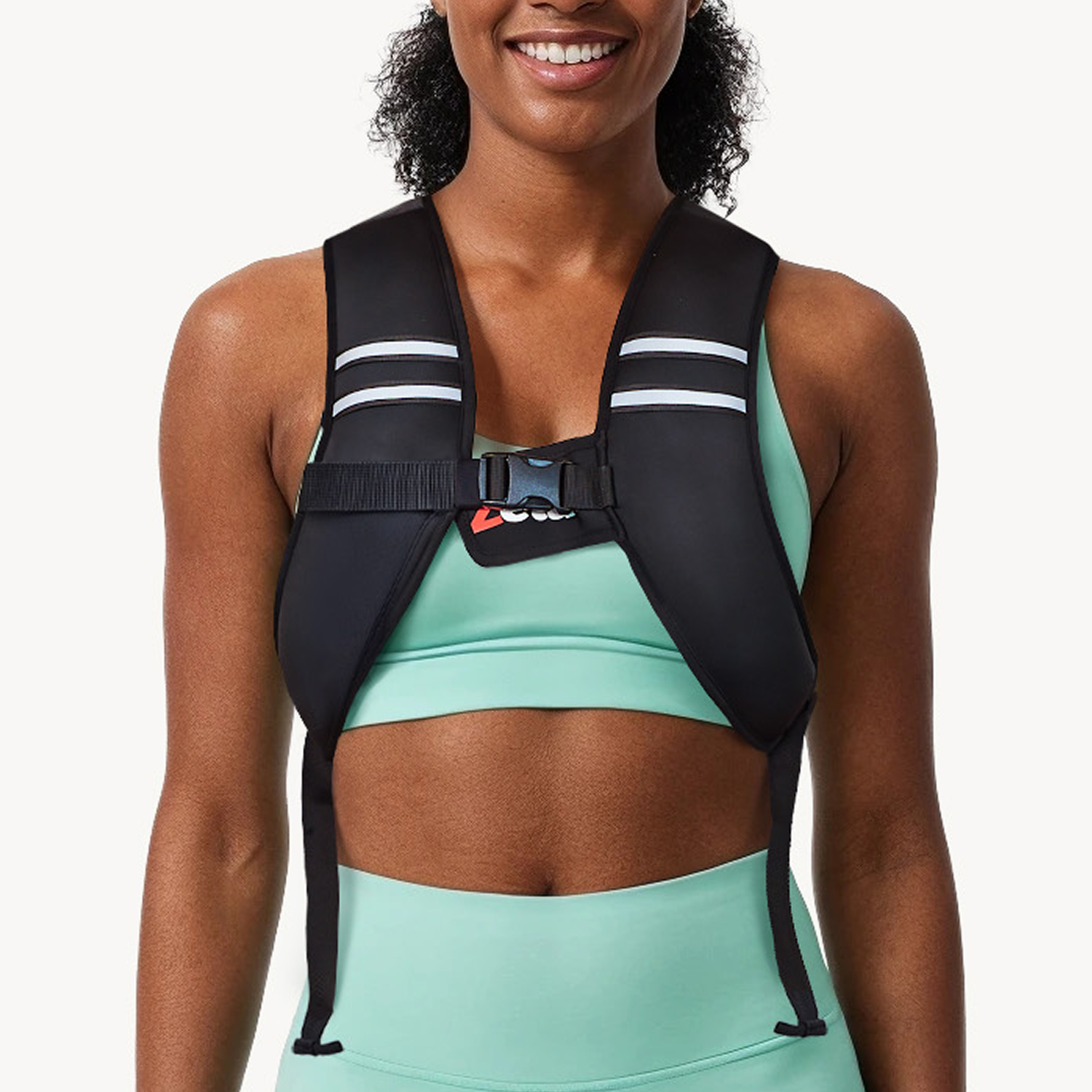
The "One Size Fits Most" Myth: How to Find Your Ideal Weighted Vest Fit
The "One Size Fits Most" Myth: How to Find Your Ideal Weighted Vest Fit
When you are shopping for a fitness weighted vest, you will constantly see the labels "one size fits all" or "one size fits most." Manufacturers love this terminology because it simplifies production, but for the consumer, it is often a misleading marketing claim.
Weighted vests are not truly one-size-fits-all. While entry-level or budget-friendly vests rely heavily on adjustable Velcro straps or elastic nylon bands to expand or contract, they are engineered around the proportions of an "average" adult male torso. If your body type falls outside of that specific baseline—whether you are shorter, taller, curvier, or plus-sized—a universal vest can quickly become a hindrance rather than a tool.
The scope of this problem was explicitly laid bare in a comprehensive 2026 quantitative market study by Zelus, which surveyed 1,069 actual weighted vest purchasers. The data revealed that an overwhelming 67%–75% of dissatisfied users singled out "poor wear comfort, difficult adjustments, and severe shifting during movement" as their primary product complaints.
Does a Weighted Vest "One Size Fits All"?

No, a weighted vest is not truly "one size fits all." While mass-market manufacturers use adjustable Velcro or elastic straps to label their products as universal, these vests are structurally engineered around the proportions of an "average" male torso, creating significant fit penalties for individuals with shorter, taller, or curvier body types.
For women and plus-size individuals, a universal vest often causes severe chest constriction and breathing restrictions when tightened, or leads to violent bouncing, friction, and skin chafing when left loose.
👉 Read More: Best Weighted Vest Sizes for Plus-Sized Women
Body Proportions and Gender-Specific Anatomy

Men and women possess fundamentally different shoulder breadths, torso shapes, and chest contours. A generic, boxy unisex vest assumes a relatively flat, rectangular torso.
The Chest and Bust Dilemma
For women, particularly individuals with a larger bust, universal vests present a distinct and painful structural problem. According to Zelus’s 2026 data, 61% of all weighted vest users in the market are women, yet they are heavily underserved by "one size" designs.
A staggering 48% of female users report experiencing suffocating chest tightness or severely restricted breathing when trying to strap down traditional, rigid vests tightly enough to prevent movement.
Tightening a standard unisex vest enough to secure the payload restricts lung expansion and compromises oxygen intake during cardio. Leaving it loose, however, causes the vest to violently bounce and shift, with 19% of athletes reporting severe chest compression and painful clavicle bruising from rigid weight distributions.
👉 Read More: Weighted Vests for Large-Busted Women
The Solution: Zelus Z-Fit™ Technology

Premium fitness brands have abandoned the rigid universal model entirely. They engineer female-specific cuts that feature curved lines, tailored strap geometries, and cutouts that sit comfortably around or below the bust rather than crushing it, distributing the load across the shoulders and core seamlessly.
Leading the charge in this shift toward shape-specific fitness is Zelus. Rather than treating women or plus-size individuals as an afterthought, Zelus has strategically designed its lineup to solve the exact pain points highlighted by the data:
- Tailored for Female & Plus-Size Ergonomics: Knowing that 61% of the market is female and 35% of active users navigate the challenges of a curvier frame (BMI > 25), Zelus replaced boxy templates with elongated, independent dual-side adjustment straps and flexible, body-contouring panels.
- Innovative Z-Fit™ Tech: To eliminate chest constriction, Zelus introduced its Z-Fit™ Silicone Soft Iron lineup. Fine iron powder is directly infused into pliable silicone, creating a flexible single weight layer that behaves like a supportive second skin over curves.
- Maximum Stability & Zero Chafing: Precise strap geometry and deeply scooped armholes target the 43% of consumers prioritizing "Fit & Stability," locking weight flush to the core to eliminate bouncing, collarbone bruising, and skin chafing.
👉 Read More: zelus plus size weighted vests collection page
Weight Distribution and Center of Gravity
The primary objective of a weighted vest is to mimic natural body mass by placing the extra load as close to your center of gravity as possible.
The Dynamic Shifting Risk
If you have a narrower torso or a smaller frame, a universal vest will inherently be too wide, causing the weight modules to sit too far out on the edges of your shoulders or hang loosely off your ribs. Research shows that in high-intensity strength environments, rigid and improperly scaled weight distributions alter the body's natural center of gravity for 29% of athletes.
When weight isn't held flush against the spine and sternum, it creates a dangerous pendulum effect. As you move, the weight shifts laterally, creating excessive torque and micro-strain on your lower back, neck, and trapezius muscles. Furthermore, a bouncing vest alters your center of mass mid-stride, increasing kinetic impact forces on knees and ankles by up to 20%.
Torso Length and Hip Interference
Human heights vary drastically, yet many universal vests feature a fixed, standard length. Where a vest ends on your torso dictates how much freedom of movement your lower body has.
The Low-Riding Vest Problem
If you have a shorter torso, a standard universal vest will often extend past your belly button and rest directly on your hips or pelvic bone. During a run, brisk walk, or high-knees exercise, a vest that hangs too low continuously bangs against your upper thighs and hips.
High-frequency walking represents the single most common activity for vest owners, driving 77%–93% of weekly usage. If a vest is too long, daily movements, deep squats, or lunges will cause the bottom of the vest to bunch upward into your throat or severely restrict your pelvic range of motion.
Range of Motion and Friction (The Chafing Factor)
A poorly fitting vest doesn't just impact your biomechanics; it ruins your skin. Universal designs leave excess material that creates unwanted fabric folds, gaps, and unnecessary friction points.
- Shoulder & Armhole Clearance: Oversized straps and small armhole cutouts on generic vests dig into anterior deltoids and armpits during overhead presses, push-ups, or arm swinging.
- Friction & Chafing: Gaps between vest and skin cause repetitive friction during movement. Around 22% of runners and fast walkers suffer from rapid weight bouncing that leads to friction and severe skin chafing across ribs, collarbones, and inner arms.
What Size & Weight Should You Choose?

Determining the correct weighted vest requires balancing two factors: the physical footprint of the vest (how it scales to your torso) and the total resistance load (how it affects your joints and biomechanics).
1. Calculating Your Optimal Starting Weight
Introducing too much load too quickly overloads the lower back, knees, and ankles before stabilizing muscles adapt. According to the International Sports Sciences Association (ISSA), beginners should always stick to the 5% to 10% Baseline Rule based on total body weight:
| Body Weight (lbs / kg) | Recommended Starting Load (5%–10%) |
|---|---|
| 160 lbs (~73 kg) | 8 – 16 lbs |
| 220 lbs (~100 kg) | 11 – 22 lbs |
Prioritize Modular Weight Systems
Unless purchasing an ultra-slim silicone vest for walking, choose models with removable weight blocks or sand packets. Modular designs allow you to start at a safe baseline and increase resistance in small 0.5 lb to 1 lb increments as strength builds.
👉 Read More: How Much Weight Should You Put in Your Weighted Vest?
2. Sizing the Load to Your Specific Activity
- Cardio, Power Walking & Running: Stick strictly to 5%–10% of body weight. The key priority is zero bounce—the vest must hug the upper ribs and clear the pelvic bone.
- Strength Training & Calisthenics: For push-ups, pull-ups, squats, or planks, loads can safely reach 15%–20% of body weight. Focus on uninhibited range of motion with deeply scooped armholes and shorter shoulder profiles.
3. Mastering Measurements Beyond Standard S/M/L
Ignore standard clothing labels and measure your physical dimensions directly against sizing guides:
- Chest / Bust Circumference: Measure around the widest part of your chest. Ensure your measurement sits comfortably in the middle of the vest’s adjustable strap range.
- Torso Vertical Length: Measure vertically from top of collarbone to ~2 inches above belly button. The vest should cover the upper ribs without extending down to the waistline.
👉 Read More: Zelus Weighted Vest Size Chart for Men and Women
How Tight Should a Weighted Vest Fit?

A weighted vest should feel like a firm, supportive "hug" around your torso—secure enough to stay completely stationary, but gentle enough that you can breathe deeply without restriction.
The 4-Step Tightness Test
- The Deep Breath Test ("Two-Finger Rule"): Take a deep breath through your nose. You should be able to slide two fingers snugly between vest and chest without restricted lung expansion.
- The Forward Bend Test: Bend forward at the waist to touch your toes. The vest must stay flush against your spine without sliding forward or pushing up into your throat.
- The 5-Second Jump Test: Perform 3–4 gentle hops in place. The vest must move with your skin as one unit without shoulder straps slapping or side panels shifting.
- The Arm Swing Test: Swing arms vigorously and lift them overhead. Armholes must fully clear your deltoids and armpits without rubbing or pinching.
Key Considerations for Women & Curvier Frames
Since 48% of female users report suffocating tightness on traditional vests, adjust straps strategically: tighten the lower waist strap first to anchor weight onto the core, then keep the upper chest strap slightly looser to accommodate the bust and breathing.
⚠️ Danger of a Loose Vest: Leaving a vest loose to avoid chest pressure actually increases injury risk. Loose weights create a pendulum effect, placing micro-strain on your back and knees while causing painful chafing and collarbone bruising.
Summary: Finding Your Perfect Fit
The promise of a "one size fits most" weighted vest is tempting, but your unique body shape, torso length, and fitness goals require a personalized fit. This is especially vital for women and plus-size athletes, where generic unisex designs often turn workout sessions into battles against chest pressure, chafing, and unstable weight bounce.
Investing in vests with independent adjustments, contoured ergonomics, or flexible materials—like Zelus Z-Fit™ silicone soft iron technology—protects joint safety, maintains posture, and builds long-term consistency. Keep starting weights between 5%–10% of body weight, measure precisely, and insist on a snug, gap-free fit that moves seamlessly with you.
We want to hear from you! Have you ever struggled to find a weighted vest that actually fits your body comfortably? Leave a comment below with your biggest fit challenges, or share which style transformed your daily walking routine!

Before You Go…
Here are a few handpicked articles to inspire your next self-care moment.