I Wore a Weighted Vest for a Month: My 30-Day Before & After Honest Results
Weighted vests for walking are currently being hyped up all over fitness social media as the ultimate health game-changer, especially for women over 50. But are they actually worth the fuss? As someone who makes evidence-based content for midlife health, I wanted to test the hype against actual science—and my own body.
Here is exactly what happened when I added a 12 lb weighted vest to my daily walk for a month, the surprising shifts in my body measurements, and the truth about the research no one else is telling you.
The Setup: Walking With a Weighted Vest Before 30 Days

Because I like science, I wanted to isolate the vest as the only variable. I didn't change my diet, and I didn't change my existing exercise routine.
For context, I’m 5'11" (well, 178 cm—my last health check revealed I’d shrunk an inch, but let's not dwell on that) and my baseline weight was 65.9 kg (145 lbs). I already have a fairly active lifestyle:
- Walking: 45 to 50 minutes (about 4 km), 5 out of 7 days a week.
- Cycling: 45 to 60 minutes on my Peloton, 3 days a week.
- Resistance Training: Weight sessions 2 days a week.
The general rule of thumb for weighted vests is not to exceed 10% of your body weight. I ordered a 12 lb (5.4 kg) vest from Amazon, which put me right around the 8% mark.
Walking With a Weighted Vest After 30 Days: Honest Results

Week 1: The Weight Shock
When the package arrived, I was shocked. I’m tall, I’m strong, and I thought, "Hey, 12 lb isn't that much!" I was wrong. It felt like someone had shipped me a dense, heavy brick.
Putting it on for the first time was an immediate wake-up call. Within 30 seconds, I could feel the weight pressing hard against my collarbones and shoulder blades.
I wore the vest once a day on my regular walks, anywhere from 20 to 60 minutes.
It was incredibly intense. I was huffing, puffing, and sweating far more than usual.
On the positive side, if you love weighted blankets, you will love this. The pressure felt incredibly grounding, comforting, and secure.
Weeks 2 & 3: Feeling Superhuman
By the second and third weeks, my body began to adapt, and the physical results started showing up fast.
I felt like I could fly up stairs without losing my breath. On a grocery trip with my mom, I easily carried six heavy bags to the car without a second thought.
On the mornings I walked without the vest, I felt so light on my toes it felt like I could literally jump over a building.
My metabolic burn spiked massively. I was absolutely ravenous after these walks, meaning I was definitely eating more to keep up with the extra calorie burn!
Does Walking With a Weighted Vest Burn More Calories?
Week 4: The Shoulder Slump & "The Skirt Hack"
This is where the experiment hit a major roadblock. While my legs and lungs felt stronger, my shoulders started to ache.
The vest I purchased had a massive design flaw: it did not distribute weight evenly. Unlike a high-quality backpacking pack that transfers weight to your hips and core via a supportive waist strap, this vest hung entirely from my shoulders.
To cope with the strain and protect my posture, I had to get creative. I ended up wrapping the vest around my waist and wearing it like a weighted skirt. It looked ridiculous, but it felt amazing to shift that load to my center of gravity. Because of the shoulder strain, I scaled my walks down to a strict 20 minutes for the final week.
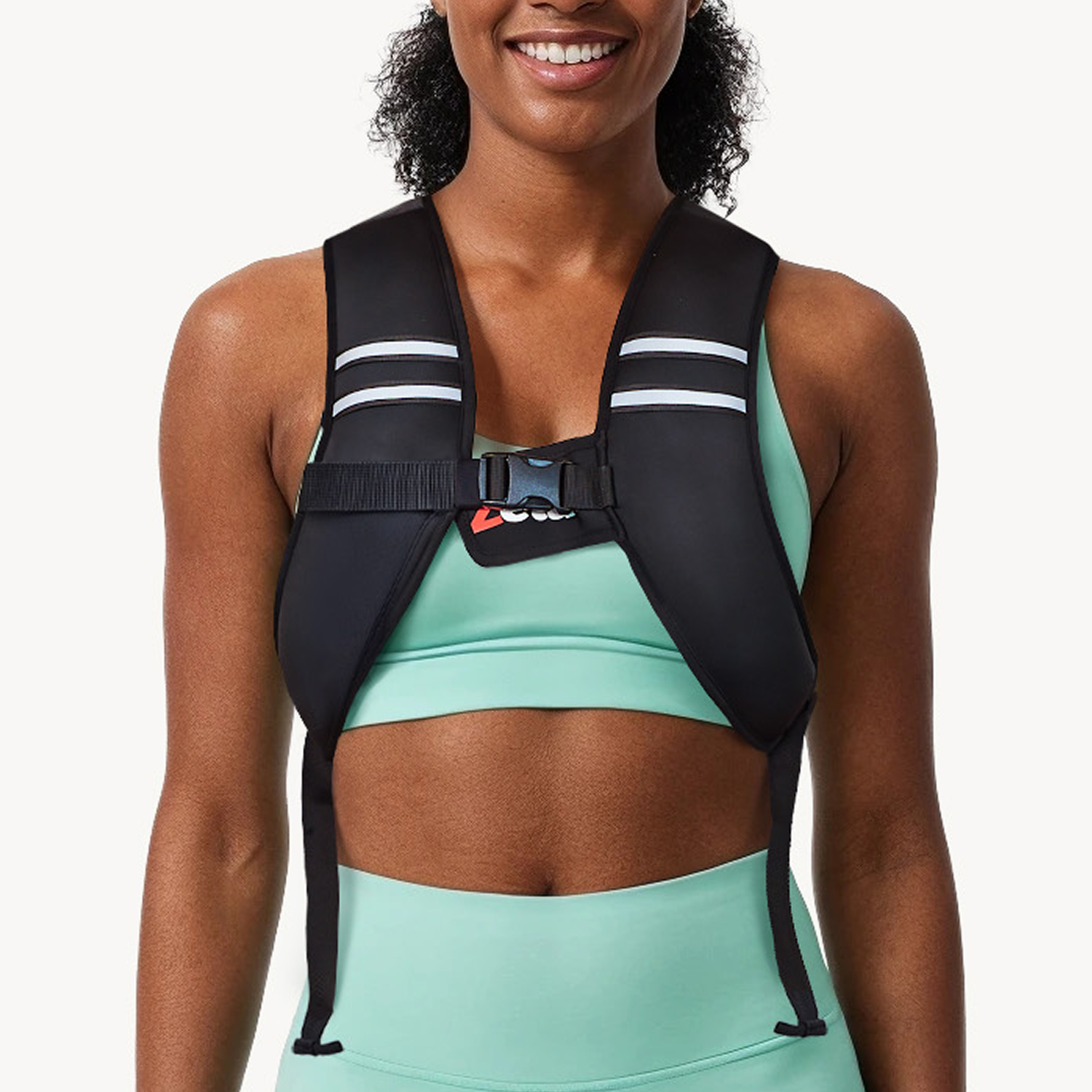
Since then, in order to keep reaping the amazing benefits of weighted walking without torturing my joints, I threw that cheap, poorly distributed vest into a dark corner of my closet to collect dust and upgraded to the ZELUS Classic U-Shape Weighted Vest.

ZELUS Classic U-Shape Weighted Vest
Compared to my previous shoulder-straining disaster, the ZELUS vest is designed with ergonomics in mind, making it an absolute game-changer, especially for women.
The absolute best part about this vest is the even weight distribution. Because it hugs your torso properly, the weight sits securely on your core and upper body rather than pulling down relentlessly on your collarbones and traps. I can wear it comfortably for my full hour-long walks, or just around the house while doing chores, completely pain-free.
If you want to reverse bone density loss, build real core strength, and level up your daily steps, please learn from my mistake: don't ruin your posture with a cheap, badly designed vest. Investing in a high-quality, adjustable, and ergonomically shaped vest like the ZELUS Classic U-shaped weighted vest will make your daily 12,000 steps feel less like a chore and more like a superpower!
Does a Weighted Vest Improve Posture?
Best Weighted Vests for Posture: Expert Guide & Reviews
My Weighted Vest Walking Results Before and After 30 Days: Comparison By the Numbers
After 30 days of staying consistent, I took my final measurements. Here is how they compared to day one:
|
Metric |
Day 1 |
Day 30 |
Change |
|
Weight |
65.9 kg (145 lbs) |
65.7 kg (144.5 lbs) |
-0.2 kg (-0.5 lbs) |
|
Waist Circumference |
75 cm |
73 cm |
-2 cm |
|
Thigh Circumference (Left & Right) |
55 cm |
54 cm |
-1 cm each |
Losing half a pound of weight is completely negligible (and I wasn't trying to lose weight anyway). However, losing 2 cm off my waist and 1 cm off my thighs genuinely surprised me. My legs felt noticeably tighter and stronger.
4 Mistakes to Avoid When Buying a Weighted Vest

When I first decided to try weighted walking, I went online, clicked "buy" on the first high-rated vest I saw, and assumed I’d be fine. I wasn't. To save you the returns, the wasted money, and the physical frustration, here are the major mistakes you’ll want to avoid when shopping for your own vest.
1. Too Much Weight
I have a strong core, so when I saw a 30-pound vest, I thought, "I can handle that!" I was incredibly wrong.
Just picking up a 30-pound weight from the floor usually requires two hands and proper form. Trying to swing that dead weight over your head and onto your shoulders is a recipe for throwing your back out. I actually needed my husband, Brett, to help strap me into it every single time because I couldn't get it on myself!
What to do instead:
- If you have a weaker core or are brand new to fitness, start with 5 to 8 lbs.
- If you are generally active, 12 lbs is the absolute sweet spot to start (it's what I used for my successful 30-day trial).
- Once that starts feeling like a warm hug, you can graduate to 18 lbs and beyond.
2. Falling for the Bulk of "Ammo" Style Vests
Adjustable weighted vests that feature rows of tiny pockets for individual 1-pound weight inserts look incredibly cool—like you're carrying tactical ammunition across your chest. On paper, it seems like a cost-effective dream because you can slowly add weight as you get stronger.
These tactical vests are significantly more expensive, highly bulky, and cover your entire torso. Because they wrap so tightly around your whole upper body, they act like a portable sauna. You will sweat five times more in an ammo vest than in a minimalist, U-shaped vest. Unless you want to walk around your neighborhood completely drenched and overheated, stick to a streamlined design.
3. Ignoring Your Body Shape and Anatomy
This is a major issue, especially for women. Weighted vests are not one-size-fits-all, and how a vest sits across your chest changes everything.
Some vests are designed with straps that run directly across the chest, essentially crushing your breasts or forcing them out to the sides. (Honestly, I'm convinced a man designed those!)
If you are petite, a standard vest will hang down too low, hitting your hips and straining your lower back. My husband is 6'1" and 200 lbs, and the vest that fits him comfortably would look like a giant gown on me. Look for a U-shape design that curves naturally around the bust and features adjustable shoulder and rib straps so you can lock it tightly to your frame.
4. Picking the "Cute" Color
I know those pastel pinks, mint greens, and lavender vests look adorable on your feed. Do not buy them.
You are going to sweat in this vest. A lot. Lighter fabrics show sweat stains instantly, trap dirt, and will get absolutely ruined if you use self-tanner.
Buy black. It matches everything, hides the grime, and doesn't show sweat rings.
A Simple Guide to Buying Your First Weighted Vest
Pro-Tip: The "Shower Spa" Weighted Walking Vest Care Method

Whatever you do, do not throw your weighted vest in the washing machine. The heavy iron sand or steel shot weights inside will destroy your washing machine drum, and the spin cycle will likely rip the seams of your vest, leaving you with a laundry room full of loose sand.
Because you will be sweating in it regularly, it will eventually start to smell. Here is my foolproof cleaning method:
How To Wash and Maintain Your Zelus Weighted Vest
1.Take it into the shower:Post-walk wash.
After your walk, bring the vest straight into the shower with you. Lay it flat on the shower floor or hang it from a low faucet.
2.Scrub with mild soap:Target sweat zones.
Use a gentle liquid soap, baby shampoo, or mild sports detergent. Gently scrub the fabric—especially the shoulder straps and inner lining—using your hands or a soft sponge.
3.Rinse thoroughly:Cold water wash.
Run cold shower water over the vest until all the soap is completely rinsed out and the water runs clear.
4.Drip dry:Never use the dryer!.
Squeeze out the excess water gently (do not wring or twist the vest, as this can shift the internal weight fillings). Hang it up over the tub or outdoors in a shaded, well-ventilated area to air dry completely.
Are Weighted Vests a Game-Changer?
If you’ve been looking for a way to upgrade your health routine without adding hours to your day, the short answer is yes—weighted vests are an absolute game-changer.
If you want to preserve muscle mass and bone health as you age, lifting weights at the gym or doing dedicated resistance exercises is still the gold standard.
Who should use a weighted vest?
- The Consistent Fitness Buff: If you already walk regularly (30–45 minutes) and already lift weights, adding a vest is a great, logical next step to progress your fitness.
- The Modulated Exerciser: If you are dealing with a minor injury that prevents you from doing your normal weight routine, but you can still walk comfortably, a vest can help keep the intensity up (just clear it with your doctor or physio first).
Who should skip it?
- Anyone with existing neck, spine, or shoulder injuries: The downward pressure can easily trigger or worsen back pain.
6 Reasons Your Weighted Vest Might Be Hurting Your Body
A Lesson in Buying Gear
Will I keep walking with a vest? Yes. But not with the cheap one I bought.
I fell into the classic trap of buying the cheaper, bulkier shoulder-weighted model to save money. Because it caused neck strain, I am upgrading to a premium model—specifically looking at an ergonomic design like the Zelus Classic U-Shape weighted vest. Its snug, U-shape design sits tightly around the core rather than hanging off the shoulders, meaning no pressure on the neck (or the boobs!). Learn from my mistake: buy right the first time!
Before You Go…
Here are a few handpicked articles to inspire your next self-care moment.