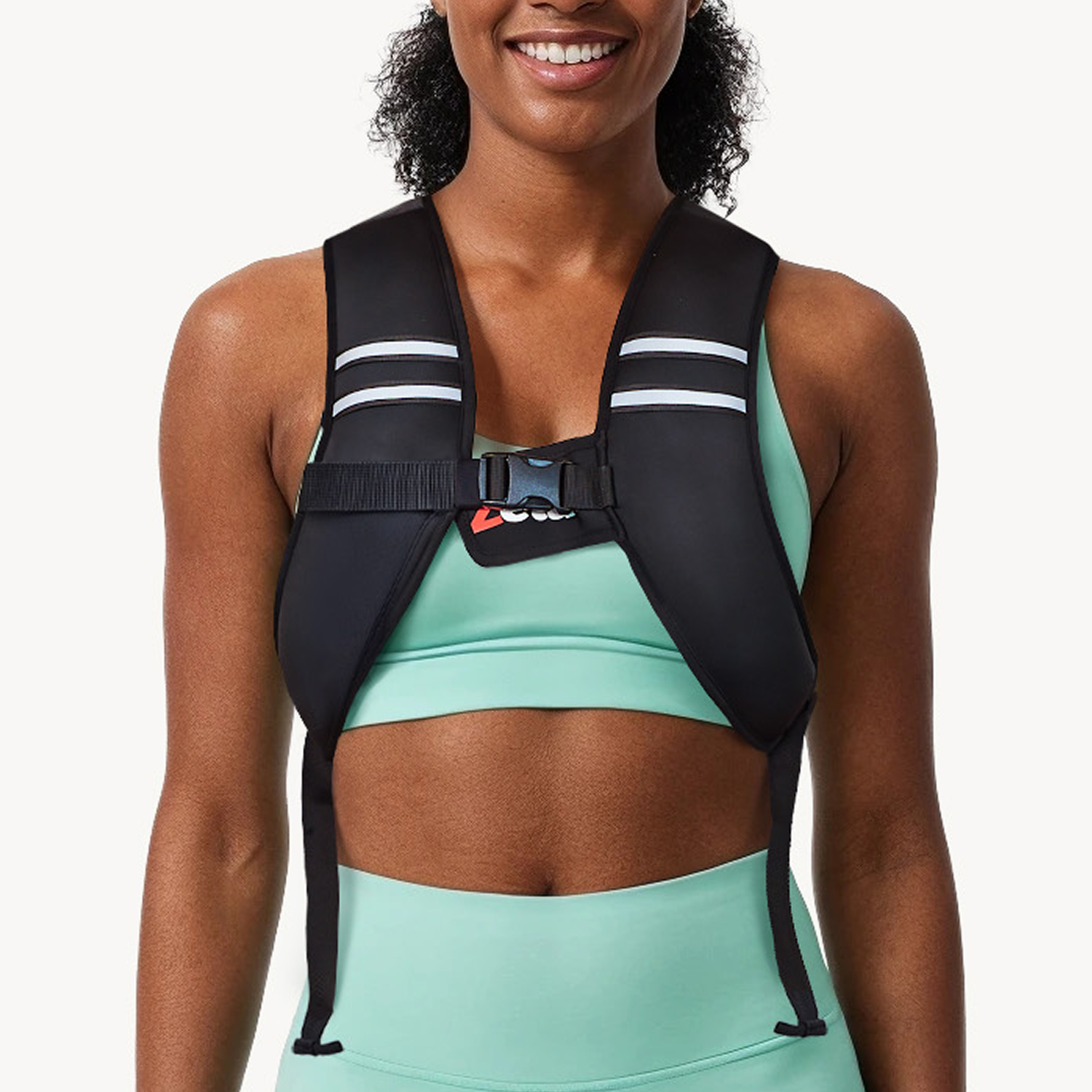
Why a Waist Belt Beats a Vest for Most Women Over 40
You have probably noticed everyone from walking enthusiasts to hardcore lifters strapping on weighted vests. Adding a little extra resistance to your daily walk or workout is a proven way to boost bone density, ramp up calorie burn, and build functional strength.
For women over 40, these benefits are no longer a luxury—they are an absolute necessity. As estrogen levels naturally decline, our bodies lose muscle mass and bone mineral density at a significantly accelerated rate.
We are actively seeking ways to fight back against this shift. According to a landmark Zelus survey of 1,327 weighted vest purchasers conducted between January and March 2025—which surveyed a US-only cohort that was 62% female with an average age of 41—between 20% and 28% of users buy a weighted vest specifically to combat bone density loss and muscle wasting. This health concern is most pronounced among women and the silver-haired demographic, who rely on weight-bearing exercise to trigger critical bone remodeling.
While vests get all the hype, the truth is that a weighted waist belt is often the far superior, safer, and more comfortable choice for women over 40. Here is exactly why lowering the weight to your hips beats strapping it to your chest.
Weighted Vests Aren’t Made for Female Curves

Most weighted vests on the market are built with a boxy, unisex design. For men, this works fine. For women, it can be a frustrating, uncomfortable mess.
The 2025 Zelus user survey (comprising 1,327 US purchasers, 62% female, average age 41) heavily supports this reality, revealing that "fit and stability / minimal bounce" (44%) and "comfort and breathability" (41%) are the absolute top priorities for buyers. Yet, traditional vests consistently fail to deliver on these needs for female bodies, leading to three massive design flaws:
Chest Compression
A vest requires a tight fit to keep from bouncing. For women, this means tight straps squeezing directly across the breasts, which can cause painful chafing and breathing restriction.
- What the 2025 Survey by Zelus says: This isn't just a minor annoyance—it's a major product failure. In low-impact and torso-bending movements like yoga and flexibility training, up to 48% of female users explicitly complain of suffocating chest pressure and restricted breathing. Furthermore, in strength training and cardio setups, 19% of users report intense tightness and pinching directly across the neck, clavicle, and chest area.
Traps and Neck Strain
Vests hang all the weight directly on your shoulders and trapezius muscles. If you already carry tension in your neck or head from sitting at a desk, a vest can trigger nasty tension headaches and upper back pain.
- What the 2025 Survey by Zelus says: The survey reveals that "uncomfortable wear" is the number one driver of product complaints, cited by 67% to 75% of dissatisfied users. When it comes to traditional weight styles, users frequently note that the design severely disrupts their center of gravity and overloads the upper shoulders, making it a frustrating choice for the 25% of buyers who are "Busy Professional Elites" trying to combat desk-sitting fatigue.
Sizing Frustration
Many women find themselves needing to "switch to oversize" vests just to comfortably fit their chest or hips, only to end up with a vest that is way too long, loose at the waist, and bounces violently while walking.
- What the 2025 Survey by Zelus says: Standard sizing simply isn't working for diverse body types. Across almost all vest styles, "difficulty adjusting sizes" and "poor weight distribution" score as top-tier complaints, with up to 22% of users experiencing frustrating shifting and sliding during basic movement. It’s exactly why "offering multiple sizing options tailored to different frames" was ranked as a critical, top-tier improvement area that users are most willing to pay extra for.
A weighted waist belt completely bypasses the chest and shoulders. Instead, it wraps securely around your core and places the load directly onto your hips and pelvic floor.
Is a Weighted Belt Right for You?
A weighted waist belt is an excellent, specialized fitness tool designed for individuals who want the metabolic and bone-building benefits of carrying extra resistance, but need to keep that weight off their upper body. A weighted waist belt is specifically ideal for several distinct groups of people:
Women Over 40 and Postmenopausal Women
As estrogen levels drop during and after menopause, women face a rapid decline in bone mineral density and muscle mass. Clinical studies show that adding external resistance to your lower body stimulates bone synthesis and helps halt postmenopausal bone loss. A waist belt is highly popular among women because, unlike a weighted vest, it does not compress the chest, restrict breathing, or cause chafing across the bust.
Plus-Size Fitness
For plus-size individuals or those working through a major weight loss journey, a weighted waist belt is vastly superior to a vest. Vests are notoriously difficult to fit over larger chests and midsections; they often choke the neck, restrict lung expansion during heavy breathing, and trap body heat, leading to rapid overheating.
Furthermore, carrying significant weight already puts extra stress on the spine and knees. A weighted vest adds vertical compression straight down through the shoulders and spinal column. A weighted belt anchors the extra load directly onto the wide, sturdy shelf of the hips and pelvis. This keeps the upper body free, prevents spinal compression, and allows for a much safer, more comfortable, and cooler walking experience.
People with Chronic Neck, Shoulder, or Upper Back Pain
If you carry stress in your upper body, sit at a computer all day, or suffer from tension headaches, wearing a weighted vest will likely aggravate your symptoms by pulling down on your trapezius muscles. A weighted belt transfers 100% of the load directly onto your strong hip and glute muscles, keeping your shoulders completely relaxed and pain-free.
Walking, Hiking, and Treadmill Enthusiasts
If your primary form of exercise is walking, a waist belt is often much more comfortable than a vest. Because the weight is anchored right at your natural center of gravity (your pelvis), it feels like a natural extension of your body. This allows you to maintain perfect posture and swing your arms freely without any friction or fabric bulk around your armpits.
Older Adults Focused on Balance and Fall Prevention
Clinical research has shown that when older or frail adults incorporate a weighted belt into functional walking or rehabilitation exercises, it significantly improves gait speed, lower-body power, and balance (by up to 76% in some recovery studies). It provides a safe, low-cost way to build lower-body stability without needing complex gym equipment.
Those Tracking Weight Loss Who Want to Protect Muscle
When you intentionally lose weight through diet and cardio, your body naturally sheds a combination of fat, muscle, and bone. Studies suggest that wearing a weighted belt loaded to roughly 10% of your body weight tricks your body into thinking it is still carrying its original mass, which helps preserve your bone density and lean muscle while the fat melts away.
Walkers Who Prefer Discretion
Weighted vests often look like tactical body armor, which can draw unwanted attention or looks from neighbors. A weighted waist belt is sleek and low-profile. It can easily be worn underneath a slightly oversized hoodie, sweatshirt, or jacket, allowing you to get a high-intensity workout completely invisibly.
What Size Weighted Waist Belt Should I Buy?
To choose the correct size for a weighted waist belt, do not buy based on your standard pants or dress size. Because weighted belts sit directly over your clothing and need to be secured tightly around your torso or hips, pants sizing will almost always result in a belt that is too small.
Decide Where You Want to Wear It
Weighted waist belts are generally worn in one of two positions depending on your body shape and comfort:
- Natural Waist: Around your belly button or just above it. This is usually the best spot if you want to anchor it tightly over your core.
- Hips: Lower down, resting right on top of your hip bones. Many women prefer this position because it completely removes pressure from the stomach and stomach muscles.

What Users Say:
These are very practical, but I will say they do run a bit large and I would suggest maybe getting a size small instead of a medium I bought if you are close to a 35 inch waist it just depends on where you want these two sit on your body if you prefer them lower on your hip bone then maybe the medium is the best one for you.
Source: Amazon
Take an Accurate Measurement
- Grab a flexible fabric measuring tape.
- Put on the type of clothes you plan to wear most often during your walks or workouts (like a t-shirt, tank top, or sweatshirt).
- Wrap the tape measure snugly—but not tightly—around the exact area (waist or hips) where you plan to wear the belt.
Note:
If you live in a cold climate and plan to wear the belt over thick winter layers or an oversized hoodie, make sure to take your measurement while wearing those layers.
Compare to the Brand's Specific Size Chart
Every fitness brand has entirely different sizing standards. A "Medium" in one brand might cover a 28–32 inch waist, while in another brand it might cover 32–36 inches. Always look for the brand's inch or centimeter chart.
If your measurement falls right on the border between two sizes (for example, you measure 34 inches and the Small fits up to 34, while the Medium starts at 34), always size up.
Weighted belts use heavy-duty Velcro or buckle straps to tighten down. If you buy a belt that is too small, the overlapping Velcro won't have enough surface area to grip securely, and the heavy weight pockets might shift or pull the belt open while you walk. A slightly larger size will give you plenty of strap length to pull it tight and secure it safely.
Zelus Recommend Model
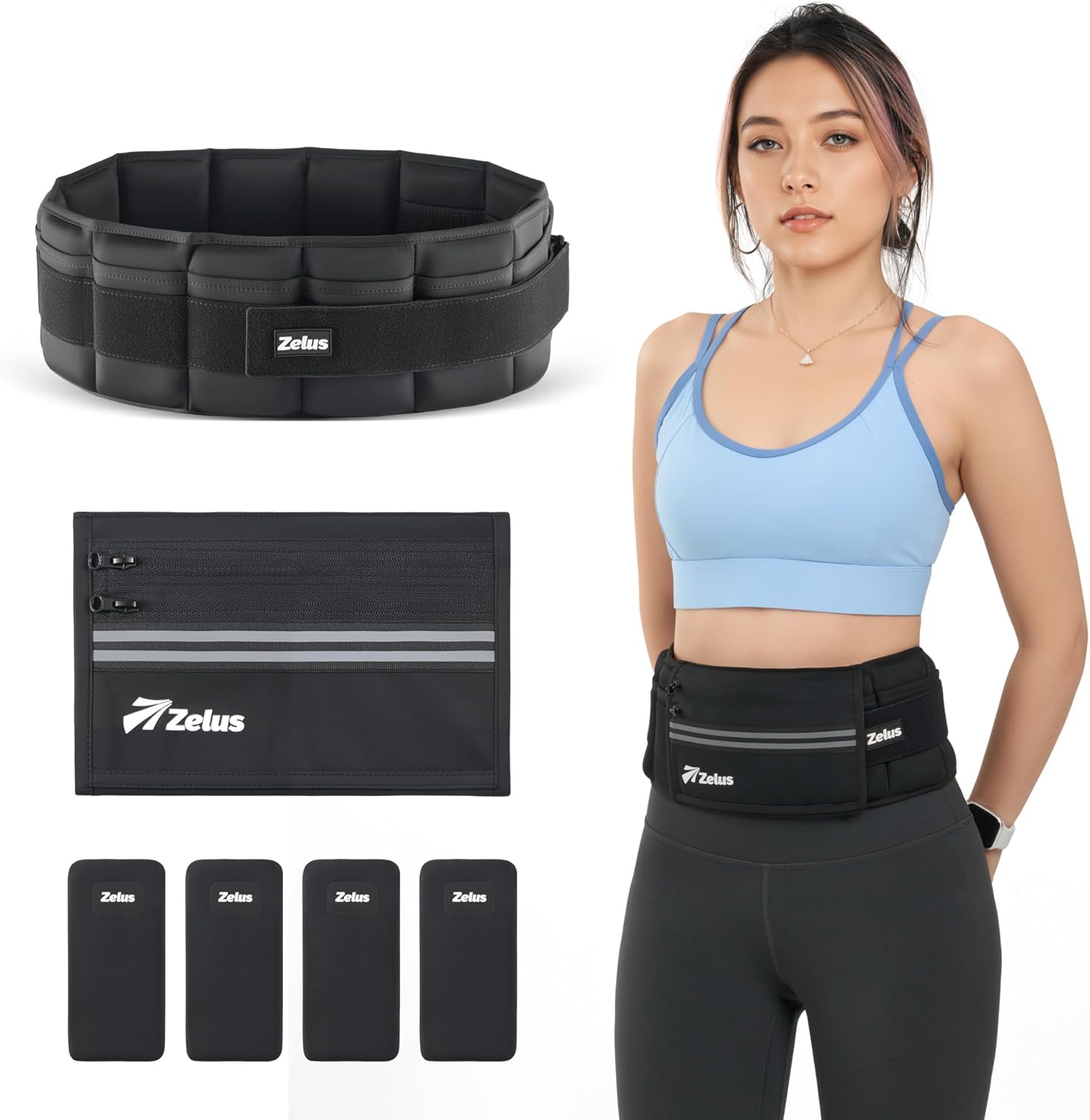
Z-Fit™ Adjustable Weighted Belt
- Flexible Comfort: Soft Lycra & Z-Fit silicone iron blocks move with you—no digging or stiffness.
- Adjustable Weight: Easily add/remove soft blocks up to 6, 8, or 10 lbs to match your pace.
- Stay-Put Fit: Secure hook-and-loop closure prevents bouncing while walking or training.
- Machine Washable: Simply slide out the weights and toss the belt in the wash.
- Hands-Free: Includes a detachable storage pouch for your phone, keys, and essentials.
Check Real User’s Reviews:
Source: Amazon
"Let's get the details out of the way. It is 10 lb. It is a little over five paper towel rolls long. I originally had it next to a bar but not everyone has that but usually everyone has a paper towel roll on hand. The velcro goes all the way around the back for adjustment which is really good because the weight can slide down if it's not tight enough. After I adequately tightened it and ran it safely stayed up. The weight is evenly distributed throughout the belt.
I was able to tighten the belt and pull the elastic all the way to the middle of my back because originally it was pulling down my shorts. So in the future I know to wear sweats with like a tie because the shorts were pretty loose anyway to be fair. After I tightened it did stay in place And only bundled a bit in the front beyond the point where you're kind of pulling it. I would still feel comfortable wearing this to the gym because the bit of bundling didn't protrude and affect the smooth appearance. It's thick and tough but not ugly and bulky.
I love how natural it felt. It didn't decrease my speed. I just went at a jogging Pace even though I can run in it comfortably. It didn't feel like it weighed me down so I didn't really feel like it would have much of an effect until I was done my first mile and was completely drenched in sweat. I wasn't tired but my body knew that we had somehow gained 10lbs lol.
Another noticeable thing for me is that I didn't wear my best bra and I'm top heavy but the belt seemed to have grounded my torso and reduced the bopping around of my top half. In fact I would go as far as saying it kept me from certain bends that I didn't know I was doing that would pull on my back and cause discomfort later. With that said it still gave me flexibility and I never felt stiff.
So overall excellent comfort and quality."
What the Science Says: Do Weighted Waist Belts Work?
Do weighted waist belts and vests actually work? Absolutely. Decades of clinical studies prove that adding a modest external load dramatically multiplies the results of simple movements.
Whether you opt for a vest or a belt, the physiological benefits for women over 40, early menopausal women, and seniors are profound:
Halting Postmenopausal Bone Loss

In a landmark 14-month German study of osteopenic women in early menopause, strength training 4 times a week incorporating weighted vests was capable of completely halting the accelerated rate of bone loss that occurs in the years immediately following menopause. The exercise group actually gained 1.3% spinal bone density while the control group lost bone mass.
Furthermore, a unique 5-year long-term study found that combining weighted vest training with lower-body resistance and jump training increased hip bone mineral density by 3.2% to 4.4%—a remarkable feat considering women of this age typically lose 0.5% to 1% of their bone mass annually. Even women on hormone therapy who were previously continuing to lose bone reversed the trend, gaining 1.5% to 2.4% hip bone density over two years when incorporating lower-body exercises with a weighted belt (averaging a 17 lb load).
How Weighted Vests Affect Bone Health and Weight Loss
Amplifying Simple Walking & Cardio
You don't need to lift heavy barbells to see results. A study among older adults showed that wearing a weighted vest loaded to 10% of body weight during a 30-minute walk (3 times a week) led to a 100% success rate in significant strength improvements, sit-to-stand performance, and aerobic capacity, compared to just 42% of those who walked without a vest.
Similarly, an Iranian study discovered that postmenopausal women wearing a light vest (4% to 8% of body weight) during moderate treadmill walking successfully stimulated bone synthesis, decreased bone breakdown, and significantly improved balance.
Preventing Muscle Loss During Weight Loss
When older individuals intentionally lose weight, they unfortunately lose bone and muscle along with the fat. Research suggests that wearing a weighted vest loaded to 10% of one's body weight during daily activities substantially reduces this weight-loss-induced bone weakening.
Reducing Aging Frailty and Accelerating Injury Recovery

Weighted belts are powerful exercise tools not just for the athletic, but also for the elderly or mobility-limited who lack access to complex gym equipment.
A Swedish study working with frail older women recovering from a hip fracture combined functional training with a weighted belt (starting at 6% of body weight). Over 10 weeks, the belt sped up recovery, improved balance by 36% to 76%, and increased walking speed by 16% to 38%. For women over 70 with severe mobility limitations, using a modestly loaded vest during resistance training or home-based stair climbing produced a 17% improvement in leg press peak power and massive gains in functional stair-climbing capability.
Who Should NOT Use a Weighted Waist Belt?
While fitness weighted waist belts are often a safer and more comfortable alternative to weighted vests, they are still a form of external compression and resistance. Because they place an extra load directly onto your midsection, core, and lower body joints, they are not suitable for everyone.
You should avoid or delay using a weighted waist belt if you fit into any of the following categories:
- Pelvic Floor Dysfunction or Prolapse
When you wrap a weighted belt around your waist, it can increase intra-abdominal pressure (the pressure inside your stomach area) as you walk and move. If you suffer from pelvic organ prolapse, severe urinary incontinence, or a weakened pelvic floor, this downward pressure can push against your pelvic floor muscles, worsening your symptoms, causing a dragging sensation, or leading to leakage. Anyone dealing with pelvic health issues or who is under 6 months postpartum should work with a pelvic floor physical therapist before adding extra load.
- Acute Lower Back Pain or Herniated Discs
If you have a known spinal injury—such as a bulging disc, herniated disc, spinal stenosis, or severe sciatica—adding a weighted belt can aggravate your nerves. Even though a belt sits on your hips, your lower back must actively contract and brace to keep your torso upright against the extra weight. If your spine is already inflamed, this extra load can trigger a painful flare-up or cause delayed muscle spasms the next day.
- Severe Hip, Knee, or Ankle Arthritis
Every extra pound you add to your waist directly multiplies the impact forces traveling through your lower body joints with every step you take. If you have severe osteoarthritis or a current joint injury in your hips, knees, or ankles, your joints may lack the cartilage or structural integrity to handle the extra pounding.
- Beginners Who Cannot Cleanly Walk 10,000 Steps Beltless
You should never layer extra weight on top of poor movement mechanics. If you experience knee pain, lower back twinges, or a limp during a normal, unweighted walk, a weighted belt will only amplify those structural imbalances. You should be able to consistently and comfortably walk a high baseline of steps with perfect, pain-free posture before deciding to progress your workouts with extra weight.
- Diastasis Recti or Severe Core Instability
Diastasis recti is a separation of the abdominal muscles (very common after pregnancy). If your deep core stabilizers are weak or compromised, your body won't be able to handle the pressure of the belt or manage the extra weight safely. This causes your lower back to overcompensate and bow forward, leaving you highly vulnerable to a strain. You must rebuild your foundational core stability first.
- Severe Heart Conditions or Hypertension
Carrying extra weight makes your muscles work harder, which naturally demands more oxygen and forces your heart rate and blood pressure to climb faster than normal. If you have advanced heart disease or unmanaged high blood pressure, always consult your physician before adding any form of weighted gear to your routine.
Which Is Better, a Weighted Vest or a Weighted Belt?
Choosing between them comes down to a simple trade-off between high-performance athletic training (the vest) and ergonomic, lifestyle-friendly comfort (the belt).
Findings from the Zelus 2025 Survey of weighted vest users show that the fitness market is highly divided based on these exact physical differences. Here is a direct, honest look at how they stack up so you can choose the right tool for your routine.
Choose a Weighted Vest If...
You want to push your athletic limits, run, or do bodyweight exercises.
Because a vest distributes weight across your entire torso, it keeps the extra load close to your natural center of mass. This makes it ideal for dynamic movements like push-ups, pull-ups, squats, and running.
The Zelus 2025 Survey reveals that 60% of vest users regularly wear them for cardio and intense strength training. If your goal is high-intensity conditioning or breaking through a fitness plateau, a vest is the gold standard.
Buying Tip from the Survey: If you go with a vest, look for silicone soft iron adjustable models. While standard iron-sand models dominate the market, silicone models scored the absolute highest in user satisfaction because they curve to the body and drastically reduce the #1 user complaint: bouncing and shifting during movement (44%).
Choose a Weighted Belt If...
You want "invisible fitness," suffer from neck pain, or hate restrictive chest straps.
A weighted belt shifts the entire load down to your pelvic girdle, completely freeing up your upper body. This is a game-changer for several reasons:
- Bypasses Neck & Shoulder Tension: Vests compress the trapezius muscles. If you are part of the 25% of users who are "Busy Professional Elites" carrying desk-job posture stress, a vest can trigger tension headaches. A belt eliminates this entirely.
- Anatomically Better for Women: Unisex vests are notoriously boxy. The Zelus 2025 Survey notes that up to 48% of women experience uncomfortable chest/breast pressure and breathing restriction in standard vests. A belt avoids the chest altogether.
- Safer for Sub-Health Concerns: Lowering the weight to the hips offers a more stable load that doesn't strain a sensitive lower back or put downward pressure on the pelvic floor.
|
PRODUCT |
||||
|
IMAGE |
 |
 |
 |
 |
|
TYPE |
Weighted vest |
Weighted vest |
Weighted vest |
Weighted waist belt |
|
MODEL |
Classic U-Shape |
Classic + U-Shape |
Z-Fit™ Flex |
Z-Fit™ Belt |
|
SERIES |
Classic |
Classic |
Z-Fit™ |
Z-Fit™ |
|
RECOMMENDED SPORTS |
Walking · Jogging · Yoga · Daily |
Walking · Rucking · Yoga |
Walking · Rucking · Yoga · Daily |
Yoga · Pilates · Ballet · Walking |
|
WORKOUT INTENSITY |
💪💪 |
💪💪💪 |
💪💪💪 |
💪💪 |
|
COMFORT |
★★★☆☆ |
★★★★☆ |
★★★★★ |
★★★★★ |
|
SHAPE |
U-Shape |
U-Shape |
Flex / Body-fit |
- |
|
WEIGHT TYPE |
Fixed |
Adjustable |
Adjustable |
Adjustable |
|
WEIGHT RANGE |
6 – 20 lb |
4 – 32 lb |
10 / 15 lb |
6 / 8 / 10 lb |
|
FILL MATERIAL |
Iron Sand |
Iron Sand |
Z-Fit™ Silicone-Iron |
Z-Fit™ Silicone-Iron |
|
BUILD MATERIAL |
Breathable Fabric |
Breathable Fabric |
Soft Silicone Skin |
Soft Silicone Skin |
|
NOISE LEVEL |
Low |
Low |
Zero |
Zero |
|
COLORS |
3 colors |
1 (Black) |
1 (Black) |
1 (Black) |
|
REFLECTIVE STRIPS |
Yes |
Yes |
Yes |
Yes |
|
Cleaning Choice |
Wipe |
Wipe |
Machine wash |
Machine wash |
|
POCKETS / STORAGE |
Yes |
Yes |
Yes |
Yes |
Weighted Belts vs. Lifting Belts
It is incredibly easy to confuse a weighted belt (used for walking/cardio) with a weightlifting belt (used for heavy gym training). They serve two entirely different purposes.
|
Feature |
Weighted Waist Belt (Cardio/Fitness) |
Weightlifting Belt (Strength Training) |
|
Image |
|
 |
|
Primary Purpose |
Adds extra pounds to burn calories and build bone density during movement. |
Provides a rigid wall for your core to brace against to protect the spine under heavy loads. |
|
How It Works |
Contains physically heavy pockets filled with sand, iron, or steel weights. |
Contains zero added weight; it is a stiff piece of leather or nylon used for pressure. |
|
When to Use It |
During walks, bodyweight lunges, step-ups, or light aerobics. |
During heavy, structural compound lifts like squats and deadlifts. |
Final Words
You shouldn't have to battle your workout gear just to get a good sweat or protect your bone health. If your daily routine consists of walking, running errands, or managing a busy household, your gear should adapt to you, not the other way around.
By ditching the boxy, unisex vest and opting for a targeted weighted waist belt, you completely eliminate upper-body chafing, avoid the clumsy trap of buying oversized gear, and gain a sleek, comfortable, and highly effective tool for long-term functional strength.
Scientific References
- Gretebeck, R. J., Perez-Guerriero, V., Black, D. R., Gretebeck, K. A., & Saris, W. H. (2015). Weight-bearing physical activity and bone mineral density in postmenopausal women: A randomized controlled trial. JAMA Internal Medicine, 175(2), 217–013. [Ref: 217013]
- Snow, C. M., Shaw, J. M., Winters, K. M., & Witzke, K. A. (2000). Long-term exercise using weighted vests prevents hip bone loss in postmenopausal women. The Journals of Gerontology: Series A, 55(9), M489–M491. https://doi.org/10.1093/gerona/55.9.m489
- Mierzwicki, J. T. (2019). Weighted vest training in community-dwelling older adults: A randomized, controlled pilot study. Physical Activity and Health, 3(1), 108–116. https://doi.org/10.5334/paah.43
- Rey, E., Padrón-Cabo, A., Costa, P. B., & Barcala-Furelos, R. (2012). Effects of short-term aerobic exercise with and without external loading on cardiorespiratory fitness and body composition. Journal of Strength and Conditioning Research, 26(4). [PubMed: 22441962]
- Nordström, A., Thorsen, K., & Nordström, P. (2002). The effect of physical activity and weight loading on bone mineral density in a cross-sectional and longitudinal perspective. Scandinavian Journal of Disability Research / Journal of Human Movement Studies, 43, 145–152. https://doi.org/10.1080/140381902320141452
Before You Go…
Here are a few handpicked articles to inspire your next self-care moment.