Performance vs. Z-Fit™ Slim vs. Classic: One Decision Tree to Rule Them All
Weighted vests have exploded in popularity, transitioning from niche military and athletic training gear into mainstream wellness tools. Whether you want to boost your bone density, burn extra calories on a daily walk, or break through a strength-training plateau, strapping on extra weight works.
However, walking into the weighted vest market today can be an overwhelming experience. With varying shapes, closure systems, and filling materials, choosing the right vest isn't just about picking a weight—it's about choosing an experience.
You do not have to guess which model works best for your body. Based on a 2026 survey of 1,069 weighted vest purchasers conducted by Zelus (which included a deep dive into 347 Zelus owners and 722 users across low, mid, and high-price competitor brands), we have broken down exactly how real people train, what they struggle with, and how they select their gear.
The Big Three at a Glance

The modern weighted vest market is no longer a one-size-fits-all category. Today, the market is completely dominated by three distinct product tiers, each utilizing a completely different material engineering approach to create a unique user experience.
Market Share and Demographic Preferences by Weighted Vest Type ($n = 1,069$)
|
Vest Model Type |
Market Share (%) |
Key Demographic Strengths & Preferences |
|
Iron Sand Weighted Vest (Classic) |
61% |
• Market Dominant Model (Highest overall popularity) • Most preferred by women, busy professional elites, and outdoor hikers. |
|
Iron Block Adjustable Vest |
25% |
• Strongest market advantage among men, young adults aged 25–34, and weight loss shapers. |
|
Iron Plates Vest (Performance) |
~15% |
• Fitness-driven segment tailored for heavy lifting and structured strength training. |
|
Iron Slabs Vest |
~14% |
• Specialized tactical and high-intensity structural fitness segment. |
|
Silicone Soft Iron Vest (Z-Fit™) |
~10% |
• Premium Innovation Segment • Highly favored by comfort purists, yoga/Pilates practitioners, and home fitness users. |
Data Source: Zelus Weighted Vest User Quantitative Research Report (February 2026). Note that total percentages exceed 100% due to users owning multiple models or choosing overlapping product classifications.
According to the 2026 Zelus survey, the market breaks down into these three major segments:
- Classic (Iron Sand Weighted Vests): ~61% Market Share. This is the undisputed mainstream market leader. It features flexible fabric pockets packed with fine iron sand, offering an accessible, soft-molding entry point for general fitness.
- Performance (Iron Plates Vests): ~15% Market Share. This is the structured, fitness-driven training segment. It utilizes solid, heavy iron plates or bricks slipped into rigid sleeves, engineered specifically for progressive weight overloading.
- Z-Fit™ (Silicone Soft Iron Vests): ~10% Market Share. This is the rapid-growth, comfort-first innovation segment. It bypasses loose sand and hard plates entirely by infusing micro-fine iron powder directly into high-grade, flexible silicone.
The core reason users report vastly different experiences across these categories comes down to materials. Loose materials shift, rigid materials resist, and infused materials flow. Let's look at how these engineering differences impact your workouts.
Classic Iron Sand Vest (The Market Leader)

The Classic vest is constructed using durable, heavy-duty fabric panels (like neoprene or nylon) partitioned into internal chambers. These chambers are filled with fine iron sand. Because sand is fluid, the vest has a pliable, soft structure that naturally drapes over the body’s contours.
The 2026 Zelus survey data indicates that the iron sand model is heavily favored by women, professional elites, and outdoor hikers. It is particularly popular among "Weight Loss Shapers" (making up 62% of the total market) who want to safely amplify calorie burn during low-to-medium intensity activities.
Strengths
- High Initial Comfort: The soft, pliable panels mold easily to different body shapes, making it comfortable for extended, long-duration wear.
- Highly Cost-Effective: Representing the bulk of mass production, these models dominate the highly accessible $50 to $100 price bracket, which 60% of survey respondents state is their preferred spending zone.
- Beginner-Friendly: It provides a gentle, predictable loading experience that doesn't feel overly aggressive or stiff when you first put it on.
Limitations
- Weight Shifting: Over time and during sudden acceleration, the loose iron sand inside the pockets can migrate. This can cause the sand to pack unevenly, creating annoying pressure points.
- Bulkier Profile: Because sand takes up more physical volume than solid iron, these vests naturally look thicker and bulkier underneath clothing.
Performance Iron Plate Vest (The Training Tool)

The Performance vest is built like a rugged tactical plate carrier. It features a rigid, reinforced vest structure designed to hold solid, heavy iron plates, blocks, or slabs flat against the chest and back.
According to the 2026 market data, iron block and plate models have a distinct advantage among men, younger fitness enthusiasts aged 25–34, and dedicated strength builders. It is the go-to choice for gym owners, fitness coaches, and elite CrossFit athletes.
Strengths
- Flawless Load Stability: Because the weights are solid metal plates locked into dedicated sleeves, there is zero internal shifting or pooling of weight, regardless of how fast you move.
- Perfect for Progressive Overload: These systems allow you to manually add or remove plates, making it incredibly easy to track and scale your strength progression over months of training.
- Extreme Durability: Built to withstand heavy gym environments, abrasive barbells, and outdoor high-impact training.
Limitations
- Rigidity Over Curves: Solid iron plates do not bend. For female athletes or individuals with smaller frames, this style can feel incredibly boxy, restrictive, and unnatural.
- Reduced Long-Wear Comfort: The stiff structure can cause intense localized pressure on the collarbones, chest, and trapezius muscles, rendering it uncomfortable for casual, multi-hour wear.
Z-Fit™ Silicone Soft Iron Vest (The Comfort Innovation)

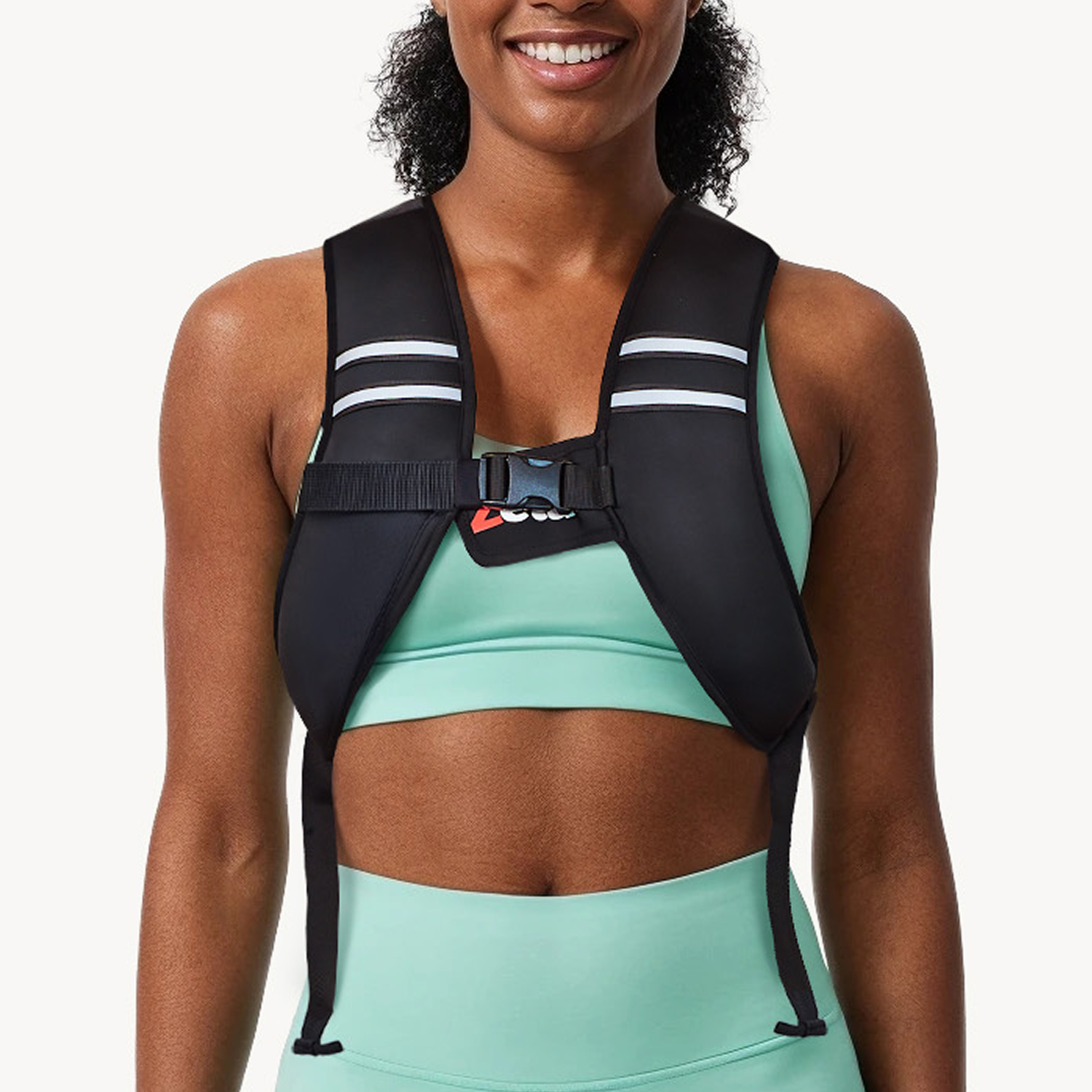
The Z-Fit™ vest represents a massive leap forward in wearable sports technology. Instead of using separate fabric pockets to hold loose sand or hard blocks, Zelus developed an advanced manufacturing process that infuses micro-fine iron powder directly into ultra-soft, medical-grade silicone. The result is a seamless, unibody weighted wearable.
Z-Fit™ completely redefines how extra weight feels on the human body. Because the iron is suspended uniformly throughout the flexible silicone matrix, there are no separate weight pockets, no harsh seams, and no rigid pressure points. It acts less like a piece of heavy equipment and more like a dense, supportive second skin.
Core Benefits of Z-Fit™
Soft to Wear
The entire surface of the Z-Fit™ vest consists of silky, smooth silicone that sits comfortably against your bare skin or premium activewear. It eliminates the scratchy, abrasive feel of heavy nylon straps, making it so comfortable you'll easily forget you are wearing extra weight.
Free to Move
Because it is cast as a single unibody piece, the Z-Fit™ vest distributes its weight perfectly across your entire torso. It stretches, flexes, and twists exactly as your body does. This completely eliminates bouncing, shifting, and friction—making it the ultimate vest for dynamic movements like yoga, Pilates, or agility training.
Zero Noise
Traditional vests click, rattle, or rustle with every step you take. Z-Fit™ is completely solid and seamless, operating in absolute silence. You can wear it discreetly around the house, during office walking-desk hours, or in quiet group class environments without a sound.
Who It’s For
Z-Fit™ is engineered specifically for users who prioritize premium comfort, seamless ergonomics, and a low-profile look. It is a massive favorite for lifestyle fitness users, office walkers, and beginners who want a completely frictionless "wear-it-and-forget-it" health asset. Notably, the Zelus survey revealed that Z-Fit™ scored the absolute highest Net Promoter Score (NPS) among brand users, particularly with individuals training in yoga studios and home environments.
Limitations
- Premium Investment: The advanced silicone infusion process positions Z-Fit™ at a higher price tier than entry-level, mass-market iron sand models.
Decision Tree — Which Weighted Vest Should You Choose?
To bypass the confusion, use this step-by-step decision matrix based directly on data trends from 1,069 real-world users:
Step 1: What Is Your Primary Goal?
Your ultimate training objective dictates the fundamental structure of your vest.
-
Hardcore Muscle Building, Heavy Gym Training, or Overcoming a Plateau: Choose Performance (Iron Plates/Blocks).
Survey Insight: For those hitting a training plateau (a challenge cited by 27% of all users) or identifying as a "Hardcore Physical Trainer" (the dedicated 4% consisting of coaches, gym owners, and veterans), a rigid plate system engineered for progressive overloading is required. -
Everyday Weight Loss, Toning, and Active Lifestyle Movement: Proceed to Step 2.
Survey Insight: This aligns with the single largest demographic in the market—"Weight Loss Shapers" (62% of users)—who primarily use vests to increase caloric burn during everyday life. -
A Strictly Budget-Friendly Entry Point for General Fitness: Choose Classic (Iron Sand).
Survey Insight: For beginners or price-conscious buyers, this aligns with the 20% to 25% of users (predominantly women, young adults aged 18–24, and fixed-income seniors) who prefer an initial entry price under $50.
Step 2: Where Will You Use It Most?
Your physical environment dictates how much the vest needs to breathe, adapt, or disappear.
-
Inside a Commercial Gym, CrossFit Box, or Calisthenics Park: Choose Performance.
Survey Insight: 50%+ of users frequent indoor fitness centers. For explosive bar work or high-impact lifting, fixed steel components are required so the load will not shift or stretch under high velocity. -
At Home, Around the Office, or in Quiet Studio Classes (Yoga/Pilates): Choose Z-Fit™ (Silicone Soft Iron).
Survey Insight: The home is the #1 most popular exercise venue. For the 25% of users who are "Time-Busy Professional Elites" trying to log "invisible workouts" between meetings, or the 29% who are "Yoga/Pilates Core Practitioners," this seamless silicone design scores the absolute highest satisfaction rating. -
On Rugged Outdoor Hiking Trails or Casual Neighborhood Dog Walks: Choose Classic.
Survey Insight: Outdoor walking is the highest-frequency activity in the market, with 77% to 93% of users walking weekly. For those matching the 16% of users who are dedicated "Outdoor Hiking Enthusiasts" demanding durability over rugged terrain, the canvas-wrapped iron sand classic is the ideal staple.
Step 3: How Important Is Comfort and Sensory Feel?
Gear failure usually comes down to physical friction. Decide what trade-offs your body is willing to make.
-
"I want maximum comfort, zero chafing, and an invisible look under everyday clothes": Choose Z-Fit™.
Survey Insight: "Fit & Stability / Minimal Bounce" (44%) and "Comfort & Breathability" (41%) are the top two purchase factors across the entire market. Z-Fit™ completely solves the top product complaints because its unibody silicone structure eliminates the bulky pockets that cause 22% of runners to complain about shifting weight. -
"I want a balanced, traditional fit without minding a slightly bulkier feel": Choose Classic.
Survey Insight: Since 61% of the market buys iron-sand models, it is the safest bet for a classic, heavy-garment feel. It drapes naturally over the shoulders, making it a reliable pick for the 29% of users who are "Busy Home Managers" wearing weights during housework or gardening. -
"I have no concern about a bulky look; my priority is carrying maximum weight slabs": Choose Performance.
Survey Insight: This option is best if you are willing to look overtly tactical. 45% to 62% of users in strength training settings accept a bulkier profile because their absolute priority is stabilizing heavy, fixed iron weights.
Step 4: What Kind of Physical Feedback Do You Prefer?
How should the weight respond to your bone structure and skin?
-
Soft & Adaptive (The "Second Skin" Feel): Choose Z-Fit™.
Survey Insight: It contours tightly to body curves. This completely eliminates the suffocating chest pressure and restricted breathing reported by up to 48% of women when bending over or twisting in traditional vests. -
Stable & Traditional (The Pliable Heavy Blanket Feel): Choose Classic.
Survey Insight: It uses free-flowing iron sand. While it feels soft initially, keep in mind that 22% of users note that sand can pool unevenly over time, and 17% complain that traditional fabrics are harder to wash once they absorb sweat. -
Firm & Tactical (The Rigid Protective Shield Feel): Choose Performance.
Survey Insight: It uses solid iron blocks (overwhelmingly preferred by younger men aged 25–34). Be prepared for zero flexibility; 19% of users note intense stiffness around the neck and collarbones during movement.
Performance vs. Z-Fit™ vs. Classic: Comparison Table
|
Feature |
Classic (Iron Sand) |
Performance (Plates) |
Z-Fit™ (Silicone) |
|
Weight Material |
Loose Iron Sand |
Solid Iron Plates/Blocks |
Infused Fine Iron Powder |
|
Structural Design |
Partitioned Fabric Pouches |
Rigid Tactical Plate Carrier |
Seamless Unibody Silicone |
|
Comfort Level |
Moderate (Soft but can bulk/shift) |
Low (Rigid, heavy shoulder pressure) |
Maximum (Second-skin, soft touch) |
|
Stability (No Bounce) |
Moderate (Sand pools during cardio) |
High (Locked into fixed sleeves) |
Maximum (Contours tightly to curves) |
|
Acoustic Profile |
Quiet rustling |
Heavy metal clanking/rattling |
Absolute Silence |
|
Best Use Case |
Casual walking, hiking, chores |
Heavy lifting, CrossFit, progression |
Yoga, Pilates, office wear, low-profile walks |
|
Target Audience |
General fitness seekers, hikers |
Heavy lifters, trainers, men 25–34 |
Women, busy professionals, comfort purists |
Final Verdict
The quantitative data from the Zelus 2026 survey clearly shows that no single weighted vest can fulfill every workout style. The key to long-term success is matching your vest to your natural body geometry and activity level is the ultimate strategy to ensure your extra weight stays on your torso—and out of the back of your closet.
FAQ
Which weighted vest is best for beginners?
For most beginners, The Classic (Iron Sand) vest or the Z-Fit™ (Silicone Soft Iron) vest is the best starting point. If you want a budget-friendly option for simple neighborhood walks, the Classic vest is a highly reliable entry choice. However, if you are concerned about gear causing upper-body chafing, heavy shoulder pressure, or bouncing, I highly recommend starting with Z-Fit™. Its second-skin fit eliminates the learning curve and physical friction often associated with traditional fitness gear.
A Simple Guide to Buying Your First Weighted Vest
Is Z-Fit™ better than traditional weighted vests?
"Better" depends entirely on your training environment. If your goal is heavy, tactical strength progression in a commercial gym, traditional iron plates or blocks are superior. However, for lifestyle fitness, home workouts, yoga, and office desk walking, Z-Fit™ is an absolute game-changer. Our 2026 survey showed it completely solves the top two consumer complaints regarding traditional vests: uncomfortable shifting/bouncing (44%) and suffocating chest/breathing restriction (48% among female users).
Can I use a weighted vest every day?
Yes, but you must be strategic about your loading. If you are wearing a light vest (such as a Z-Fit™ at 5% to 10% of your total body weight) for low-impact daily activities like walking your dog, washing dishes, or working at a standing desk, daily wear is highly beneficial. However, if you are training with heavy iron plates or block systems for high-intensity workouts, your joints and muscles require rest days to recover. I always advise clients to start light, track how their joints feel, and gradually build up their wear time.
Can I wear a weighted vest all day?
No, you should not wear a weighted vest all day (meaning 8+ hours straight). While it can be tempting to think "more hours equals more calories burned," wearing a weighted vest continuously for an entire day turns beneficial fitness resistance into chronic physical stress.
How Long Should You Wear a Weighted Vest?
What is the ideal weight for a weighted vest?
As a general industry standard, the ideal starting weight for lifestyle fitness, walking, and cardio conditioning is 10% of your total body weight. For example, a 150-pound individual will thrive in a 15-pound vest. If your primary goal is high-intensity strength building or progressive overloading, you can scale upward to 15% or 20% using an adjustable iron block or plate system, provided you maintain perfect exercise form.
What Size Weighted Vest Should I Get
Does a weighted vest help build bone density?
Yes, research shows weighted vests can help support bone health, especially in older adults, by increasing mechanical load during walking and resistance exercises.
Our 2026 data shows that 20% to 28% of users buy weighted gear specifically to combat bone density loss and muscle wasting. When you add weight to your torso, gravity places a healthy, mechanical load on your hip girdle and femur bones. Your body responds to this targeted stress by triggering osteoblasts—the cells responsible for laying down new, dense bone tissue.
Does a Weighted Vest Improve Bone Density?
Is Z-Fit™ noisy when moving?
No, and this is one of its most loved features. Traditional iron sand pockets can rustle, and iron blocks or plate carriers constantly click, clank, and rattle with every step you take. Because the Z-Fit™ vest infuses fine iron powder directly into a single, seamless block of medical-grade silicone, it is a unibody construction. It operates in absolute silence, making it the perfect choice for quiet offices, early morning home workouts while your family sleeps, or calm group yoga studios.
Before You Go…
Here are a few handpicked articles to inspire your next self-care moment.