Rucking vs Weight Vest: Which Is Better?
Load-bearing training adds external resistance to basic human movement, turning simple walking or bodyweight exercise into a higher-demand workout. By carrying extra weight, the body is forced to recruit more muscle fibers, increase energy expenditure, and improve structural endurance. Over time, this type of training can enhance cardiovascular fitness, strengthen joints and connective tissues, and build real-world functional strength.
Although both weighted vests and rucking involve adding load, they create very different training stimuli. This raises a key question for most trainees: if both methods improve fitness through added weight, which one should you choose—and is there a benefit to using both in your training plan?
Rucking vs Weight Vest: Definition
What is rucking?
Rucking is a form of weighted walking where you carry a loaded backpack (often called a “ruck”) over distance or time. The concept comes from military training, where soldiers march with heavy packs to build endurance, strength, and mental resilience.
Learn More: Loaded march
In fitness, rucking is typically done with a structured backpack and added weight such as sandbags, ruck plates, or improvised loads. The weight sits on your back and shoulders, meaning your body has to continuously stabilize the load while you walk.
Rucking is usually performed outdoors on varied terrain—roads, trails, hills, or uneven ground—which increases difficulty because your body must adapt to changing surfaces. This makes it a hybrid of cardio and strength endurance training.
What is weighted vest training?
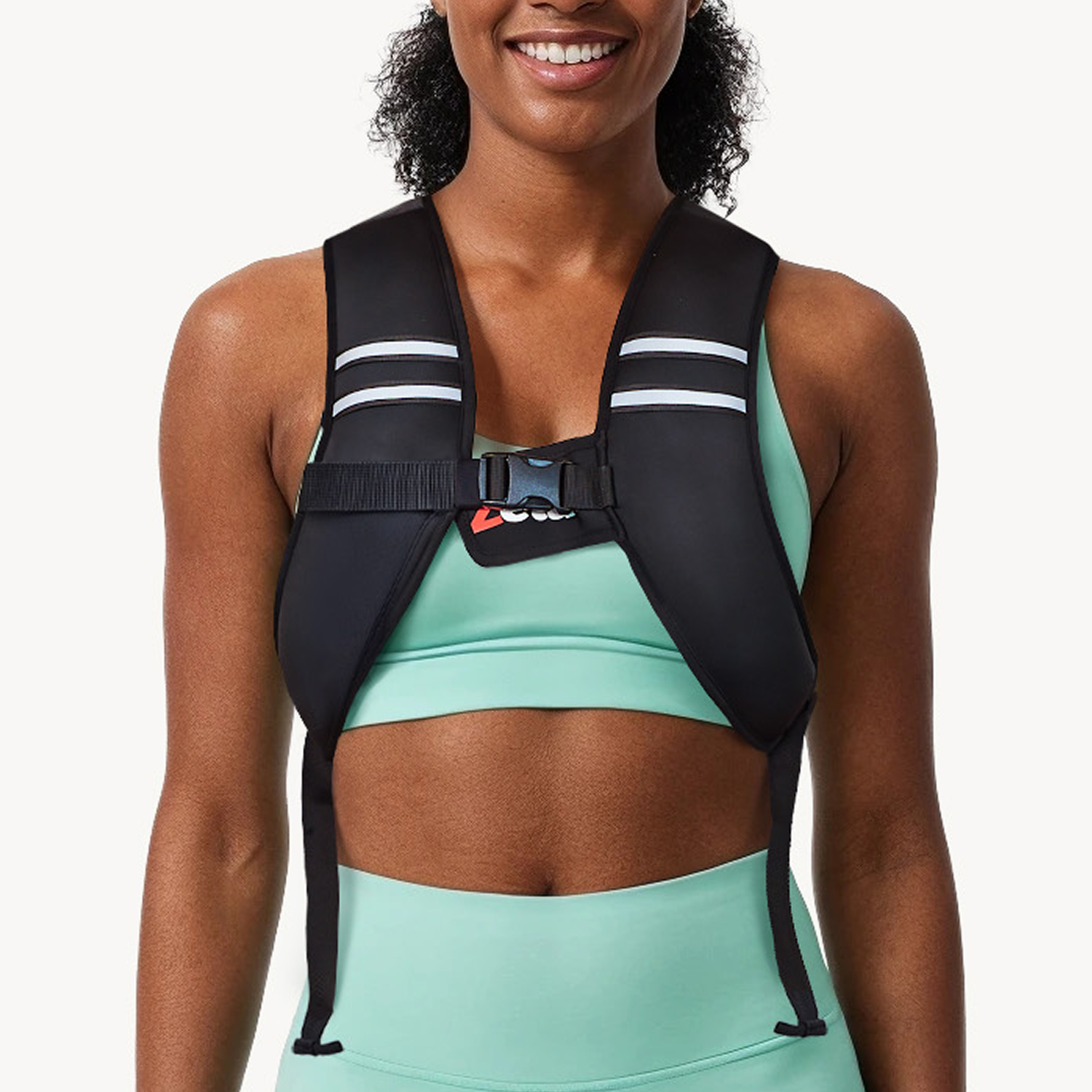
Weighted vest training involves wearing a specially designed vest that distributes resistance evenly across your torso. Unlike a backpack, the weight is placed on both the front and back of your body, keeping the load closer to your center of gravity.
This type of training is highly versatile and can be used for walking, running, bodyweight exercises, treadmill sessions, or high-intensity interval training (HIIT). Because the weight is evenly distributed, it tends to create a more balanced and upright posture compared to backpack loading.
Can You Wear a Weighted Vest For Rucking?
Rucking vs Weight Vest: Key Differences
|
Category |
Rucking (Backpack) |
Weighted Vest |
|
Weight distribution |
Load sits on the back, shifting center of gravity backward |
Evenly distributed across chest and back, closer to center of gravity |
|
Posture impact |
Encourages forward lean; requires active posture correction |
Supports more upright and stable posture |
|
Muscle engagement |
Higher demand on core, lower back, glutes, and posterior chain |
More balanced full-body engagement depending on activity |
|
Training versatility |
Mainly walking, hiking, endurance-focused training |
Walking, running, HIIT, strength training, treadmill work |
|
Comfort and setup |
Requires proper packing and strap adjustment; may cause shoulder pressure |
Easier setup; more uniform comfort but can feel hot or restrictive |
Rucking vs Weight Vest: Weight distribution
Rucking places all load in a backpack on the back, which shifts the center of gravity backward and requires the body to constantly compensate during movement. In contrast, a weighted vest distributes weight evenly across the chest and back, keeping the load closer to the body’s natural center of gravity and reducing imbalance.
Rucking vs Weight Vest: Posture impact
Rucking tends to encourage a slight forward lean, especially as weight increases or distance extends, making posture control an active part of the exercise. Weighted vests generally support a more upright and stable posture because the load is balanced around the torso and does not pull the body backward.
Rucking vs Weight Vest: Muscle engagement
Rucking places greater demand on the posterior chain, including the lower back, glutes, and core, as these muscles stabilize the backward-shifted load. Weighted vests create more evenly distributed muscular engagement across the upper and lower body, depending on the movement being performed.
What Muscles Does a Weighted Vest Work?
Rucking vs Weight Vest: Training versatility
Rucking is primarily used for walking, hiking, and endurance-based outdoor conditioning. Weighted vests are more versatile and can be used for walking, running, HIIT workouts, treadmill sessions, and strength training, making them suitable for a wider range of fitness goals.
Rucking vs Weight Vest: Comfort and setup
Rucking requires proper backpack fitting and careful load packing to avoid shifting weight and discomfort during long sessions. Weighted vests are generally easier to put on and use, offering more consistent comfort, although they may feel warmer or slightly restrictive during extended or high-intensity workouts.
Rucking vs Weight Vest: Training Goal
|
Goal |
Rucking (Backpack) |
Weighted Vest |
|
Fat loss & calorie burn |
Strong steady-state calorie burn from long-duration walking |
Higher flexibility; can boost burn in walking, running, or HIIT |
|
Strength & endurance |
Builds lower-body and postural endurance over long distances |
More balanced full-body strength endurance across multiple movements |
|
Athletic performance |
Improves hiking, load carrying, and real-world endurance |
Better for speed, power, and sport-specific conditioning |
|
Rehab & low-impact fitness |
Low-impact but may stress lower back if overloaded |
More joint-friendly and evenly distributed for controlled rehab work |
Rucking vs Weight Vest: Fat loss and calorie burn
Rucking is highly effective for fat loss because it turns simple walking into a sustained calorie-burning activity. The added backpack load increases energy expenditure over long durations, especially when done outdoors on varied terrain. Weighted vest training also supports fat loss, but it offers more flexibility since you can use it for walking, running, or HIIT workouts, allowing for higher-intensity calorie burn in shorter sessions.
Rucking vs Weight Vest: Strength and endurance building
Rucking primarily builds lower-body and postural endurance due to the continuous load carried behind the body over long distances. It strengthens the legs, hips, and back in a way that closely mimics real-world carrying tasks.
Weighted vest training develops more balanced full-body endurance because the load is evenly distributed and can be applied to a wide range of movements, including bodyweight exercises.
Rucking vs Weight Vest: Athletic performance training
Rucking is more specialized for endurance-based performance such as hiking, military-style conditioning, or long-distance load carrying. It improves resilience under prolonged effort rather than explosive performance.
Weighted vest training is better suited for athletic development because it can be integrated into running, agility drills, and explosive movements, making it more transferable to sports performance.
Rucking vs Weight Vest: Rehab and low-impact fitness
Rucking can be low-impact compared to running, but heavier loads or poor posture may place stress on the lower back and joints. It is generally better suited for already-conditioned individuals.
Weighted vests provide a more controlled and evenly distributed load, making them more suitable for rehabilitation, beginners, or those seeking low-impact strength and cardio training.
Does rucking or a weighted vest burn more calories?
Both rucking and weighted vest training significantly increase calorie burn compared to regular walking because they add external resistance. In general, calorie expenditure is similar when the total weight and walking speed are equal. However, rucking often feels more demanding because the load sits behind the body and requires more stabilization effort, especially over longer distances.
Rucking vs Treadmill Weighted Vest Training
Can You Wear a Weighted Vest on a Treadmill?
Outdoor rucking vs indoor training setup
Rucking is typically performed outdoors, where natural terrain like roads, trails, and hills adds variability and increases overall training demand. Treadmill weighted vest training is done indoors in a controlled environment, where speed, incline, and duration can be precisely adjusted without external factors like weather or uneven ground.
Movement mechanics and muscle engagement
Rucking engages more stabilizing muscles because the body must continuously adapt to changing surfaces and maintain balance with a rear-loaded backpack. This increases activation in the core, hips, and lower back. Treadmill weighted vest training provides a more consistent movement pattern, focusing mainly on steady lower-body endurance while maintaining a more predictable stride.
Intensity control and progression
Rucking intensity is naturally variable and influenced by terrain, elevation, and pace, making it less precise but more adaptable to real-world conditions. Treadmill training allows for exact control of speed and incline, making it easier to structure progressive overload and monitor workout intensity over time.
Impact, safety, and joint stress
Rucking may place more uneven stress on joints if terrain is rough or load is poorly distributed, but it also promotes functional resilience. Weighted vest treadmill walking offers a more controlled, low-impact environment, reducing the risk of tripping or imbalance while still providing resistance.
Ruck Sack vs Weighted Vest: Comfort
Rucking vs Weight Vest: Pressure points and load feel
A ruck sack places all the weight on the shoulders and upper back, which can create concentrated pressure points during longer walks. As fatigue builds, the straps may dig into the shoulders, and the load can pull backward, increasing strain on the upper back and lower spine. A weighted vest spreads the load across the chest, shoulders, and upper torso, which generally feels more evenly supported and reduces localized pressure.
Rucking vs Weight Vest: Heat and breathability
Rucking backpacks cover less of the torso, allowing slightly better airflow around the front of the body, but sweat can still build up on the back where the pack sits. Weighted vests tend to trap more heat because they wrap around the chest and back more tightly, making them feel warmer during long sessions or high-intensity training.
Rucking vs Weight Vest: Movement and natural feel
A ruck sack can feel more restrictive during posture changes, especially when climbing hills or leaning forward, since the weight shifts behind you. A weighted vest feels more “natural” during movement because it stays close to the body and moves with you, which many users find more comfortable for walking, running, and bodyweight exercises.
Rucking vs Weight Vest: Long-duration wearability
For long-distance endurance sessions, comfort often depends on load management and fit. A well-fitted ruck can become uncomfortable over time due to shoulder fatigue, while a weighted vest tends to maintain more consistent pressure distribution. However, heavier vests may feel more restrictive around the chest during extended use.
Ruck Plate Carrier vs Training Weight Vest
A ruck plate carrier makes the most sense for users focused on tactical-style training, load-bearing resilience, or sport-specific preparation where stability under heavy load is key.
A training weight vest is better suited for general fitness, fat loss, endurance training, and everyday workouts where comfort, versatility, and long-duration wearability matter more than replicating tactical equipment.
Plate Carrier vs Weighted Vest: Key Differences
Can You Combine a Rucking Backpack and Weighted Vest?
Yes, you can wear a weighted vest and a rucking backpack at the same time, but it significantly increases total load and training stress. This setup is essentially “double loading,” where weight is placed both on the torso and on the back.
This approach is generally only suitable for experienced trainees who already tolerate rucking or weighted vest training individually. Beginners or general fitness users should avoid combining them, as it is not necessary for fat loss or endurance gains and can quickly become excessive.
Rucking vs Weight Vest: Pros and Cons
Rucking backpack: pros and cons
Rucking is effective for building endurance through loaded walking, especially outdoors. It closely mimics real-world carrying tasks, making it highly functional for long-distance conditioning.
|
Pros |
Cons |
|
Scalable load for progressive training |
Uneven pressure on shoulders and back |
|
Natural walking and hiking movement |
Higher risk of lower back strain if overloaded |
|
Strong outdoor endurance conditioning |
Less stable load distribution |
|
Builds real-world carrying strength |
Limited exercise variety compared to vest |
Weighted vest: pros and cons
Weighted vests provide a more evenly distributed resistance that stays close to the body, making them suitable for a wide range of fitness activities.
Weighted Vests: Benefits, Sizing, and How to Use One
|
Pros |
Cons |
|
Even load distribution across torso |
Lower maximum load capacity |
|
Versatile (walking, running, HIIT, strength training) |
Heat buildup during long sessions |
|
Better posture support and balance |
Can feel restrictive on chest if too tight/heavy |
|
Suitable for indoor and outdoor training |
Less “real-world load carry” specificity |
FAQs
Is rucking better than a weighted vest?
Rucking is often more effective for building long-duration endurance and real-world carrying strength. Because the load is placed in a backpack, it challenges posture, core stability, and lower-body endurance over extended distances, especially outdoors on varied terrain.
A weighted vest is usually more versatile and controlled. The even load distribution allows you to walk, run, or perform strength and HIIT workouts with less posture compensation. This makes it more efficient for mixed fitness training, fat loss circuits, and indoor workouts.
Can you ruck with a weighted vest instead of a backpack?
Yes, you can use a weighted vest as an alternative to rucking, but it slightly changes the training effect. Instead of a rear-loaded carry (backpack), a weighted vest distributes weight evenly across your torso, making the movement more balanced and upright.
Which is safer for joints and spine?
Weighted vests are safer for beginners and those concerned about joint or spinal stress, while rucking is safe but requires better load management, posture awareness, and gradual progression.
Does weighted vest walking build muscle?
Weighted vest walking helps strengthen and condition muscles, improves endurance, and enhances overall fitness, but it works best as a supplement rather than a primary method for building large amounts of muscle.
How heavy should my ruck or vest be?
For rucking, a common starting point is about 10–15% of your body weight. This is enough to challenge endurance without overloading the lower back or joints. As conditioning improves, many people move into the 15–25% range for general training. Heavier loads are possible, but they should be used carefully and usually for shorter distances or experienced users.
For weighted vest training, the load is typically lighter because it is often used for more dynamic movement. A good starting range is 5–10% of body weight, especially if you plan to walk, run, or do HIIT. More advanced users may go up to 10–15%, but performance and form should always stay the priority.
How Much Weight Should You Put in Your Weighted Vest?
Is rucking good for osteoporosis?
Rucking can be beneficial for osteoporosis, but it needs to be approached carefully and is not automatically the best option for everyone. Because osteoporosis involves reduced bone density and increased fracture risk, the goal is to use safe, progressive weight-bearing exercise to stimulate bone strength without excessive impact or spinal stress.
Weighted vests are usually preferred for safety and control, while rucking may only be appropriate in mild cases and with conservative loading.
Before You Go…
Here are a few handpicked articles to inspire your next self-care moment.