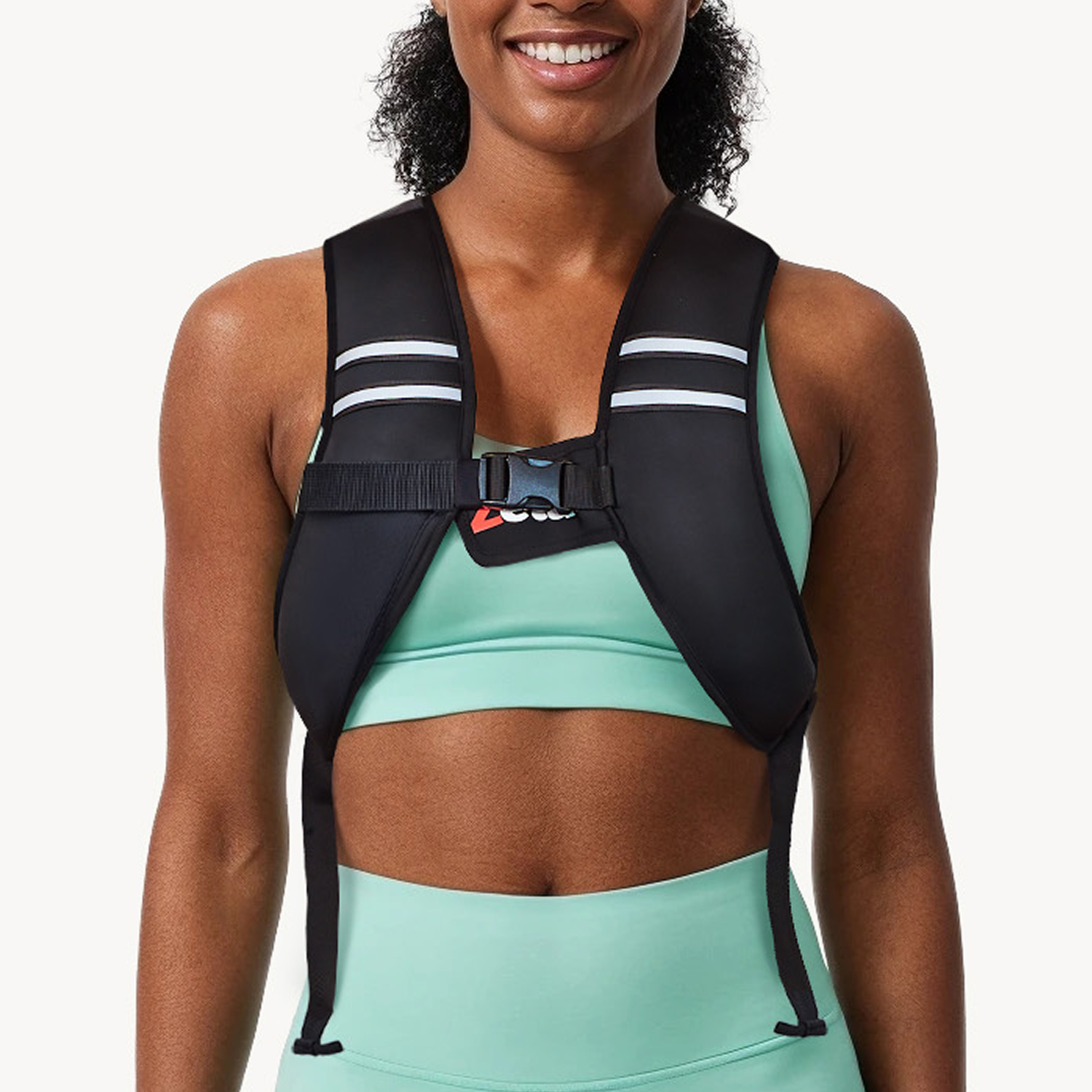
Weighted Vests & Bone Density: What Every Woman 35+ Should Know
In the evolving world of fitness and anti-aging, the weighted vest is shifting from an elite athletic tool to a mainstream wellness staple. According to a January–March 2026 Zelus survey of 1,069 U.S. purchasers (average age 41; 62% female), consumers are looking for more than just fat loss. Strikingly, 20% to 28% of buyers cited deep anxiety over age-related bone density loss and muscle wasting as their primary motivation—a concern that peaked among older demographics and women managing heavy daily domestic workloads.
This skeletal anxiety is entirely valid. As we age—particularly for women navigating postmenopausal estrogen drops—bone loss can feel like an unstoppable hourglass. But is a weighted vest a scientifically sound strategy to help manage this decline, or is it simply a passing fitness fad?
Do Weighted Vests Help Build Bone Density?
Yes, under the right conditions. According to clinical data from a 5-year study, utilizing a weighted vest combined with progressive impact exercise not only prevents age-related bone loss but can actively increase bone density at critical stress-bearing sites.
Postmenopausal women typically face rapid bone loss due to dropping estrogen levels, which significantly spikes the risk of dangerous hip fractures. While the study's inactive control group experienced severe bone density loss across the entire hip joint over five years (ranging from -3.43% to -4.43%), the exercise group successfully reversed this trend. By training three times a week, participants helped stabilize their skeletal framework and achieved a +1.54% increase in bone mineral density at the highly vulnerable femoral neck.
This remarkable response is driven by Wolff's Law, which states that bone remodels and strengthens in direct response to the mechanical loads placed upon it. The combination of a weighted vest and targeted movement triggers two powerful biomechanical mechanisms: progressive axial loading and dynamic impact.
The vest evenly distributes extra mass across the torso to increase vertical loading down the spine and hips, while ground reaction forces send mechanical waves through the skeleton. Together, these forces exceed normal daily thresholds, signaling bone-building cells (osteoblasts) to lay down a denser mineral matrix.
Weighted Vest Exercise for Bone Density

If you are trying to strengthen your bones, it is vital to know that not all exercise is created equal. Many people believe that simply staying active or taking daily walks is enough to ward off osteoporosis. However, bone biology operates on a strict rule: your skeleton only adapts when forced to handle high-level physical stress that exceeds daily routines.
Based on clinical research, to build genuine bone mineral density (BMD), you need exercises that maximize force and acceleration. When we rank activities by their ability to trigger bone growth, two training styles stand out:
High-Impact Exercise (The Force Multipliers)
High-impact movements force your skeleton to absorb sudden, rapid spikes of energy upon hitting the ground. When your feet strike a surface with velocity, it sends a mechanical wave up through your legs and directly into your hips and spine. This stimulation prompts osteoblasts to deposit new mineral matrix.
- Top Examples: Running, singles tennis, jumping jacks, and controlled vertical hopping.
Heavy Resistance Training (The Structural Overload)
Bones don't just respond to ground contact; they also respond to internal tension generated when your muscles contract against heavy resistance. When you lift heavy weights, your tendons pull aggressively on the bone anchors, signaling the skeletal framework to reinforce itself.
Casual lifting with minimal weight won't move the needle for bone density. Landmark research indicates that to meaningfully stimulate BMD, resistance must be substantial—typically training under guided supervision at higher percentages of maximum capacity.
- Top Examples: Compound movements like deadlifts, overhead presses, and weighted squats.
Is It Safe for Everyone?
While combining a weighted vest with squats or high-impact drills provides excellent stimulation for bone health, safety must come first. For older adults or individuals already diagnosed with osteoporosis, dynamic jumping or heavy lifting should always be introduced cautiously and ideally under the guidance of a physical therapist or certified specialist.
Pros and Cons of Weighted Vests for Skeletal Health

Using a weighted vest is a well-researched, non-pharmaceutical strategy to support bone density. However, it is not a standalone solution and carries distinct considerations if used improperly.
Pros
- Targeted Axial Loading: Unlike handheld weights, a vest distributes mass evenly across your torso. This creates compressive forces down the spine and through the hips—the exact structural sites most vulnerable to age-related loss.
- Improves Postural Balance: Wearing a vest slightly shifts your center of gravity, engaging core stabilizers and improving proprioception. Over time, enhanced balance is vital for reducing fall risks.
- Practical and Accessible: Vests offer a simple, hands-free method to increase resistance during daily home workouts, bodyweight squats, or step-ups.
Cons
- Passive Walking Isn't Enough: A common misconception is that casually walking in a weighted vest will automatically build massive bone density. Because walking is a low-velocity movement, a light vest (adding 5–10% of body weight) needs to be paired with progressive impact or resistance drills to cross the threshold for new bone creation.
- Spinal Compression Risks: For individuals with severe osteoporosis or existing vertebral fractures, adding vertical weight without proper form can strain the back. Always start ultra-light.
- Joint and Postural Strain: Top-heavy weight can place stress on the knees, hips, and lower back if baseline alignment is compromised.
6 Reasons Your Weighted Vest Might Be Hurting Your Body (And Fixes)
How Much Weight Do You Need for Bone Health?

Determining the right amount of weight for a bone-loading protocol requires balance: it must be heavy enough to stimulate cellular adaptation, yet light enough to protect your spine and joints.
In clinical settings, a common guideline is to start ultra-light and gradually progress, maxing out at 4% to 15% of your total body weight, depending on your individual health baseline.
Key Guidelines for Weight Selection:
- Consider Baseline Bone Health: Individuals with mild osteopenia can typically work toward moderate loading under guidance, while those with severe osteoporosis should keep weights light (4%–8% of body weight) and avoid explosive movements.
- Balance Weight Evenly: Ensure weight inserts are balanced between the front and back of the vest to prevent forward or backward pull on your spine.
- Monitor Spinal Comfort: Discontinue or reduce weight immediately if you experience pinching or aching in your mid-to-lower back.
A Simple Guide to Buying Your First Weighted Vest
Recommended Vests for Progressive Bone Loading
1. Z-Fit™ Flex Weighted Vest (Best for Micro-Loading)

The Z-Fit™ Flex Weighted Vest features a body-contouring silhouette designed to distribute load smoothly across the torso without restricting joint mobility.
- Silicone-Iron Inserts: Soft, anti-chafing materials fit comfortably against the body.
- Adjustable Loading: Allows users to scale vertical resistance incrementally to stay within a safe training zone.
- Quiet Fit: Eliminates clanking weights during walking and functional exercises.
2. Zelus Classic U-Shape Weighted Vest (Best Range for Progression)

The Zelus Classic U-Shape Weighted Vest offers an extended adjustable weight range, allowing ultra-light baseline setups that can grow as strength increases.
- Wide Loading Capacity (4–32 lbs): Removable packets make it easy to start at 1–2% of body weight and scale up slowly.
- Durable & Breathable: Fabric construction keeps workouts comfortable while providing steady axial support.
3. Z-Fit™ X-Shape Weighted Vest (Best Low-Profile Choice)

The Z-Fit™ X-Shape Weighted Vest offers an ergonomic cut that encourages upright posture, making it ideal for low-profile workouts under light gear.
Weighted Vest Comparison for Bone Density
| MODEL | Z-Fit™ X-Shape | Z-Fit™ Flex | Classic U-Shape |
|---|---|---|---|
| SERIES | Z-Fit™ | Z-Fit™ | Classic |
| RECOMMENDED ACTIVITIES | Walking · Mobility · Daily Wear | Walking · Rucking · Functional Flows | Rucking · Resistance Training |
| FIT STYLE | Ergonomic X-Shape | Body-Contour Flex | Traditional Chest U-Shape |
| WEIGHT TYPE | Fixed Options | Adjustable Increments | Adjustable Packets |
| RANGE | 5 / 10 / 15 lb | 10 / 15 lb | 4 – 32 lb |
| FILL MATERIAL | Silicone-Iron | Silicone-Iron | Iron Sand Packets |
Final Thoughts
A weighted vest can be a highly practical, accessible tool to support bone density and functional balance as we age. However, it works best when viewed as part of a complete routine—paired with controlled resistance exercises, proper nutrition, and guidance from healthcare professionals. By applying appropriate mechanical stress safely and consistently, you can support your skeletal health for years to come.
Frequently Asked Questions
What is the most effective way to support bone density growth?
Research highlights a combination of high-intensity resistance training (such as supervised squats or deadlifts) and dynamic impact exercises (such as hopping or stomping) as key physical drivers. These activities create the muscular tension and impact needed to signal bone remodeling. For optimal results, physical exercise should be paired with proper nutritional intake (Calcium, Vitamin D) and medical oversight.
Does walking with a weighted vest build bone density?
While walking with a vest increases calorie burn and lower-body endurance, walking alone is a low-velocity movement. To stimulate new bone density growth, vest routines should typically incorporate progressive resistance exercises (like squats or step-ups) or controlled dynamic movements.
Does Walking With a Weighted Vest Burn More Calories?
Can resistance training help manage osteoporosis?
Yes. High-intensity resistance training creates muscular pulling forces on the bone anchors, which stimulates the bone-remodeling process. While it may not completely restore bone to youthful levels, it helps slow age-related loss, reinforce bone architecture, and build the muscle strength needed to help prevent falls.
How long does it take to see changes in bone density?
While you may feel improved stability and muscle engagement within weeks, bone remodeling is a slow cellular process. Measurable changes in bone mineral density typically require 6 months to a full year of consistent, progressive training before showing up on a DXA scan.

Before You Go…
Here are a few handpicked articles to inspire your next self-care moment.