My First 30 Days with a Weighted Vest: Results & Mistakes to Avoid
Walking has been my absolute favorite exercise since the very beginning of my fitness journey. It keeps me lean, serves as my ultimate creative outlet, and takes me to incredible outdoor places I didn't even know existed. Plus, it’s the best way for my two dogs and me to get our daily movement together.
So, I decided to do a 30-day experiment walking and living with a weighted vest. I learned a lot along the way. Whether you are doing this for bone health, posture, or to accelerate weight loss, here is exactly what to expect, the massive mistakes I made that you should avoid, and the real data behind how this gear transforms your body.
The Mistakes You Want to Avoid
When I first decided to try a vest, I thought, "Hey, I have a really strong core, I lift heavy, let's go big." So, I ordered a 30-pound vest.
Huge mistake.
I almost threw my shoulder out just trying to hoist the thing onto my back. I couldn't put it on without help, and it was entirely too heavy to start. When I returned it, I bought a weight vest for walking that was too large and hung down too low, which completely wrecked my posture and strained my lower back.
According to data based on a survey of 1,327 weighted vest purchasers conducted between January–March 2025 (Participants: 62% Female, Average Age 41, US only), I wasn't alone in my initial struggles:
- 44% of users report intense frustration with traditional vests shifting, bouncing, or pulling painfully on their lower back due to a poor fit.
- 48% of female users report experiencing suffocating chest tightness or breathing restriction when trying to strap traditional vests down tightly enough to stop the bouncing.
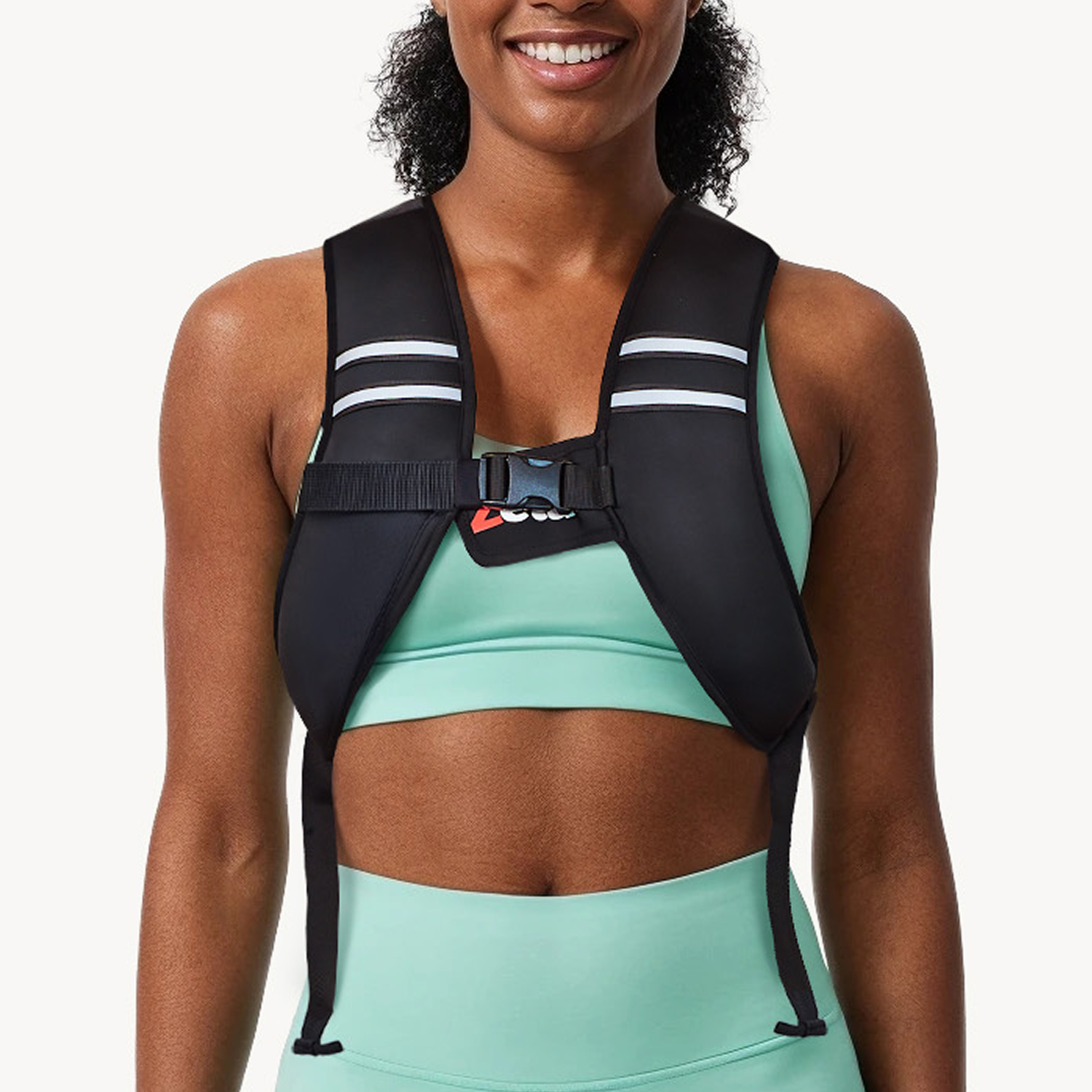
The takeaway? Non-negotiable comfort and proper sizing are everything. If a vest digs into your shoulders, smashes your chest, or drags you down into a slouched position, you won't wear it. Look for a sleek, ergonomic layout. I personally prefer a vest that buckles high across the chest and lets your breasts sit naturally on the outside, rather than a bulky tactical model that smashes everything flat.
After those first two disastrous attempts, I finally found the solution that saved my routine: the Zelus Classic X-Shaped Weighted Vest.
Instead of a bulky tactical model that smashes everything flat, its sleek, ergonomic layout was an absolute game-changer for me. Because of its intentional X-shape design, it buckles high and tight across the chest while letting your breasts sit comfortably and naturally on the outside. The iron sand weight is distributed perfectly between the front and back, keeping the load entirely off my lower back and preventing that exhausting, suffocating chest squeeze.
If you want to avoid the painful learning curve I went through, a contoured fit like this is exactly what you should look for.
6 Reasons Your Weighted Vest Might Be Hurting Your Body
What Your First 30 Days Will Actually Feel Like
If you think you're going to strap on a vest and immediately crush a high-speed, one-hour power walk, let me give you a realistic roadmap so you don't quit by day three.
Week 1: The "House Arrest" Phase
Don't even try to walk outside yet. The first week I wore my 12-pound vest, it felt incredibly heavy. I kept staring at the clock thinking, "Has it been 20 minutes yet? Can I take this off?" It felt like a low-grade strain on my entire system.
My Advice: Wear it around the house for just 10 to 15 minutes at a time. Put it on over your robe while you brush your teeth, make coffee, or stand at your desk. Let your postural muscles adjust to the new gravitational load. The best part? When you take it off, you will feel like you can fly.
Week 2: The Reality Check
By week two, I took it out for my regular one-hour power walk. I usually walk at a very fast clip, but with the vest on, I was moving like a snail and frankly, I hated it. It felt like tedious work, and it stripped the joy out of my morning routine. If this happens to you, do not force it.
Weeks 3 & 4: Falling in Love (The "Hug" Effect)
By week three, I pivoted. I stopped wearing it during my fast morning cardio walks. Instead, I wore it for 20 to 30 minutes while running errands, cleaning the house, or when my husband and I took a slow, leisurely stroll after dinner.
That is when the magic happened. My body adapted. The vest stopped feeling like a burden and started feeling like a comforting, heavy hug. It naturally pulled my shoulders back, aligned my spine, and forced me into beautiful posture.
How Heavy and How Long?
You don't need a massive military rucksack to change your biology. Clinical studies on postmenopausal women show that wearing a vest averaging just 11.1 pounds only three times a week resulted in a dramatic, measurable increase in bone mineral density.
To prevent joint compression and postural breakdown, follow these safe loading timelines:
|
Vest Weight (% of Body Weight) |
Max Recommended Continuous Wear Time |
Best Activity For This Weight |
|
Light (5% - 10%) |
1 to 2 Hours Max |
Household chores, standing desks, casual walking |
|
Medium (10% - 15%) |
45 to 60 Minutes |
Brisk walking, trail hiking, incline treadmill |
|
Heavy (15% - 20%+) |
20 to 30 Minutes Max |
Strict gym calisthenics, squats, lunges |
Note: If you have a weaker core or are completely new to fitness, feel free to start at a modest 5 pounds. You can always pass that vest to a friend and level up later as you get stronger!
Best Zelus Adjustable Weighted Vests for Women [Ultimate Guide]
Best Weighted Vest Sizes for Plus-Sized Women
Best Weighted Vests for Large-Busted Women
The Surprising Benefits (Beyond Bone Density)
While preventing bone loss is a massive victory, adding a vest to your routine triggers several other incredible physiological shifts:
- Combating Sarcopenia (Muscle Loss): If you are on a weight loss journey—especially if you are utilizing GLP-1 medications like Oepic or Wegovy—you are at a very high risk of losing lean muscle mass alongside body fat. Wearing a vest preserves and builds your moving (isokinetic) muscle strength by forcing your body to carry a heavier load, preventing that muscle wasting.
- Cardiovascular and Balance Booster: Research shows that older adults using weighted gear experience significant improvements in their V2 Max, balance, joint stability, and sit-to-stand power.
- The Calorie Multiplier: Because your body is fighting extra resistance against gravity, you are burning significantly more energy doing basic movements without having to increase your impact or stress your knee joints.
Recommended reading: Does Walking With a Weighted Vest Burn More Calories?
Quick Tips for Weighted Vest Care
You are going to sweat—a lot. Carrying that extra weight shifts your metabolic furnace into overdrive, meaning your vest is going to absorb a massive amount of moisture and body oils. Because you can't just toss this heavy gear into a standard laundry cycle, maintaining it requires a bit of strategy.
- Buy Black (The Aesthetic Lifesaver): Skip the cute pastel pinks, light grays, and purples. A solid black vest is your best friend because it effortlessly hides unsightly sweat rings, ground-in outdoor dirt, and rubbing from self-tanner or body lotions. It keeps looking brand new long after lighter fabrics start looking dingy.
- The Golden Rule (Protect Your Washing Machine): Never, under any circumstances, throw a weighted vest into a washing machine or tumble dryer. Whether your vest uses iron sand, solid metal ingots, or flexible weight blocks, the sheer centrifugal force will destroy your washing machine's drum, tear the vest's stitching, and potentially leak iron particles everywhere.
- The Modern Alternative: If the thought of hand-washing your workout gear makes you cringe, you can bypass the traditional rules entirely by choosing a vest designed for the 21st century. I highly recommend the Zelus Z-Fit™ Flex Weighted Vest and the Z-Fit™ Y-Shaped Weighted Vest. Unlike old-school tactical gear, it is specifically engineered with premium, water-resistant fabrics and fully removable weight modules. This unique design allows you to easily slide the weights out, zip up the empty shell, and toss it straight into your standard washing machine on a gentle cycle—making it the easiest vest on the market to keep smelling fresh.
The Shower Trick
When your vest inevitably gets gross and starts holding onto odors, the shower is your best cleaning arena.
- Remove Detachable Weights: If your vest features removable iron blocks or sand packets, slide them out first and set them aside. If it is a fixed-weight vest (like many iron-sand models), keep the whole unit together.
- Soak and Scrub: Take the vest right into the shower or tub with you. Fill a small bucket with lukewarm water and a small amount of gentle, residue-free sports detergent or baby shampoo. Avoid harsh bleaches or fabric softeners, which can degrade the neoprene or heavy-duty nylon webbing. Use a soft-bristled brush or a microfiber cloth to scrub the high-friction areas: the shoulder straps, underarms, and inner chest panel.
- Rinse Thoroughly: Use the showerhead to rinse the vest completely until the water runs crystal clear and free of soap bubbles. Residual soap trapped in the lining can cause skin irritation on your next sweaty walk.
- The "No-Wring" Air Dry: Do not wring or twist the vest to squeeze out water, as this stretches the elastic straps and structural seams. Instead, lay it flat between two heavy towels and press out the excess moisture. Finally, hang it up to dry in a well-ventilated area out of direct sunlight, which can crack and fade the material. Always ensure it is 100% dry before storing it away in a dark closet to prevent mold and mildew from taking root.
Recommended reading: How To Wash and Maintain Your Zelus Weighted Vest
Tips for a Safe First 30 Days
If you want to upgrade your daily walks without the excruciating shoulder pain I went through, follow these professional guidelines:
- Consult a professional
If you have any underlying joint, neck, osteoporosis or back concerns, check with a doctor before loading your spine.
- Gear Setup
Avoid loose, cheap vests that bounce. Look for unibody structures—such as the ergonomic Zelus Classic X-Shaped Weighted Vest, the Zelus Z-Fit™, or tactical block systems—that contour closely to your torso. An intentional X-shape design is particularly effective because it distributes weight evenly away from the trapezius muscles and anchors securely around your core, preventing painful chafing and lower back strain.
- Start at 10% and build gradually
Start at 10% of your body weight. Wear supportive shoes, maintain a moderate pace, and start with shorter distances.
- Listen to your body and hydrate
Pay strict attention to your joints and lower back. If you feel sharp pain (not muscle fatigue), take the vest off. Always carry extra water to combat the added heat generation.
Recommended Model
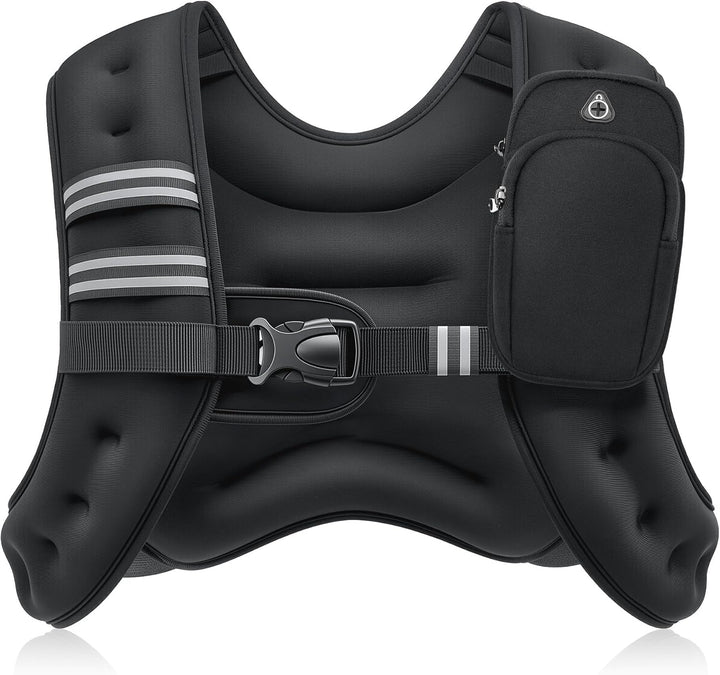
Classic X-Shaped Weighted Vest
Or 2 interest-free installments of $21.50
The Verdict
Adding a weighted vest to my lifestyle completely reshaped how I look at functional health, bone density, and aging powerfully. Start light, listen to your body, give yourself 30 days to adapt, and watch how quickly your strength takes off!
Important Note
While adding external weight is a clinically proven method to spark bone remodeling and combat bone density loss, safety must come first. If you have been diagnosed with osteopenia, osteoporosis, or any pre-existing spinal or balance conditions, it is absolutely vital that you consult your primary care physician or physical therapist before purchasing or wearing a weighted vest.
Depending on your current T-score, placing an axial, vertical load over an already severely compromised skeletal structure can accidentally increase your risk of spinal compression fractures or falls. Always secure a professional medical evaluation to determine if a weighted vest is safe for your specific baseline, and to establish a medically approved starting weight and wear schedule.
Before You Go…
Here are a few handpicked articles to inspire your next self-care moment.